
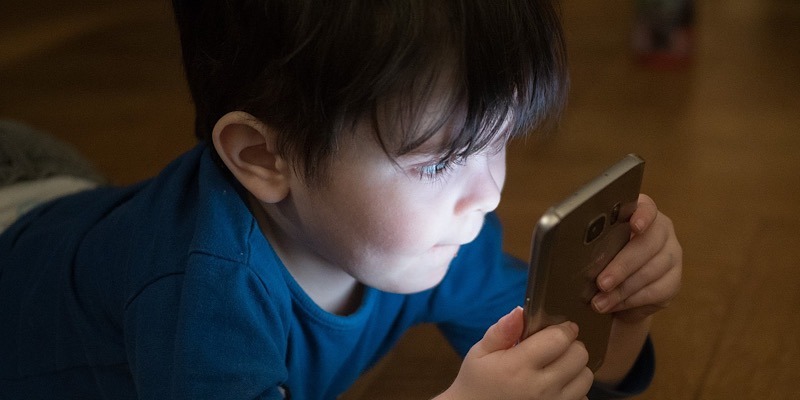

Either you’ve done it yourself, or you’ve seen other parents do it: handing a child a smartphone or a tablet to keep them occupied for a little bit. You may think it’s fine, or you may think it’s a terrible practice. The World Health Organization (WHO) has their own opinion.
WHO recommends for children 2 to 4, precisely the age when parents are apt to try to keep them busy, that they only have one hour a day in front of a screen. Infants should have zero screen time, and those between 1 and 2 should rarely be allowed screen time.
Limiting Children’s Screen Time
You can’t blame parents for needing a break occasionally, but certainly it’s not a good practice to just toss your smartphone at them to quiet them down. Yet, these are tough guidelines.
This doesn’t mean one hour of smartphone time a day. It’s one hour of all screen time. That includes TV time, movie time, and game time for 2 to 4-year-olds. Granted, most children under one probably (hopefully!) aren’t getting screen time anyway, but 1- to 2-year-olds are probably getting screen time more than “rarely.”
To create these guidelines, WHO relied on science revolving around the risks of screens on developing young brains. Child development experts believe acquiring language and social skills through interacting with others is among one of the most important skills for them to learn.
But that can be tough when children are spending so much time on their screens. Common Sense Media, a non-profit, reports 95 percent of families with children under the age of 8 have smartphones, and 42 percent of those children have a tablet of their own.
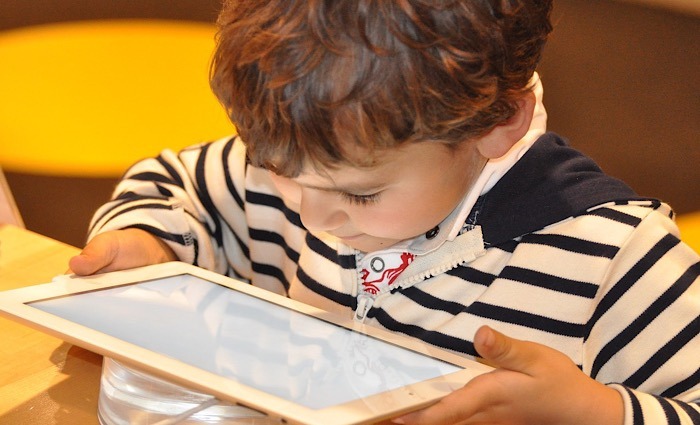
“Achieving health for all means doing what is best for health right from the beginning of people’s lives,” said WHO Director-General, Tedros Adhanom Ghebreyesus, in a statement.
“Early childhood is a period of rapid development and a time when family lifestyle patterns can be adapted to boost health gains.”
JAMA Pediatrics published a study that showed screen time could delay the language and social skills of toddlers. Another study published in Pediatrics reported that parents interacted with and spoke to their toddlers more when they read print books compared to when they read electronic books.
University of Michigan pediatrician Jenny Radesky, the author of the American Academy of Pediatrics guidelines, knows that’s putting a lot of pressure on parents.
“It induces a real conflict,” she said. “The more guidelines we give, it just seems like there’s going to be more of a mismatch between what experts say … and what it feels like to be a parent in the real world every day.”
“The absolute priority for very young children has to be face-to-face interactions, physical exercise, and sleep,” said psychologist and author of “iGen,” a book focused on the effects of social media and tech on kids. That should obviously go without saying. Parents shouldn’t need to be told that.
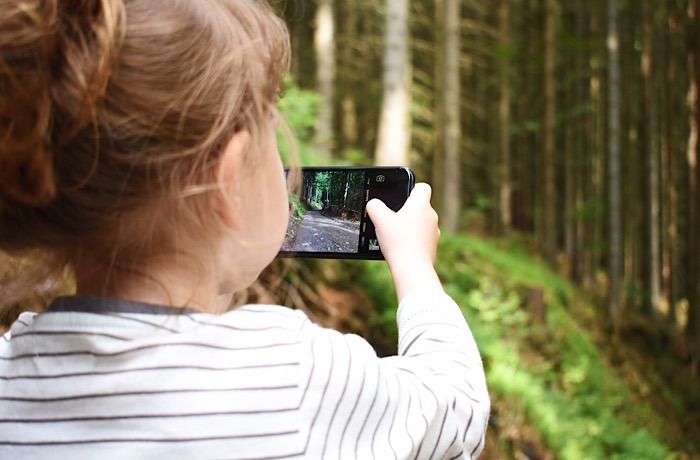
“I think the temptation to hand young children a phone or a tablet any time they fuss is misguided. Children need to learn how to self-soothe and manage their emotions. and if they’re frequently handed these devices, they don’t learn these things.”
It also needs to be noted that the studies that have been conducted are on screen time other than phones and tablets, as these devices haven’t been mainstream long enough to study their effects long term.
The Parent’s Perspective
I have adult children in their 20s. My daughter was 5 and my son 8 when I got my first cell phone. They were teenagers when I got my first iPad. So the screen time they had when they were young was TV.
That said, they still got more than that recommended amount of screen time. I had very active children and was a stay-at-home mom who worked from home. I needed a little bit of peace every day, and they needed the downtime. I did allow them to watch a little TV every day. But I balanced it. We had a larger library of children’s books than children’s videos. I read to them every day.
I think that’s what it comes down to: balance. Parents need to realize the guidelines and try to keep a good balance but not feel extreme guilt if their 3-year-old gets 90 to 120 minutes of screen time rather than just 60.
Are you a parent? How much screen time do your young children get? Add your thoughts and concerns to the comments.