


Monitors use RGB to display images, but printers use CMYK. Why is there a difference between the two, and why does it matter?
What’s the Difference Between CMYK and RGB?
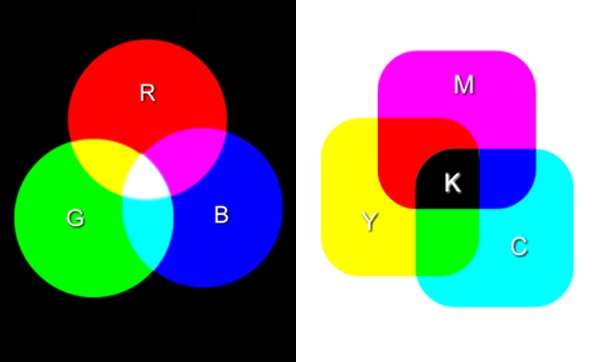
CMYK and RGB are two different ways of representing colors by combining a set of fundamental colors. The letters in the name stand for the colors mixed together to create more colors. CMYK stands for cyan, magenta, yellow and black (also called “key”), while RGB stands for red, green and blue. Both methods can produce a wide range of visible colors, but they have fundamental distinctions between the two methods. CMYK is used for printed media, while RGB is used for monitors, televisions, projection, and other light-based display technologies. CMYK relies on the principles of subtractive color, while RGB uses the principles of additive color.
Additive and Subtractive Color
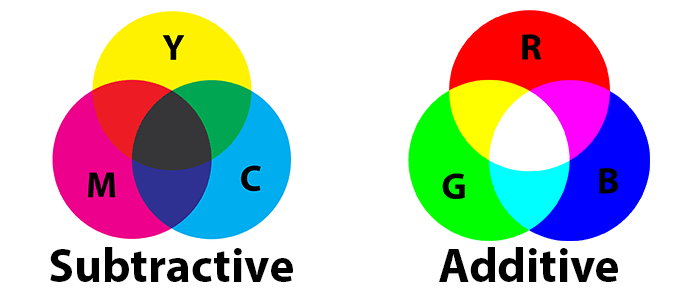
When we create colors by mixing paint or ink, we’re using subtractive color. CMYK, which mixes four ink colors, uses subtractive color. If we mix all the colors together, we end up with black, gradually subtracting lightness as we mix more paint or ink. Starting with white paper, each addition of a colored ink “subtracts” available color from the starting medium. For pure white, we must leave the paper unprinted, as nothing can be whiter than the paper it is printed upon.
CMYK specifically, and subtractive color in general, has some weaknesses. When we mix inks together we can’t make as many colors as we might like. While cyan, magenta and yellow can create a full spectrum of colors, the total amount of colors, or “color space,” is more limited than with RGB. Black is added to CMY in order to produce rich blacks; without a dedicate black ink, the best we can do is a muddy dark grey. In rare circumstances, special colors, called “spot colors,” are added to prints.
For example, a commercial printer might use a special spot color for a corporate client’s logo or brand color to ensure that it’s reproduced exactly. When white light reflects off the colored ink, certain wavelengths are reflected more prominently than others. This is interpreted by our brains as color.
The opposite of subtractive color, additive color, works oppositely from subtractive color. We start with darkness and gradually add luminosity or lightness. Mixing all colors together results in white. Additive color (RGB specifically) is used for all kinds of display screens which contain red, green and blue pixels that illuminate at various levels to create a full spectrum of visible colors. The more lights we shine, the closer we’ll get to white, gradually adding lightness until we reach that point. Black is represented by turning off or dimming pixels uniformly. When the light reaches our eyes, it’s interpreted by our brain as the various colors of the rainbow.
Why Do Printers Use CMYK Ink Instead of RGB?
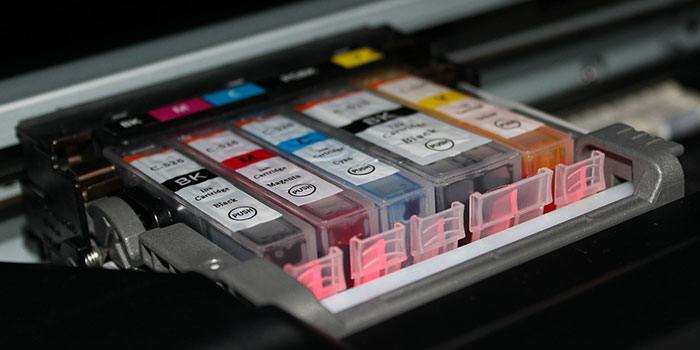
So even though RGB is capable of displaying more colors, CMYK is essential for representing color on printed media. In fact, the physical reality of printing requires using CMYK inks. Even though it’s a smaller color space compared to RGB, it’s the only way we can create a continuous spectrum of colors with printed media. Mixing red, green and blue inks together would produce a smaller range of muddy, making it indistinct. We also can’t start with black paper and add light to it until we reach white, because light can’t be painted on a surface. That means we’re limited to using CMYK inks.