
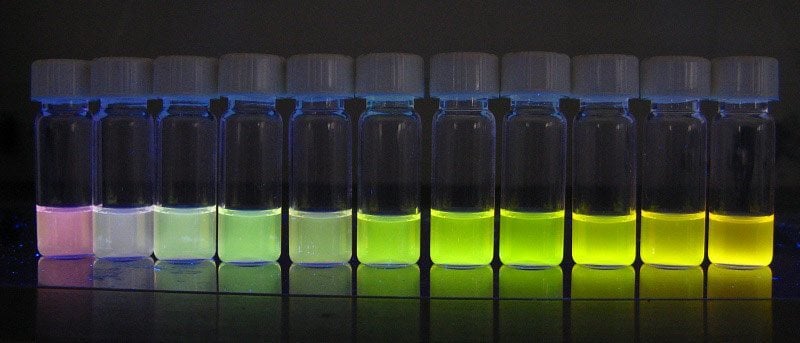

Many news articles have been appearing since mid-2015 talking about this radical type of display that uses something called “quantum dot technology.” At first sight, it might sound like another one of those over-hyped and unaffordable technologies, but once you look closer, it appears to be promising. Whenever new technologies appear, it’s natural for people to have a flurry of questions about them. The media generally does everything it can to make sure people are aware of the concept itself, but sometimes it does a lousy job of actually explaining how it works. That’s a void that probably should be filled before you decide to go out and open your wallet to a store clerk. Without further ado, it’s time to discuss what a quantum dot monitor actually is!
What’s Behind the Display?
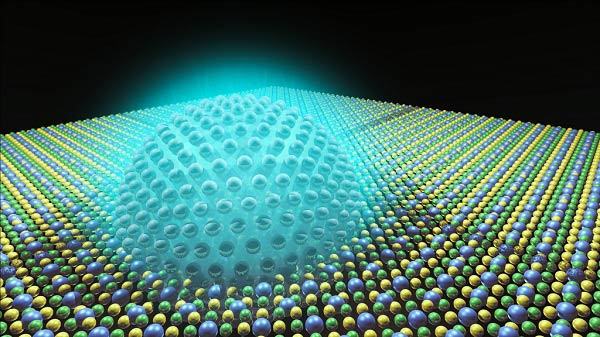
Underneath the surface there are several tiny semiconductor nanocrystals that can influence some of the smallest particles known to mankind. The sizes of these particles are so small you probably have trillions of them under your fingernail. Each of these nanocrystals is known as a quantum dot. What this does is effectively minimize the space that a pixel (or, more appropriately, a dot) will occupy on your screen. There are many reasons why this is much more applicable for television sets and desktop monitors than your current LED set up, but we’ll get to that in a minute. What you need to know right now is that we’re talking about some very tiny crystals that form the picture on your screen.
Why Not Stick with LED?
Have you ever used an OLED screen on a high-end smartphone? The black color is very deep, lacking the typical “noise” you’d encounter with any other “normal” screen. You might have also observed that the colors on display are more vivid. This is also how quantum dot (QD) technology works, except it doesn’t use organic molecules to create its light.
What makes it so much more special than anything else is its propensity to minimize power use while remaining a potentially more affordable technology than the OLED screens we are used to. Since quantum dots can be both photo-active (i.e. light triggers it) and electro-active (i.e. electricity triggers it), it means that we can trigger certain pixels to light up in color while selectively shutting down anything we want to display as black. Your typical LED screen will always have backlighting to kill the mood while you’re watching a dark scene in a movie. This backlighting requires a certain amount of power (my 27-inch monitor takes up about 45 to 48 watts in nominal power). You can technically halve that using a QD monitor because it doesn’t use any power to display black as a color.
QD’s usefulness doesn’t stop here, though. Artists and web designers are able to see a very accurate reproduction of colors due to the sharpness of the image. In addition to this, larger displays may not “fuzz out” as much with the resolution as their LED counterparts would. The fact that it’s potentially rather cheap to manufacture these displays (along with the fact that they actually shine brighter without losing their brilliance as quickly as other displays) makes the technology very promising.
Here’s a fun fact. QD technology isn’t necessarily new. The idea came around the 1980s before personal computers with separate monitors went mainstream. Now that monitors are almost all over the place, and there’s nary a home without a computer, it’s worth another look.
What do you think? Can QD tech hold up to its promise? Tell us more in the comments!