
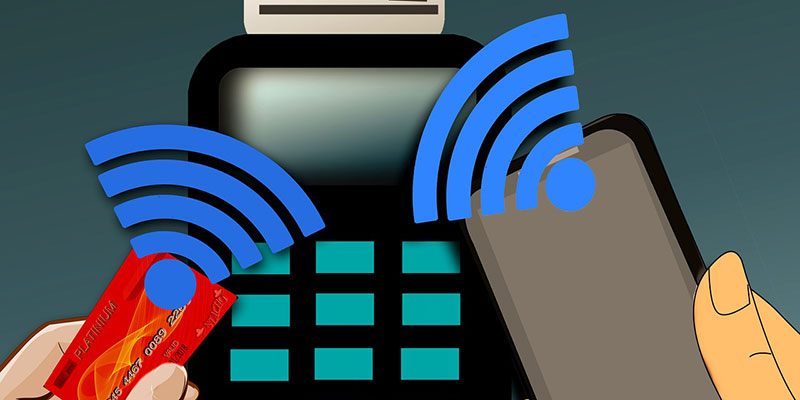

If you take a look at your smartphone’s technical specifications, you might notice that it supports NFC. But what is that, and why does your phone have it?
What is NFC?
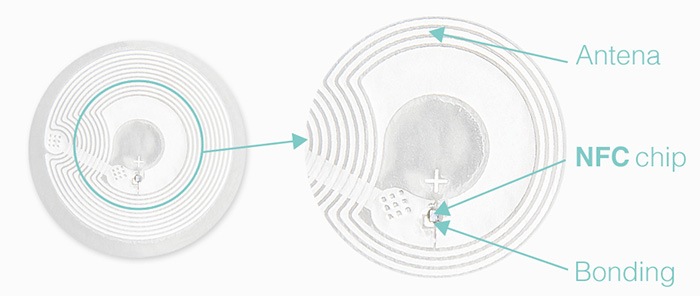
NFC stands for “near field communication.” It’s a radio-based transmission protocol that enables extremely short-range communication. And “short” means very short: the operational range of NFC is about four centimeters. In most cases users touch the transmitting and receiving devices together.
NFC is an advancement on RFID (Radio Frequency Identification) technology and is based on the same underlying concept: using radio waves to transmit data. There are two main differences, however. RFID transfers can only go one way, while NFC transfers can be two-way. NFC can also handle a lot more data than RFID.
NFC uses active and passive “tags” to store and communicate information. Passive tags store a small amount of information and are activated by an active NFC receiver. However, these tags can’t do much besides transmitting the information contained in their data store. This is the type of tag you’d find on a credit card, which only needs to transfer information to a payment terminal.
Active tags can do more: writing to recipient data stores, changing their own information, and sending information to other systems for processing. This is the type of tag you’d find in a smartphone, door lock, or payment terminal.
Passive tags can work without power thanks to NFC’s communication method. NFC uses electromagnetic induction to transfer data which allows it to power passive tags. Because of this, a successful NFC connection needs to include at least one active tag, which powers the passive tag and receive its data. Of course, you can also have two active tags communicate with each other, as is the case with smartphone-based payment systems.
How is NFC used?
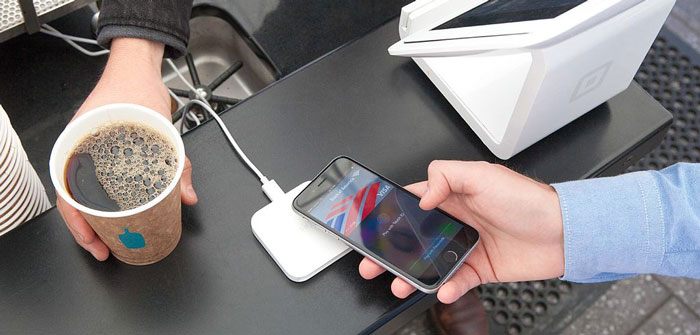
Many low-level processes rely on NFC for communication. Any transmission mechanic that involves “bumping” or touching devices together to exchange information is likely based on NFC. However, NFC is most commonly used for authentication.
You’ll find NFC used in touchless credit card terminals. The user taps or touches their credit card against the payment terminal to transmit payment information. It’s also a key technology underlying Apple Pay and Android Pay. Those proprietary payment systems use NFC as a communication band to transmit data. Some security badges also contain NFC tags, allowing users to open doors or access resources.
Those aren’t the only use cases, of course. Some business cards contain NFC, allowing users to copy contact data to their phone with a touch. Smart locks use NFC for smartphone unlocking, and tech conventions sometimes use NFC in their badges to make it easy for attendees to swap contact information.
Can I use NFC?
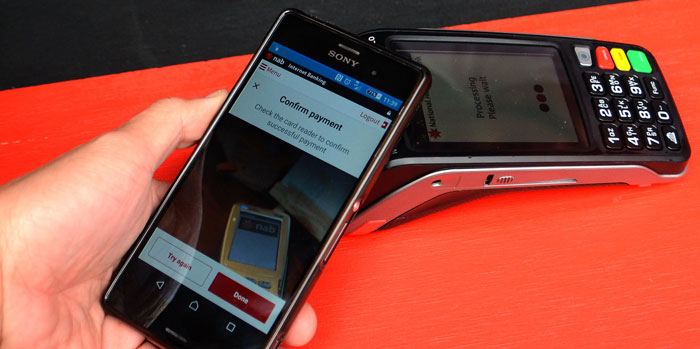
You might use NFC all the time without even knowing it. NFC is widespread in commercial applications, but it’s not as useful as a consumer-focused technology. Much of this comes down to NFC’s data limitations. NFC data packets are fairly small, hitting a maximum of eight kilobytes, or 8,192 bytes. That limitation, along with the ultra-short operating range, often makes NFC less convenient than existing consumer technologies. Some smartphone manufacturers like Samsung have tried to get users to use sharing technologies based on NFC, but without great success.
Conclusion
NFC is a useful technology with a narrow scope of use. It’s perfect for small-scale, one-time actions, like opening a locked door or transferring payment details. But like QR codes, NFC has not had a breakout consumer application. Nevertheless, it’s used consistently in commercial applications.
Image credit: NFC_Tag_Structure, Apple-payment-square, Confirm payment – NAB Happy Tappers NFC PayWave