


Predictive analytics does just what it sounds like: it analyzes data to figure out what might happen in the future. As with most predictions, it’s never 100% correct, but big data and artificial intelligence are making it a lot more accurate.
While it was once a relatively specialized branch of mathematics and computer science, new predictive technologies are more accessible and easily applicable: businesses use it on customers, researchers use it on diseases, advertising agencies use it to target consumers, banks use it to prevent fraud, and the list goes on. So how does predictive analytics really work, what does it predict, and how reliable are its forecasts?
Also read: What Does an Algorithm Look Like?
How does it work?
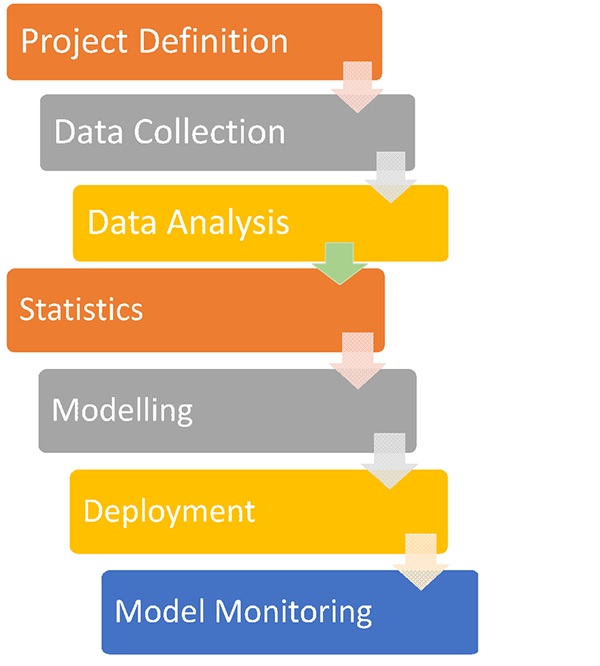
Predictive analytics has a few general steps:
- Figure out what you want to predict: how long will it take you to drive from point A to point B?
- Gather historical/current data: your/others’ past experiences on this route/current conditions.
- Identify important factors: day of the week, time of day, weather, frequency of delays, etc.
- Create and “train” a model: try to figure out how each factor has historically influenced driving time.
- Plug in your current information and get the result: on a warm Monday at 17:30, your drive will take you thirty minutes.
That’s a simple example, but if you’ve ever taken a look at Google Maps’ traffic predictions, you’ve used something like this. How accurate it is depends on the quality of historical and real-time data that’s available, but it can almost always make a pretty close guess, which is what predictive analytics is all about.
What does it predict?
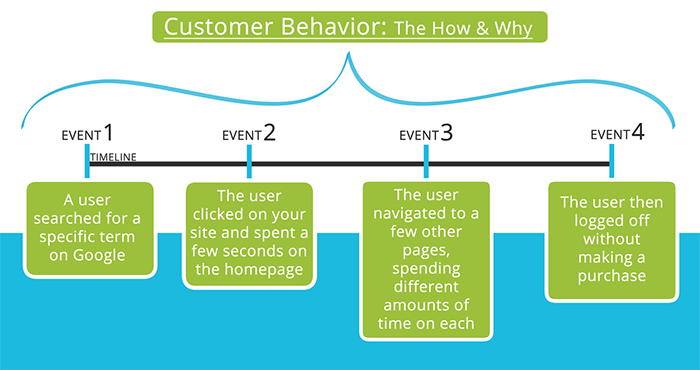
Predictive analytics is being productively used in medical research, finance, manufacturing, supply chains, and elsewhere, but one of the most profitable applications for this technology is to analyze and predict customer behavior. If you’ve ever wondered why your data is such a precious commodity, this is one of the main reasons. With access to large amounts of historical user data, it’s a lot easier for companies to figure out how they can press consumers’ buttons.
In healthcare and medicine, predictive analytics is being used mostly to optimize treatments and find new ways to fight diseases. By analyzing historical patient data, hospitals can reduce the number of patients who need to come back, create more personalized treatment plans and get more accurate risk assessments. Predictive analytics models are also important for disease research, using data generated by patients and populations to identify risk factors, treatment results, and more.
Applications in finance are similarly focused around risk – specifically, who is a safe bet for a loan or an account? Applying predictive analytics can help financial institutions identify people who are at high risk for default and flag fraud activity more effectively.
But no industry is quite as enthused about predictive analytics as retail and advertising are. Imagine if you could watch your customer’s every move, feed it into a massive database, and analyze it for patterns. You could find out who is most likely to stop using your service, what makes people keep using your product, who is most likely to react to certain ads, who to target with your campaigns – all with data that can be updated and analyzed in real time.
Also read: What Is Big Data and Why Is It a Big Deal?
How accurate are these predictions?
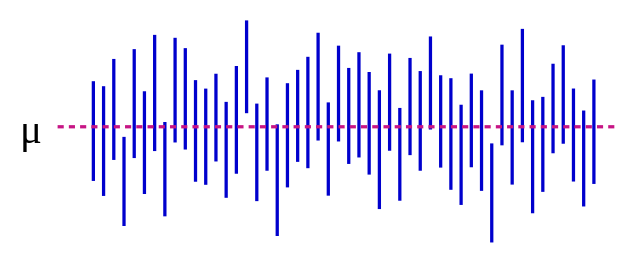
There is no single answer to this question, since every model is different. The quality of the data, the methods used to analyze it, and a host of other factors all play into how accurate the predictions can be. Predictive analytics don’t get it right all the time, but thanks to advances in big data and artificial intelligence, they’re getting it right more of the time.
The thing that makes big data “big” isn’t necessarily how much of it there is, but how effectively large amounts of it can be processed. Much of statistics has historically been based on making guesses about populations based on samples drawn from those populations, which adds a layer of uncertainty.
Big data tools, though, make it possible to use a lot more of the available data to make predictions, which makes them much more likely to be correct. Predictive analytics already does a pretty good job serving people ads and figuring out commute times, and it’s only going to be more effective in the future.
Big (bad?) data
How do you make good decisions? For most of human history, we’ve used our brains to process whatever inputs are available and act accordingly. Our decisions have always been tainted by a lack of accurate information, a limited ability to identify patterns, and any number of biases.
A well-made algorithm with a big dataset, though, doesn’t have that problem, and the ability to offload a lot of our mental labor to machines is a big step forward for humanity. Of course, algorithms can be biased, either intentionally or unintentionally, datasets can be corrupted, and predictions about behavior can be used for social control as easily as they can be used for optimizing retail experiences. Making sure our systems develop to be transparent and generally beneficial will have a real impact on the way technology shapes (and predicts) the future.
Image credits: Visual Representation of Events that Make Up Behavioral Analysis, Predictive Analytics Process