

Have you ever been watching TikTok videos and liked a song, then had to exit and find it on Spotify or Apple Music? You may be able to skip that extra step soon. According to a recently-filed patent, parent company ByteDance is interested in developing a TikTok music service. It seems like a very natural step for the social media app.
Also read: How to Add Two or More Songs to Your TikToks
The TikTok Music Patent
In May 2022, ByteDance applied for a trademark for “TikTok Music” with the US Patent and Trademark Office. It will entail options to “purchase, play, share, download music, songs, albums, lyrics.” In addition, TikTok Music will have options to “live stream audio and video,” “edit and upload photographs as the cover of playlists,” and “comment on music, songs, and albums.”
While this trademark application was submitted in May, the idea has been around much longer. Byte Dance applied for a trademark back in November in Australia, but the company already has a streaming app, “Resso,” in the India, Brazil, and Indonesia markets.

Resso has been doing very well for the past year. A button was added to the TikTok app that allows Resso users to flip over to that service to hear the entire song. There were obvious plans to get users away from the free TikTok app and redirect them to the music subscription service. However, former Resso employees said that the Chinese-owned TikTok app was banned in India because of a political dispute between India and China.
Byte Dance has plans beyond a TikTok music service, too. The trademark listing includes an app that will allow users to “live stream audio and video interactive media programming in the field of entertainment, fashion, sports, and current events.”
Will TikTok Music Be Successful?
It makes sense not to dwell on the trouble in India and move into the lucrative markets of Australia and the U.S. as well as use the name “TikTok Music” to bank on the successful name. However, ByteDance will need to jump through other hoops in the U.S.
ByteDance will need to show that it is using the trademark for the services mentioned on the application or intends to use it to sell a product to abide by trademark law. Because of that, “a company the size of TikTok or ByteDance is only going to file trademark applications for items that they’re seriously considering,” said trademark attorney Josh Gerben of Gerben Law Firm.
“If you look back through any major company’s trademark filings, you’ll see ones that they filed that never came to fruition. But a lot of times they do. And a lot of times it’s something they’re seriously working on.”
Additionally, the FCC is trying to get the App Store and Google Play to drop the TikTok app for security reasons. It doesn’t seem like they would be any more inclined to want the TikTok Music service that will allow users to stick with the app longer.
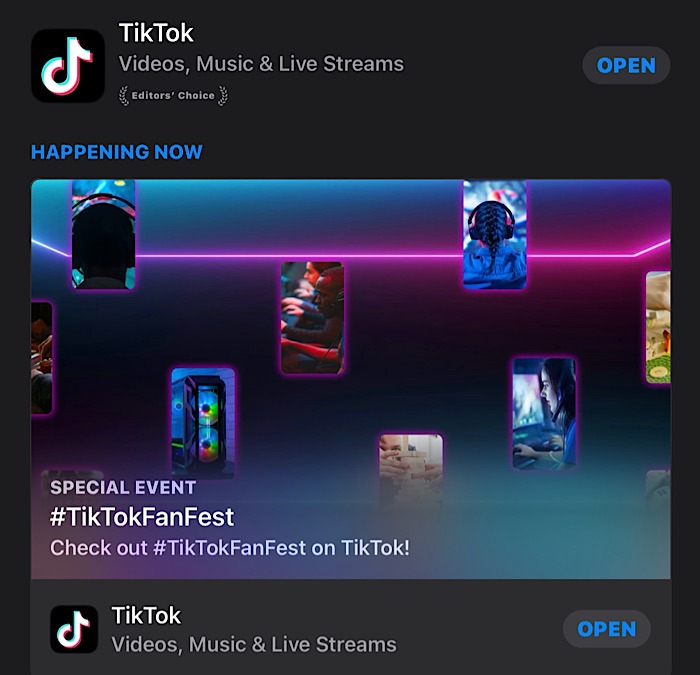
TikTok is going on to prove something I have often mentioned here in news articles – the cross-pollination of tech companies. Soon, they’ll all be offering the same services. They all seem to copy each other’s successes, sometimes fighting over it in court.
What will be interesting is how TikTok Music affects the other music services, such as Apple Music and Spotify. Right now, if you’re on TikTok and want to hear the full song, you move to one of the other apps to hear it. ByteDance’s plans will cause users to stick with TikTok.
Image credit: Unsplash Screenshot by Laura Tucker