


Although many airports and airlines have joined forces in an effort to minimize the incidence of lost luggage, the phenomenon still happens frequently enough that it’s become a sort of an initiation ceremony for every frequent traveler.
The idea of losing one’s luggage affects the way some people plan their trips and even in some cases makes them less likely to travel by plane when cheaper alternatives are available. It’s shocking to see how we’ve been able to master countless technological achievements, yet we haven’t figured out how not to send a suitcase to Tokyo by the time your flight lands in Paris. But there is a way we can use what the 21st century has brought us to our advantage and minimize (and in some cases eliminate) baggage loss in flights.
Why Airlines Lose Your Bag
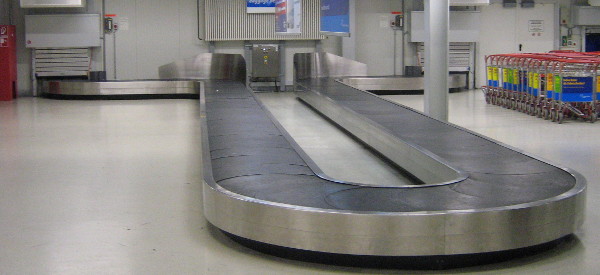
Air travel tends to be in a unique situation. Unlike trains and buses (where most of the time you personally get to load your luggage and care after it), planes are very tall and therefore need mechanical assistance when loading luggage. This means that you have to give your most precious stuff to another person who (in large airports) will send it through a conveyor that automatically sorts it. To make this process easier, each item is given a tag with a unique bar code. And herein lies the problem.
As your bags go through the conveyor system in the airport on their way to their destination, the attached tags are scanned so the mechanism knows where they’re going. If your tag has even the tiniest rip, is printed with very faded ink, or is in a position that obscures it from the automatic scanner, you’re in for a very unpleasant surprise that could ruin your trip. Tag issues seem to be the most common reason for the losses that frustrate passengers the most.
London’s Heathrow airport has attempted to address this by increasing the viewing angle for the automatic scanner in its newest terminals using grilles at the bottom of the conveyor. It still doesn’t do a whole lot to address the wider problem, though.
The Solution to Baggage Loss
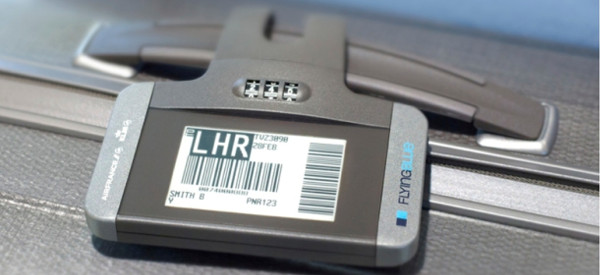
For more than two decades we’ve been using a technology that was pioneered in the 60s to help sort our luggage. That’s not necessarily a bad thing, but when something provably better (and less costly) appears, it’s probably time to start considering our options. Bar code scanners have to “see” the bag tag in order to read it, which leaves it vulnerable to anything that gets in the way of this. This means that luggage without a visible tag will not go on its flight. But what if you didn’t have to see the tag to scan it?
Towards the end of April 2016, Delta Airlines announced that it will be collaborating with airports around the U.S. to implement radio frequency identification (RFID) tag systems which allow scanners to simply “ping” bags for sorting, significantly raising the airline’s ability to prevent losses.
RFID tagging is not only more reliable but also commands a lower price tag than the bar code scanning array, which requires a multitude of devices standing at every angle around conveyors. Perhaps the most hilarious thing about this is that we could have been using RFID technology since it first appeared in 1973. That’s more than four decades ago!
Is RFID tagging reliable enough to be used in this context? Tell us what you think in a comment!