

Bluetooth keyboards have given us a lot of freedom. We don’t have to be sitting right at our keyboard, and we can use a normal keyboard for mobile devices as well. But what if we could have even more freedom?
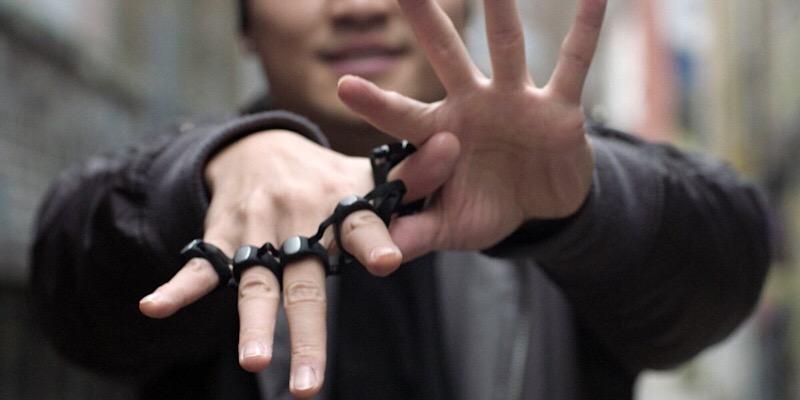
A new wearable Bluetooth keyboard by Tap Systems is available that will eliminate the need to touch physical keys. Tap Strap can be worn on your knuckles, allowing you to tap any surface to emulate keystrokes.
How Does It Work?
The surprising thing with the Tap Strap is that there is no generated image or any other visual clue to show you where to type. It’s all done from memory using simple typing gestures.
Put the Tap Strap onto your hands by sliding your fingers into the holes, kind of like putting on a glove. The smart fabric it’s constructed of has sensors on the inside to pick up your typing gestures. You can either wear one on one hand for one-handed typing or one on each hand for two-handed typing to make it go much more quickly.
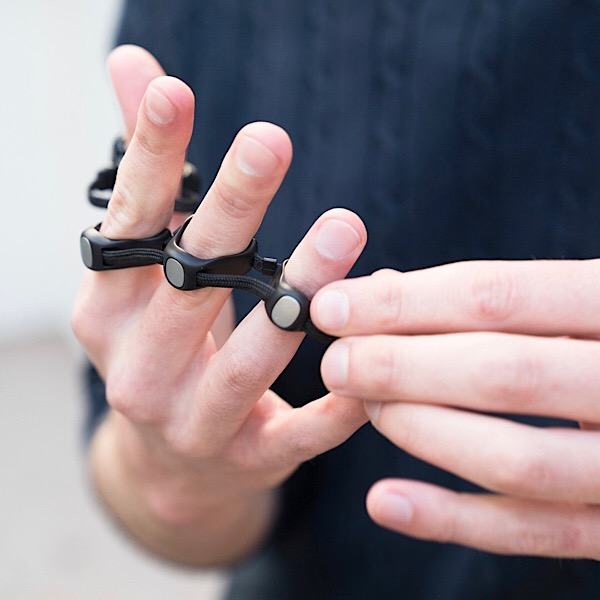
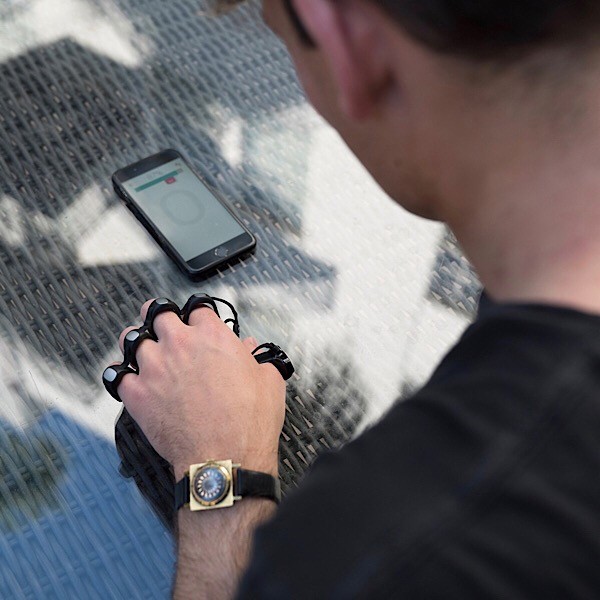
You’ll see the characters appear on the screen as you “type.” You can even do punctuation and special characters using different gestures.
How it works exactly hasn’t been explained, but one report says a single tap from your fingers are vowels, and combinations of your fingers are consonants. It equals out to a possible 31 fingers taps. Tap Systems wants this to be an alternative to voice control and feels this would lead to more privacy.
Because it connects with Bluetooth, is can be used with nearly any mobile device. Those that are typically more difficult or too small to type on, such as VR headsets, smart watches, and streaming devices could benefit from this type of keyboard.
This freedom from a real keyboard will set you back $150.
Being Realistic
The obvious knock against the Tap Strap is that it will cause you to have to relearn a new typing system. If you never really learned to type and have only used a touch screen, this probably won’t be much of a problem for you.
However, if you are from an era before digital devices and learned to type the old-fashioned way on a computer keyboard, or if you’re even older and learned to type as a “touch typist” on either an electric or manual typewriter, it could be really hard for you to learn a new system.
You’re also restricted to doing other things while you have that strap on your fingers. It seems as if it would be more difficult to pick up your phone to check your text, take a sip of coffee, eat a snack, flip the channel on the TV, etc. And if you just wanted to type a little bit here and there, you’d be forced into taking it on and off your hands continuously.
Will It Be Successful?
Looking at the disadvantages of it, the Tap Strap doesn’t might not be replacing other Bluetooth keyboards meant for mobiles. But maybe Tap Systems is onto something. Maybe there’s a more efficient typing system that we have yet to “tap” into.
What do you think of this wearable Bluetooth keyboard? Would you be interested in using something like this? Or do you prefer the old tried-and-true method of typing?
Add your thoughts in the comments below and let us know how you feel about the Tap Strap!
Image Credit: Twitter