In this article we cover rendering engines, settings for rendering, quality levels & more for taking Blender scenes & turning them into still images & video sequences.
In this article we cover the basics of animation – keyframes and motion. We also give a quick-start intro to rendering your finished work as a video which will lead into a forthcoming article covering rendering in depth.
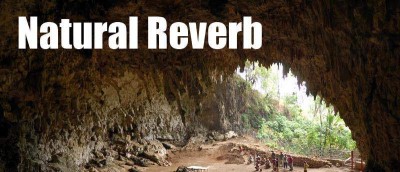
In this article we explain how to steal the sound of a real world space like a cave or tunnel, and use it in your music and sound design. All this is made possible by the magic of convolution reverbs.
Continuing from our previous article on Blender 3D modelling basics, this article discusses advanced modelling techniques using subdivisions and loop cuts.
If you are looking for a new graphics technique using layers, you may want to try this great retro 1960s pop art screen print effect. We’ll show you how to get this cool effect using Pixlr.
In this article we will teach you to light your scenes using virtual lights inside Blender 3D and render your scenes as a still, a cross-platform software.
Tagspaces is a non-cloud note and file organiser for all major platforms. It works offline, is open source, uses plain file formats & uses simple tagging. Here’s a closer look.
There are a lot of effects that come with the DAW software Reaper. In this article we show how to create sounds and provide fun presets to get you started.
Blender is an open-source cross-platform 3D graphics program. This is an introduction to node-based compositing & how to do a green screen composite shot.
Linuxsampler is a cross-platform and open-source sampler project. In this article we show how to sample and configure instruments & create a retro drumbox.
Tabs make everything easier and allow you to open multiple items as once. If you want to add tabs to the Microsoft Office interface, this guide is for you.