
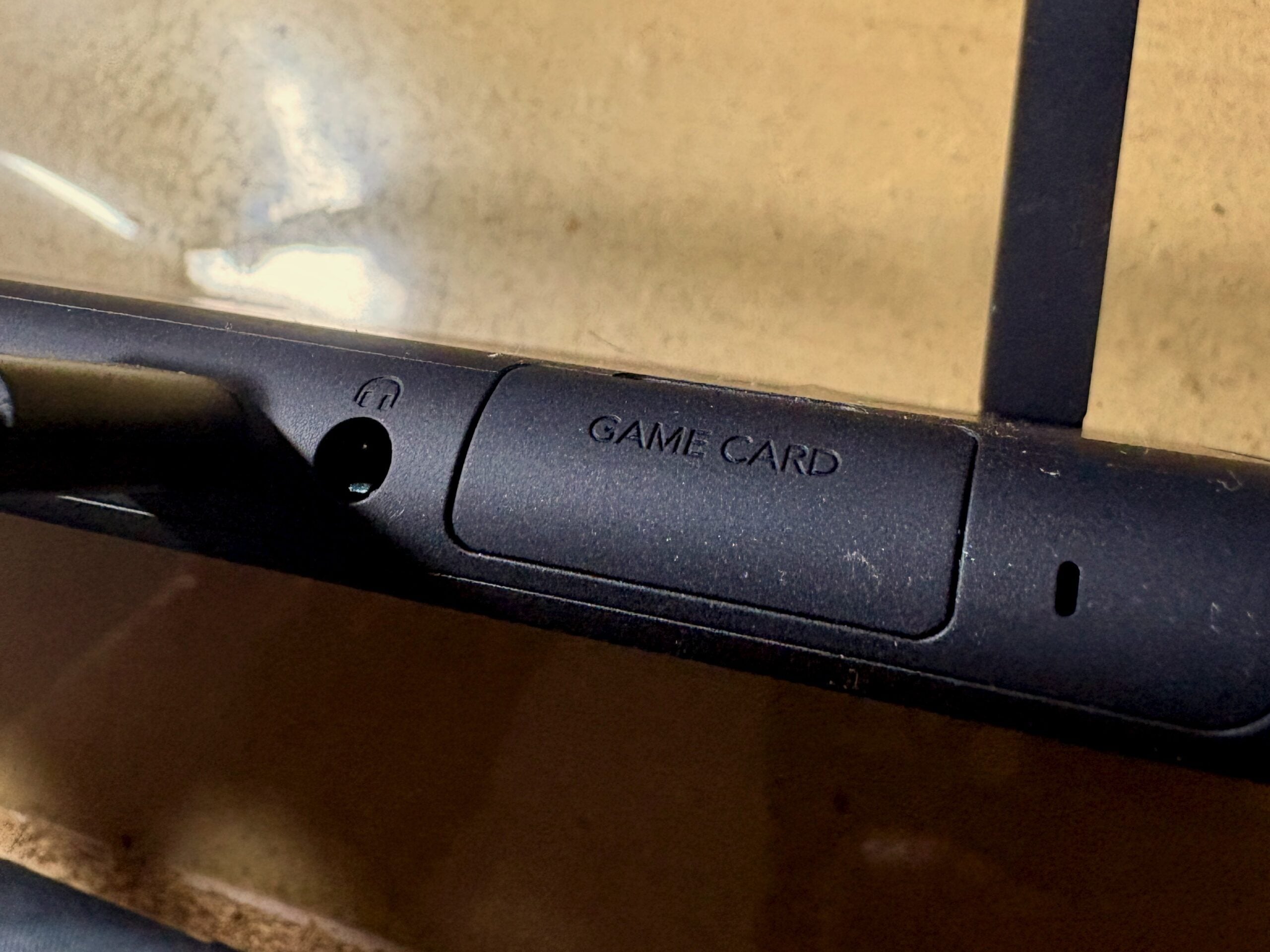


A Nintendo Switch 2 Game-Key Card does not hold the game. It is the key to downloading the game to the console. Analyst David Gibson says Macronix ending ROM chip production could push more publishers toward the format.
That forecast is Gibson’s, not Nintendo’s. Nintendo’s own comments concern component costs, and Ars Technica says the company has no plans to give up cartridges in the near future. The mechanics of the card, meanwhile, are set out plainly on Nintendo’s support site.
What a Game-Key Card holds and how it plays
Switch 2 supports two kinds of physical media. Some games ship on regular game cards that contain the full game data, exactly as cartridges always have. Others ship on Game-Key Cards, which do not hold that data at all.
Nintendo’s Game-Key Card overview says the card is the “key” to downloading the full game to the system over the internet. The word Nintendo uses is key.
The first step is a download. That requires an internet connection and enough free space in system memory or on a microSD Express card. The space needed is printed on the packaging, so buyers can check it before opening the box.
That figure also appears on the Nintendo Store or eShop listing for the digital version of the same game, which gives a second way to confirm the size in advance. A Nintendo Account is not required to download the game data.
After the download finishes, the card behaves much like standard physical software. The player inserts it and starts the game. The internet connection is required only at first launch.
From then on the game starts offline. The one constant is the card itself: it must stay inserted to play, exactly as with a regular game card. Remove it and the game stops. The console also needs system version 20.1.1 or higher.
Why the format exists, and what Nintendo says about costs
Doug Bowser, president of Nintendo of America, described the format in simple terms to The Verge. “In essence, it’s a digital game on a card,” he said.
Bowser said the benefit falls to publishing partners. Some games may need a cartridge that is too large, he said, and the Game-Key Card lets those titles reach store shelves rather than existing only as a digital download. The retail option stays open.
Cartridge size is a manufacturing question, and manufacturing costs came up directly at Nintendo’s results briefing. President Shuntaro Furukawa addressed memory prices in the 6 November 2026 question-and-answer session.
“Packaged software also uses memory in game cards, so rising component prices are affecting them as well,” Furukawa said. “Although the impact is more limited than for hardware, the situation is not necessarily favorable either.”
Furukawa added that software prices are set to reflect the value of each title rather than a uniform figure. The comments concern component and packaged-software costs, not an announcement about shop prices.
The distinction matters because the memory inside a game card is a physical input with a price attached. A Game-Key Card still needs a card, but the data lives on the console’s storage once the download is done.
Macronix stepping back, the suppliers that remain, and Gibson’s forecast
Macronix has made the ROM chips used in physical Switch cartridges. In its third-quarter report, cited by BigGo Finance and Ars Technica, the company said ROM production “has reached its end.”
Macronix also said it is “gradually decoupling from the game industry.” The wording points to a wind-down rather than an immediate stop. ROM is now 5% of the company’s business, down 39% year on year.
Ars Technica says that line of business has been crowded out by NOR, NAND, and eMMC memory.
Macronix is not the only option. Ars Technica names Rohm and Lapis Semiconductor as remaining ROM suppliers. In a post quoted by Tom’s Hardware, Gibson said Macronix is not Nintendo’s only game-memory-card maker.
Gibson, an industry analyst at MST Financial, posted that “There will be no new ROM products, and Q3 is the last quarter it reports ROM sales separately.” He also called Macronix Nintendo’s main memory chip maker for physical cartridges.
His forecast follows from that. As Nintendo Wire reported on 4 November 2026, Gibson suggests Macronix exiting might push more publishers to use Game-Key Cards, which don’t require ROM chips at all.
In the same remarks, Gibson said physical cards will likely carry on for some time, with digital growing at the margin through more Game-Key Cards and digital-only sales. That is his forecast, not a statement of Nintendo policy.
Digital distribution is expanding in other ways too. Nintendo began letting players gift eShop games and DLC to a family group in the US on 16 November.
Switch 2 owners can currently try the Monster Hunter Wilds Prologue Demo, with the full game due 4 December 2026.
Nothing in the Macronix report says cartridges are finished. Ars Technica says Nintendo stated last month that it had no plans to give up on game cartridges in the near future. Regular game cards that hold the full game data remain part of the Switch 2 lineup.
For anyone holding a Game-Key Card, the practical rule stays unchanged. Download once over the internet, then play offline, and keep the card in the system every time.