
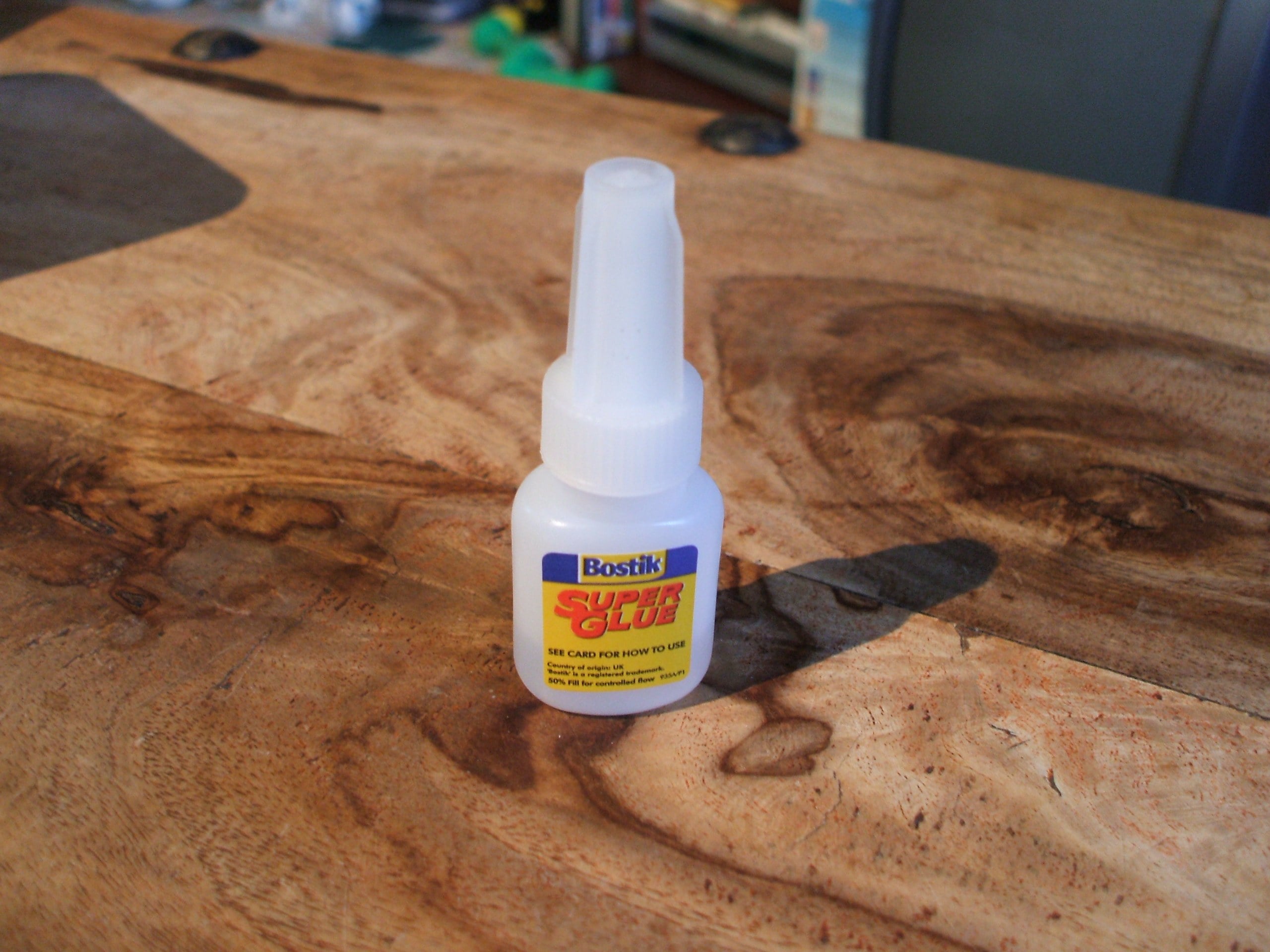


In 1942 Harry Coover and a team at Eastman Kodak were working with cyanoacrylates to make an optically clear plastic for precision gunsights, according to the National Inventors Hall of Fame, which dates the work to the Second World War. The chemicals stuck to everything they touched, and the team rejected them.
Lemelson-MIT and Hobart and William Smith Colleges both put that first work in 1942, and both say the team found the chemicals too sticky.
Too sticky for a gunsight
Moisture causes cyanoacrylates to polymerise, and almost every object carries a thin layer of moisture on its surface. In the Kodak tests that meant bonding happened in virtually every case. The researchers found the chemicals too sticky to handle, dropped them as a gunsight material and went back to their other work.
The chemicals came back to Coover in 1951.
By then he had moved to Kodak’s chemical plant in Kingsport, Tennessee, where he was overseeing a group of chemists researching heat-resistant polymers for jet aeroplane canopies. The group tested cyanoacrylate monomers and found them too sticky for canopies as well. This time Coover saw that the adhesives needed no heat and no pressure to bond.
He and the chemists tried the substance on items around the lab. Each time, the items bonded permanently.
Eastman 910
Coover received US patent 2,768,109 for alcohol-catalysed cyanoacrylate adhesive compositions and set about refining the product for sale. Kodak packaged the adhesive as Eastman 910 and began marketing it in 1958. It later became known as Super Glue, and Hobart and William Smith Colleges also lists Krazy Glue among its common names.
On the television show “I’ve Got a Secret”, Coover lifted host Garry Moore off the ground with a single drop. He also appeared in a television commercial for the product.
During the Vietnam War, field surgeons sprayed cyanoacrylate on potentially fatal wounds to stop the bleeding, according to the National Inventors Hall of Fame, so that the wounds could be treated later in the conventional way. Lemelson-MIT says the practice led to the US Food and Drug Administration approving cyanoacrylates for certain medical uses.
Hobart and William Smith Colleges says Coover was the first to recognise and patent cyanoacrylates as a tissue adhesive and a means of stopping bleeding. Cyanoacrylate adhesives are used in sutureless surgery to rejoin veins and arteries, to seal punctures or lesions and to seal bleeding ulcers.
Coover worked for Eastman Kodak for 40 years.
He retired from the company as vice president for research and development in its chemicals division, then ran a consulting firm for a time.
In 1985 he was named president of new business development at Loctite Corporation in Newington, Connecticut. He later sat on the board of Reilly Industries in Indianapolis for nine years while continuing to run his consulting business.
He retired from that work in 2004, the same year the National Inventors Hall of Fame inducted him. He died on 26 March 2011.
Sources:
- National Inventors Hall of Fame: https://www.invent.org/inductees/harry-w-coover
- Lemelson-MIT: https://lemelson.mit.edu/resources/harry-coover
- Hobart and William Smith Colleges: https://www.hws.edu/alum/loc/837.aspx