

Do you enjoy listening to music in the car? If so, you may have already taken advantage of Spotify to deliver those sweet tunes during your long journeys. If you have, you may be interested to hear that Spotify silently slipped in an update for their app that adds a new “car view” mode. This is aimed at keeping Spotify as distraction-free as possible, so you can keep your eyes on the road instead of your playlist.
What Does It Do?
Simply put, Car View reduces the UI of Spotify to contain larger buttons. This makes it easier to tap through your music collection when you’re on the move. All the icons and album names are larger, too, making it easier to see what’s playing while in the driver’s seat. While you can’t swipe to change songs just yet, it may be a feature that’s added in a future update.
What makes this new Car View feature appealing is how it can automatically engage the moment you climb into your car. It does this by looking for your car’s Bluetooth signal. When it detects that you’re near your car, Spotify will automatically load “Car View” when you open it. All you need to worry about is putting the phone in its cradle and hitting the Play button, and Spotify will take care of everything for you.
Unfortunately, at the time of writing there is no manual way to enable Car Mode. This means you can’t benefit from this new feature if you’re driving an older model of car. Hopefully, Spotify will see a manual way of enabling this feature later on down the line, after the app has had time to gather feedback from users.
Also read: 14 Useful Spotify Tips & Tricks to Get the Most Out of Your Spotify Account
How to Enable or Disable Car Mode
By default, if your Spotify app is up to date, it should engage Car Mode the moment you step into your car. You have to ensure your Bluetooth is enabled so your phone can see your car when you approach it. Then, it’s just a case of putting the phone in its holder and going on your way.
If it’s not engaging automatically, you can go into the settings to see if the update has rolled out for you yet. You can also visit the settings if you really don’t like Spotify’s Car Mode and want it to keep its normal layout as you drive.
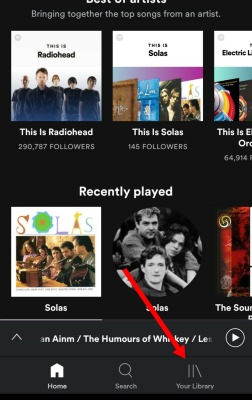
To enable or disable Car Mode (or just see if you have it!), first boot Spotify, then tap “Your Library” at the bottom-right.
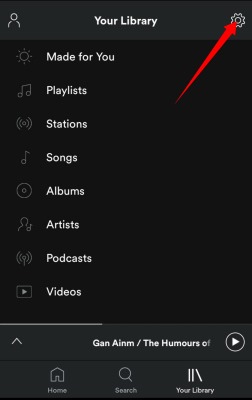
Tap the cog at the top-right.
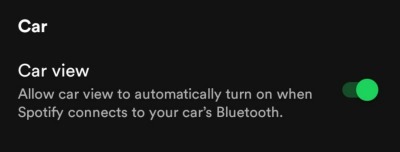
Scroll down to the “Car” category. Underneath should be “Car View” – toggle this on or off as you see fit. If you don’t see the Car category or Car View, your app hasn’t been updated to support it just yet.
Also read: 6 Web Apps to Supercharge Your Spotify Experience
Vroom with a View
Spotify’s new Car View is a great way to make playing your playlists easier as you drive. Now you know how it works, what it does, and how to enable or disable it to your liking.
Do you listen to Spotify while on the move? Do you think you’ll enjoy this new feature? Let us know below.