
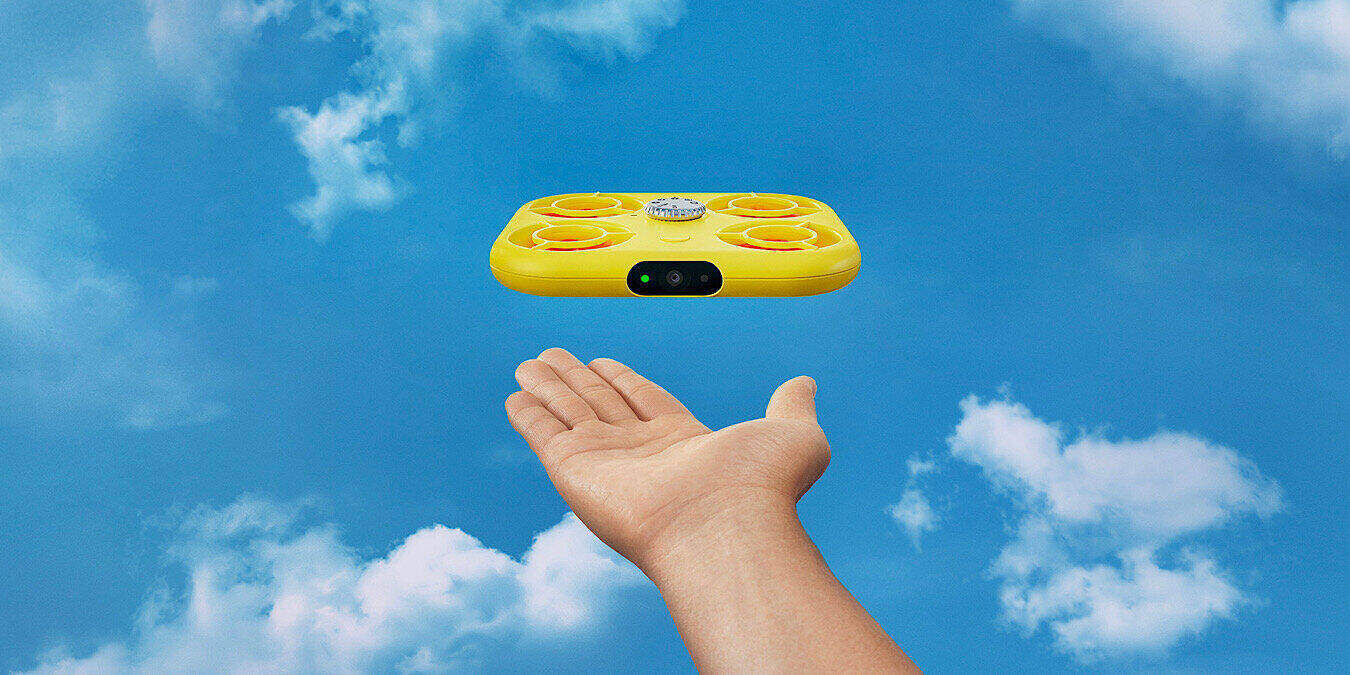

In Snap’s press release, it says Snapchat was created “as a new way to use the Camera for self-expression and communication.” The company fully realizes that mission statement with its newest product. The Snap Pixy can best be described as a selfie drone, as it will take flight, snap a picture of you, then return to the palm of your hand.
Also read: How to Create and Use Custom Stickers in Snapchat
Introducing the Pixy
Snap describes the Pixy as “your friendly flying camera,” adding that it’s a pocket-sized, free-flying sidekick that’s a fit for adventures big and small.”
This yellow disc-shaped device can fit in your pocket and be brought out whenever you feel the need to take a selfie. Tap a button on the top and choose one of the four preset flight paths. It can float above or in front of, orbit around, or follow you. It does all this without a controller or any type of setup via computer vision and object recognition.

To no one’s surprise, the Pixy is the perfect companion to Snapchat. Photos and videos that it takes will be transferred wirelessly to your Memories in Snapchat, where they can be edited and customized with AR. This allows them to be easily shared to Chat, Stories, and Spotlight. Media. They can also be shared to other platforms.
The Pixy can accomplish five to eight short flights on a full charge before it needs to be recharged. Extra batteries can be purchased to get more from the camera drone.
Snap co-founder and technology chief Bobby Murphy said, “We’re looking forward to evolving Pixy and really uncovering all the different ways that a computer-vision driven flying camera can add value.”

The Pixy is yet another device for Snap. It’s the same company behind the Spectacle camera glasses. You can buy the Pixy now (while supplies last) in the U.S. and France for $230.
Other Snap News
Being that Snap has many more active daily users than Twitter, perhaps the Pixy should have been the leading tech story this week instead of Elon Musk.
The Pixy wasn’t even Snap’s only news this week. It also introduced “Director Mode.” With a note that Snapchat videos “pop,” thanks to Lenses and other creative tools, the company introduced the Director Mode camera and editing tools. These allow the user to work with their phone’s front- and rear-facing cameras at the same time.

Two years ago, Snap launched Minis. This week it introduced the Minis Private Components System, which will allow developers to build Minis with HTML5. It will allow the Minis to incorporate reviews, ratings, etc. They are working with HBO Max, Givingli, and Ding to start.
Snap is also working with Live Nation. The social platform’s Arcadia creative studio will work with the concert promoter on a “custom-built, immersive AR.” Fans will be able to use the Snapchat Camera to create unique memories at concerts.
A new version of Lens Studio was released to add “frequently-updating information like daily horoscopes and live sports scores.” Also added are Event Insights for Lenses and Ray Tracing, which will make the shopping experience more “lifelike.” Snap is also upping its AR shopping game with new tools, such as AR shopping templates for developers.
If all of this seems right up your alley, read on to learn about more unexpected, fun things you can do with Snapchat.
Featured Image Credit: Snap