
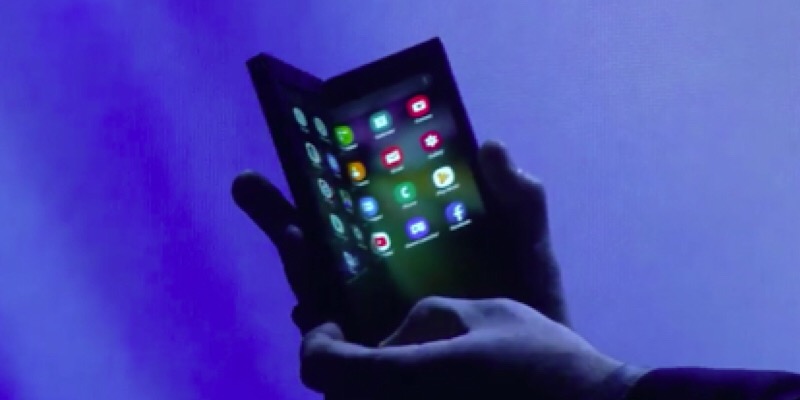

Finally, Samsung gave a preview of their foldable phone. We’ve been hearing about it for some time, but up until now it was just rumors. Now the Samsung Foldable Phone is no longer just a rumor, and we know many of the exciting details, including that it will open into a tablet. Want to know more? Read on.
Samsung Developer Conference
Samsung made this announcement at its annual developers conference taking place in San Francisco, California, this week. Since 2016, the event has been held at the Moscone Center West, the previous location for Apple’s developer conferences.
They show off their new wares not so much to get the public excited about them, but to get developers excited enough to create software for the new devices. This isn’t the first time they’ve shown a foldable phone, though, having previously shown one in 2013 at the Consumer Electronics Show that had a flexible OLED display.
With it being a slower time for all smartphone sales, they really need a home run. Even D.J. Koh, Samsung’s mobile business CEO, said last month, “When we deliver a foldable phone, it has to be really meaningful to our customers.” He stressed it wouldn’t be just a “gimmick product.”
Samsung Foldable Phone Details
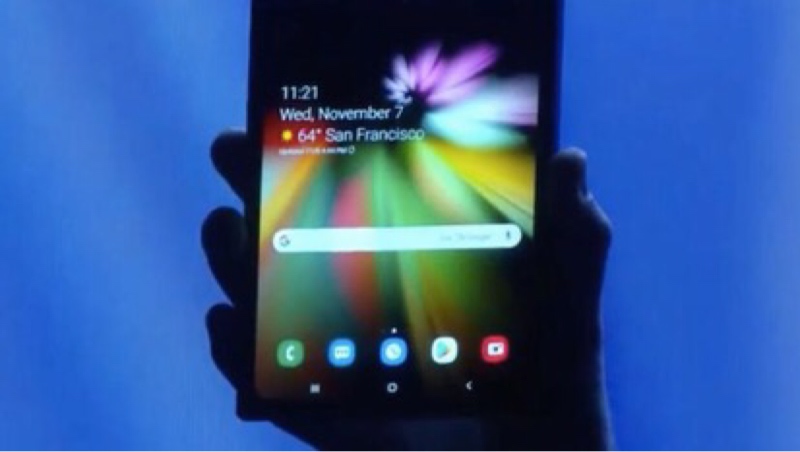
On Wednesday Samsung was able to deliver more details about the phone it has such high hopes for. It will be a phone when closed and a tablet when fully opened. The new display technology used is called Infinity Flex Display.
“The Infinity Flex Display represents an entirely new mobile platform,” said Justin Denison, Samsung senior vice president of mobile marketing. “We’ve been living in a world where the size of your screen can only be as large as the device itself. We’ve added a new dimension to help you browse, watch, and multitask like never before.”
The phone will be able to run up to three apps at the same time with something Samsung is referring to as Multi Active Window.
Jisun Park, engineering director and head of the system software group for the company’s mobile business, explained the goal is for it to have the same battery life as current Galaxy smartphones, even though there’s more screen real estate that will put a larger drain on the battery.
When the foldable phone is closed and looks like a regular smartphone, you’ll see the 4.58″ Cover Display that has a 21:9 aspect ratio. The resolution is 840 x 1960, with a 420 dpi.
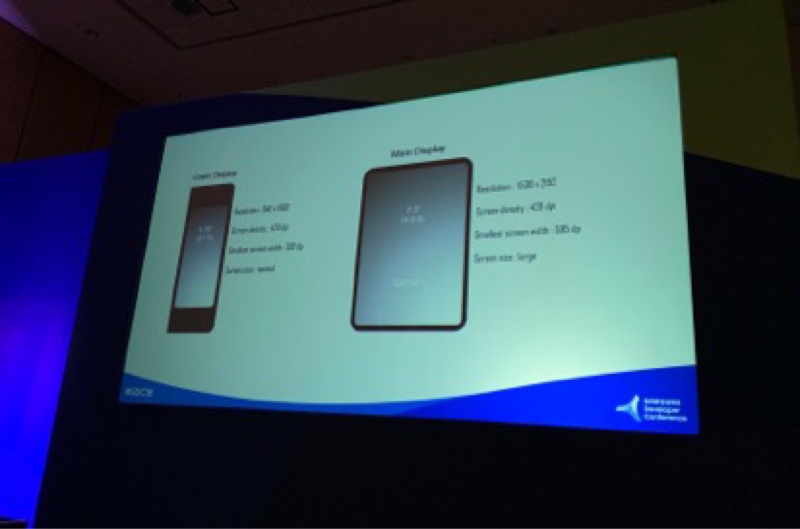
“Compared to the Main Display, the experience is more … optimized for focused and handy and quick access and interaction, to leverage the small screen,” explained Park, who added that when the phone is unfolded, the Cover Display will go black and turn off.
The larger screen that is seen on the unfolded phone, the Main Display, is 7.3″ and has a 4.2:3 aspect ratio. This display has a 1536 x 2152 resolution and also has a 420 dpi.
“Unfolding the phone provides more information with visual cues,” continued Park, who also really wants to get developers interested to take advantage of the multiple screens and build the ecosystem.
One developer that is already involved is Flipboard, who is working on an app for the new Samsung foldable phone. When the phone is closed, you’ll see a single pane of information, and when it’s unfolded, you’ll see a larger panel with multi-window support, yet it will open to the same point that you left off on the article.
Furthermore
No data has been released yet for when this Samsung phone will ship. What was displayed on Wednesday isn’t even the final product.
“The success or failure of Samsung’s first folding phone will depend on how well Samsung has been able to button up the device,” said CCS Insights analyst Ben Wood.
“If it’s a slick attractively-designed device, it will be a magnet for gadget lovers. If it is bulky and hard to use, it will be a tougher sell.”
Are you excited to see the new Samsung foldable phone? Are you waiting for the release? Do you think you’ll buy it? Let us know your thoughts on this long-awaited phone in the comments.
Image Credit: CNET