
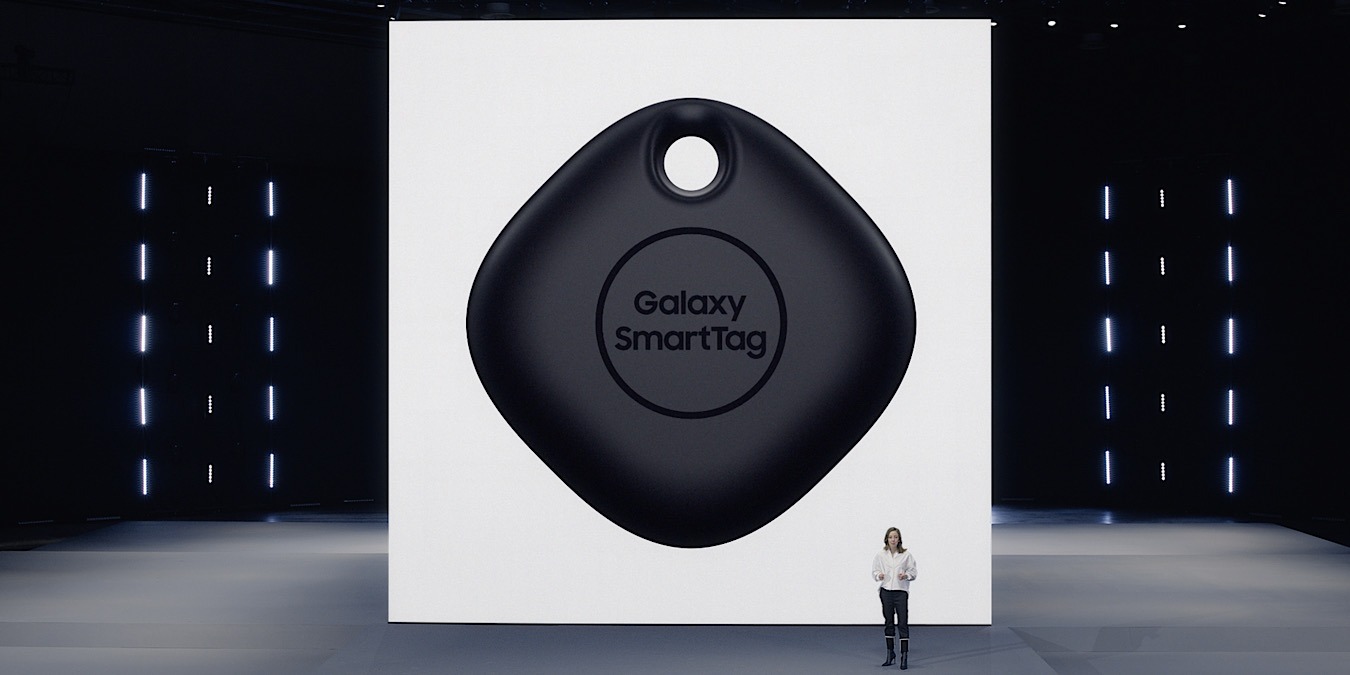
Samsung Announces Tile-Like Device: Galaxy SmartTags

Samsung Galaxy Smarttags Featured

Once again, Apple has been beaten to the punch. The question is whether it will catch up. While the company’s AirTags product has been much anticipated, the tech world is still waiting for the small locating device. In this time, Samsung has snuck in with Galaxy SmartTags, its own device that looks much like the popular Tile.

Samsung Galaxy SmartTags

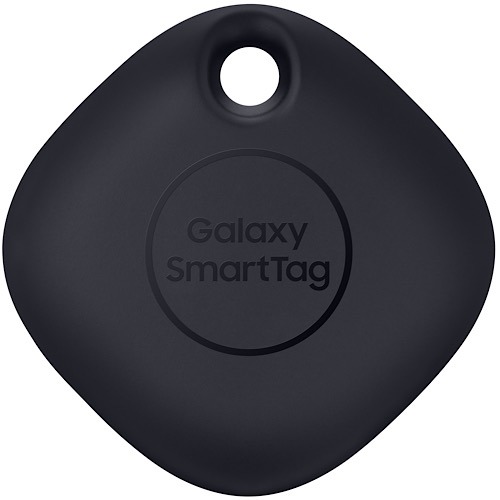
Samsung Galaxy SmartTags were released along with a collection of other devices from the company. Resembling a Tile, they are square in shape but with much more rounded edges. They are 1.54 inches x 1.54 inches x 0.39 inches and have a hole so that you can place it on a keychain and contain a replaceable CR2032 battery.
Samsung Galaxy Smarttags Tag

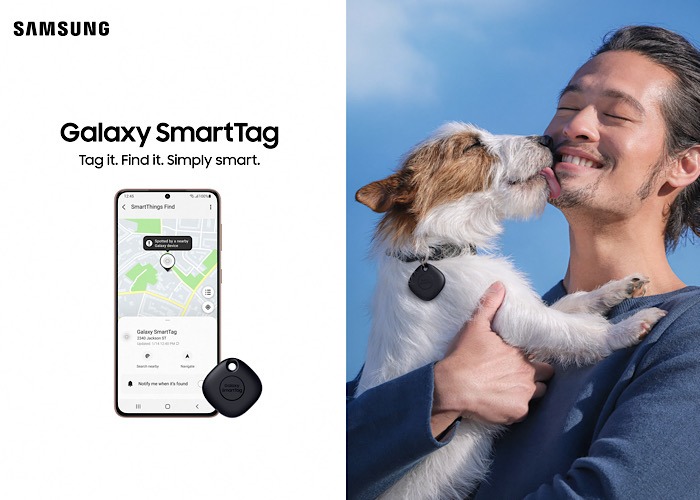
The SmartTags are enabled via Bluetooth, connecting to a Galaxy device which will show the position of the tag on an app. This allows a user to find whatever it’s connected to or placed inside, such as keys, a backpack, a laptop bag, or even a dog collar. The version that is seeing a release relies solely on Bluetooth and not UWB (ultra-wideband), although a UWB version is planned for later this year.

The “SmartThings Find” app will show the location of the tags if in Bluetooth range. If not, it will show the last known location on a map. A button in the middle of the device can be pushed to emit a sound to help locate it if it’s nearby.

It uses the “Galaxy Find Network” to locate the SmartTags, a network comprised of Galaxy devices. This is the same way most small locator devices work. The more people that own them, the better, as it expands the network and leads to more exact positioning. It also provides a history of where the SmartTag has been.
Samsung Galaxy Smarttags Dog

But Samsung Galaxy SmartTags have a key difference from Tile and like devices. SmartTags can interact with smart home devices. Pushing a button on the tag allows for smart home automation. This allows you to turn on devices when you return home or turn them off when leaving.

Availability

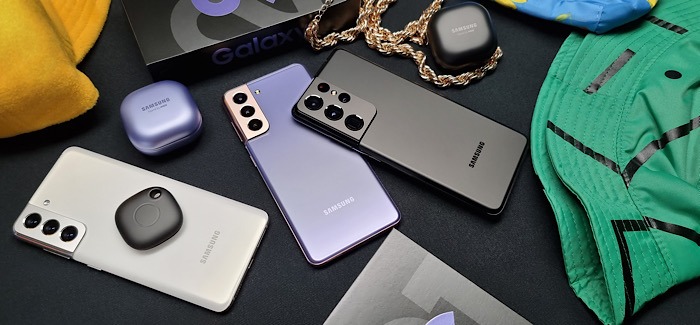
Samsung Galaxy SmartTags will not work with all Android phones; they are not Android devices. They will only work with Samsung Galaxy devices. Being sold for $30 each or in a pair makes them competitively priced to the Tile and similar devices. They are open for pre-orders now and will start shipping by January 27.
Samsung Galaxy Smarttags Devices

It’s unknown when we’ll see Apple’s AirTags. The company still hasn’t officially announced them as an upcoming product. But with Samsung’s limited customer base of only Galaxy users, maybe the two aren’t really direct competitors.

Read on to learn about Samsung’s plans to work with the auto industry.

Image Credit: Samsung Media Resources

Subscribe to our newsletter!

Our latest tutorials delivered straight to your inbox

Laura Tucker Avatar

Read next

When the SS Great Eastern laid the first working transatlantic telegraph cable in 1866, a message that had taken ten days by steamship suddenly crossed the ocean in minutes, and the financial markets of London and New York were forced, within a single trading week, to invent the modern concept of synchronised global price.
The Big Ear telescope was scanning at 1420.4056 megahertz on the night of 15 August 1977, the exact frequency at which hydrogen atoms vibrate across the universe, because Giuseppe Cocconi and Philip Morrison had argued years earlier that any species trying to be found would broadcast on that channel — and then, for 72 seconds, something did.
In 2016, archaeologists dated two rings of snapped stalagmites in France’s Bruniquel Cave to 176,500 years ago, evidence that Neanderthals had walked 336 metres into darkness with fire and built architecture deep underground long before modern humans reached Europe
Otto von Bismarck was 74 when Germany adopted the world’s first national old-age social insurance program in 1889, setting the pension age at 70 after years of fighting socialists with bans, laws, and a promise few workers would live long enough to use
When cosmonaut Valeri Polyakov stepped out of his Soyuz capsule in March 1995 after 437 consecutive days aboard Mir, doctors recorded him at several centimetres above his pre-flight height, and his spine had become so unaccustomed to gravity that the recovery team carried him to a chair rather than risk the compression of letting him walk.
When Bell Labs engineer Karl Jansky pointed a rotating antenna at the sky in 1932 looking for sources of transatlantic radio static, he kept picking up a faint hiss that peaked every 23 hours and 56 minutes, and he eventually realized he had become the first human to hear the center of the Milky Way.
When Harvard astronomer Cecilia Payne submitted her 1925 doctoral thesis arguing that the Sun was made almost entirely of hydrogen, the field’s senior figure Henry Norris Russell talked her into adding a line calling the result ‘almost certainly not real,’ and then published the same conclusion himself four years later to widespread acclaim.
When seismic waves from the Chicxulub impact reached what is now North Dakota roughly ten minutes after the asteroid struck, they appear to have triggered a ten-metre standing wave in an inland river that flung fish onto the bank and buried them under glass beads still falling from the sky.