


Cryptocurrency trading can be very profitable and rewarding, but you can also lose a lot of money if you are taking injustified risks. Of course, even if you don’t, the market is unpredictable, and you can always end up in the red. If you want to minimize the risks for this, these six strategies show how to stay safe when trading crypto.
1. Don’t Invest More than You Can Afford to Lose
I believe you’ve heard about this rule before, but it won’t hurt to repeat it – don’t invest more than you can afford to lose. Crypto markets are volatile, and huge fluctuations in the price of a currency happen all the time. Though it’s highly unlikely your coin(s) will end at 0, it’s totally possible their value will drop two, three, or more times in a day or two. Of course, it can go up in a week or so, but don’t bet your life on this. In order to sleep well, don’t invest more than pocket money – at least not in the beginning when you are new to crypto trading.
Also read: Mining vs. Trading Cryptocurrency – Which One Is Best for You?
2. Diversify Your Portfolio
If you are trading only a coin or two, you can lose a lot if/when these coins drop. If these coin(s) are winners, you can also gain a lot, but don’t count on it. To stay on the safe side, always trade multiple currencies, not just one or two. There isn’t an optimal number of coins to trade ,but at least five or ten is a good bet. This way even if a coin or two goes down, your total will still be up if the other coins are performing decently.
3. Don’t Stick to One Exchange Only
In order to spread the risk, in addition to trading multiple coins, you should also plan on multiple exchanges. Again, there isn’t an optimal number, but if you divide your assets among at least three to five exchanges with perhaps three to five coins on each exchange, this is good diversification. Additionally, this way you minimize the risk in the not so unlikely case an exchange gets hacked or disappears (together with your money) because if this does happen, not all your money is lost.
4. Avoid Risky Trades, Even If They Look Lucrative
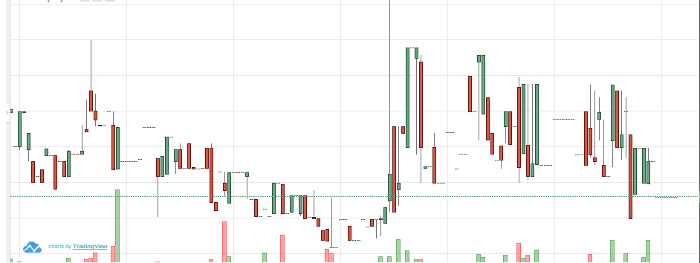
Greed is a major motivator, and when you see a coin with good variations over the past day, week, or month, you instinctively want to bet on it. However, this is the least rational and most risky behavior. If there are huge variations, or drastic spikes in the price of a coin, this could be because of a pump and dump attack on this coin or simply a coincidence. As a result, it’s very likely to see the price of this coin plummet in the coming hours or days, together with your money. Always put your money on coins with a more even trend – your profits might be not as high as when you trade risky coins, but your losses won’t be either.
Also read: 6 Tips for Safe Cryptocurrency Investment
5. Dump Losers Fast to Minimize Losses
Even the best and most experienced traders can’t always predict the market, and they end with coins they’d rather not have. In this case one strategy is just to hold – i.e. don’t sell the coins right now but wait for the price to go up again. In many cases you don’t have to wait long – a few days or a week until the trend is reversed, and the price is right (again).
However, in many other cases the plunge is for long. This means not only that you lost money on this trade but that the rest of your money is locked, and you can’t use it elsewhere. In such situations the best you can do is sell at a loss so that you free up your money. Unfortunately, there isn’t a recipe for when to hold and when to sell at a loss – you need to trust your gut feeling, but when your are a beginner, your gut feeling isn’t always wise.
6. Don’t Lose Your Sanity Over Crypto Trade
Finally, don’t let crypto trade take over your life! Don’t lose your sleep (and sanity) over it, don’t spend fourteen hours a day in front of the computer, and get a life! Even if you make a lot of money as a crypto trader, it’s hardly worth your health and social life – just know where to draw the line.
I could go into more advanced tips on how to stay safe when trading crypto, but since this is an article for beginners I’ll stop here. I’ve covered the basics and beyond, and I believe these tips will be of use to anybody who is just starting as a crypto trader or who is considering this option.