
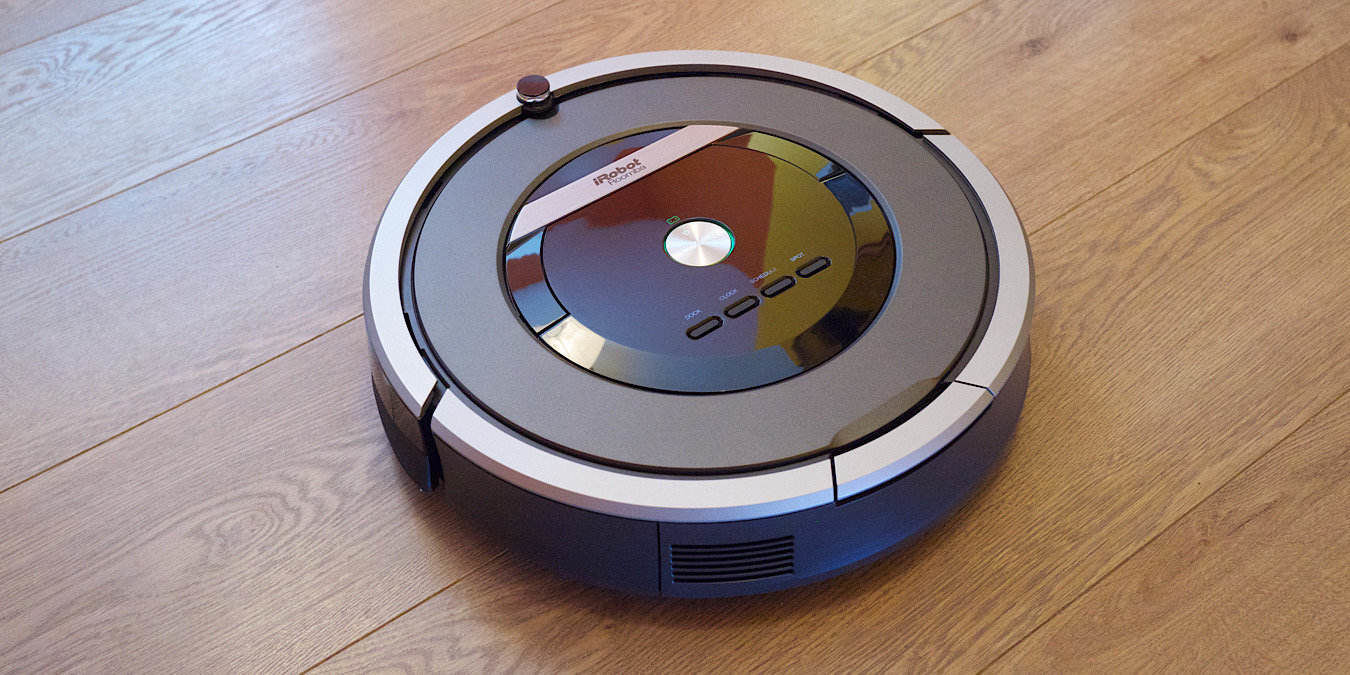

How do you make your robot vacuum stand out amongst all the others on the market? You make this smart home product even smarter. That’s what iRobot is doing with its Roomba line and iRobot Genius, making it smarter so that it will be your true partner instead of just a cleaning tool.
iRobot Announcement
The iRobot Roomba is still the most popular brand of robot vacuums, with 87 percent of market share in the United States. But now the other brands also provide voice assistant and smartphone control and stair detection.
This led iRobot to make a change in its approach. It’s now focusing more on its software than its hardware with new features it’s calling “iRobot Genius” that are available for free to all users.
iRobot’s founder and CEO, Collin Angle, said the goal is to make the Roomba vacuums and Braava mops smarter over a period of time. “A robot isn’t a tool like a hammer. It’s a partner,” he said. “And so by being a better partner, we believe we can have a long-term trusted relationship with the customers, which makes what we do feel more like a service.”
“We have a long list of new features … but all around this common theme of giving you more control of when, where, and how the robot works,” Angle added.
iRobot Genius 1.0 is the new launch, and it will receive software updates in six and 12 months.
Roomba’s New Features
The new Roomba iRobot Genius features include the following:
- The app will identify messier areas on higher-end Roombas with room mapping, and users can name them to request just those areas be cleaned.
- Those areas can be added to routines to be cleaned at a regular time, like under the table after dinner.
- The app will suggest cleaning schedules and specific rooms based on past behavior.
- IFTTT integration allows smart home triggers to be set up, such as when a smart thermostat detects no motion.
- If a room-mapping robot gets stuck on an obstacle, the app will suggest that area be avoided in the future.
- Environmental factors, such as allergy and pet-shedding seasons, can lead the app to suggest additional cleaning.
These features will come out of the new “partnership” with the user. Instead of being fully autonomous, the iRobot Roomba will do more of what the user wants it to do but without the user doing the work.
“By giving more precise control to the user, the robot can actually be a better partner and clean kind of how you do,” explained Angle.
He further adds that about a third of the time users turn Roombas off, as they get frustrated with the interruptions. He finds this “a failure of robot intelligence.” With iRobot Genius, the vacuums can hopefully be kept on more often.
There is a potential for subscription services that aren’t tied to cleaning and hardware sales, but Angle promises that the core cleaning features for the iRobot Roomba will continue to stay free.
“This is just the beginning,” Angle vows. “This is 1.0. Buying a Roomba now is a little like buying a Tesla in that it gets smarter, and it’s a new robot every few months.”
If you’re interested in learning more about home automation, read our guide on how it works.
Image Credit: Roomba 690, Roomba Discovery, and Roomba 870 via Wikimedia Commons