

Gone are the days of laboring with a mouse, trying to expertly and carefully erase the background of an image. While you used to be able to find a few mobile apps that would do it for you, now they’re populating all over, and old favorite apps are adding the feature. Pinterest Shuffles will allow you to make collages and remove the background from an image.
Also read: How to Remove Unwanted Objects From Photos
Pinterest Shuffles
After spending a couple of decades in the graphic design industry, I’ve done the tedious job of removing backgrounds by mouse. Moving on to an iPad, I then started doing it with the Apple Pencil. I was never happy with the result, but thankfully, a few apps were released that will sometimes do it, though it’s difficult for the AI to work around a white or other light-colored object.
Pinterest is well known as a social media app that lets you save and share whatever you’re interested in. It’s also become somewhat of the new Betty Crocker of the Internet. Looking for a new recipe that you’ve heard about? That’s the place to go. Wondering what to do with ground beef, pickles, and cheese? Cheeseburgers would be my first thought, but when I checked Pinterest, I found recipes for quesadillas, casseroles, and even egg rolls.
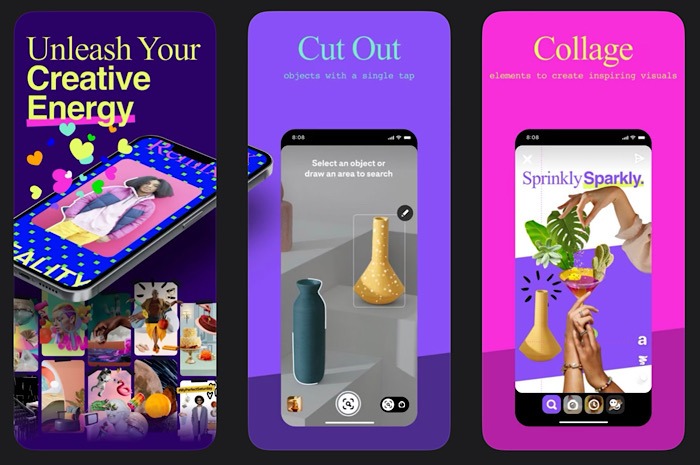
It seems Pinterest is branching out with sharing into more of the creative aspect. The Pinterest Shuffles app says it’s “designed for collective collaging.” We’ve all created collages of our friend’s birthday, beach vacation, a holiday, etc., but now this is taking the idea a bit further, as it allows you to break the objects away from the background, then add them in with other elements you want to add to the collage.
The description describes a process of taking pictures of the objects you want in the collage and possibly adding to it from the Pinterest Shuffles photo library. You then cut the objects from the backgrounds with just one tap.
You can also arrange them how you wish by layering, rotating, and resizing. Add animations and other effects if you wish, then post your Shuffles for others to enjoy, and they can in turn, change them up to make their own creation.
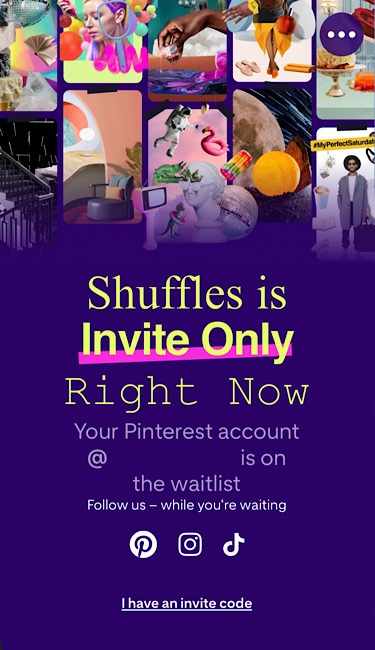
Sadly, though, the app isn’t available for everyone yet. When I downloaded it, it automatically signed me into my Pinterest account and told me it was by invitation only, allowing me to request an invite.
iOS 16 and iPadOS 16 Photos App
It’s great that Pinterest includes a way to create collages and drop a background out, even if you do have to download a separate app for it. Yet, this allows you to stick with Pinterest instead of downloading another app.
This is probably what Apple was thinking with the new feature in its Photos app for iPhones and iPads. You can drop a background out there, too. iOS 16 and iPadOS 16 won’t be available to the general public until probably the second half of September, yet developer and public betas are available for them.
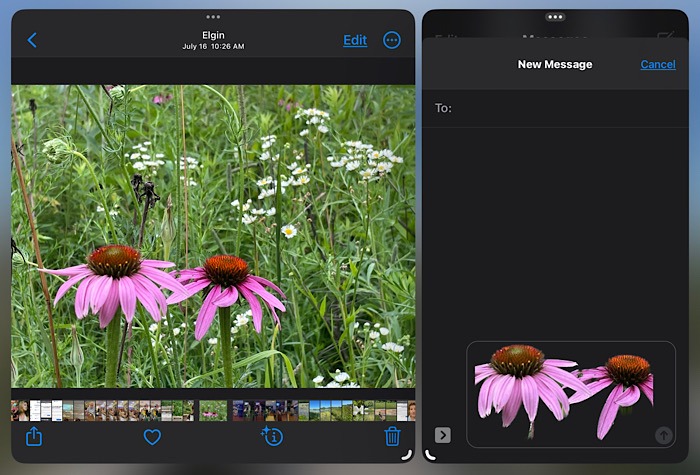
In the Photos app for the new iPadOS and iOS, you just need to put your finger on the object you want to extract from your image, wiggle it around a little until you can tell you’ve grabbed just the object, then drag it over to your project on Pages, Messages, Mail, etc.
Once again, it makes it so that you don’t have to use a third-party app to accomplish this. There was no mouse or Apple Pencil to drop out all the leaves in the picture above. It was just my finger selecting the flowers and dragging them over to a message. It’s as simple as that.
Pinterest Shuffles, iOS 16, and iPadOS 16 certainly aren’t doing anything revolutionary, but they are making our lives a bit easier. That seems to be what ByteDance has in mind, too, now that it’s filed for a trademark on TikTok Music. It prevents you from leaving the app while making things a bit easier.
Image credit: Shuffles App Screenshots by Laura Tucker