


The blame is being put on the governments who hastily put this plan in action that led to remote learning apps harvesting children’s data during the pandemic. Everyone can agree it was a difficult time, and it appears that many third-party companies were profiting from the students’ data.
Also read: How Kids Are Getting Around Parental Controls
The Hasty Remote Learning Plans
If you go back two years to the beginning of the pandemic, everyone was stressed, and no one knew what to do. Schools were empty, but children couldn’t be kept out of school indefinitely. Governments quickly set up plans to teach students remotely. Children would learn on their home computers, and teachers would educate in the same manner.

But as these plans were hastily put together, care wasn’t taken to ensure that the remote learning apps and services were safe. Some of them weren’t even meant for children. It was most likely just careless and not something sinister in the plan.
The non-profit Human Rights Watch, through research over a period of six months in 2021, learned that many of the apps and services being used for remote learning were either harvesting the children’s data or secretly monitoring them.
Harvesting the Data
Across the 49 countries in the Human Rights Watch study, 146 of the 164 remote learning apps and services (called EdTech products in the report) were able to monitor students or their parents remotely, and some actually took advantage of that option.
The most egregious discovery by Human Rights Watch was that those 146 remote learning apps or services either sent or gave access to the children’s data to 196 third-party companies, with many of them being advertisers. The researchers went on to say, “Put another way, the number of AdTech companies receiving children’s data was discovered to be far greater than the EdTech companies sending this data to them.”

They further noted, “In the process of endorsing and ensuring their wide adoption during COVID-19 school closures, governments offloaded the true costs of providing online education onto children, who were unknowingly forced to pay for their learning with their rights to privacy access to information and potentially freedom of thought.”
Much of the EdTech that governments were trusting to handle the children’s education included Zoom, Microsoft Teams, and Cisco Webex. These were created for business – not education. But some of the apps that were meant to be used by children used trackers that sent data to other companies, such as Meta and Google.
The tracking technologies didn’t just track the children while they were studying – they tracked them when they were engaged in other activities on the Internet and not during class hours. Some of the tracking was impossible to get off the devices. Many of the remote learning apps and services sent the harvested data to advertisers that “specialize in behavioral advertising or whose algorithms determine what children see online.”
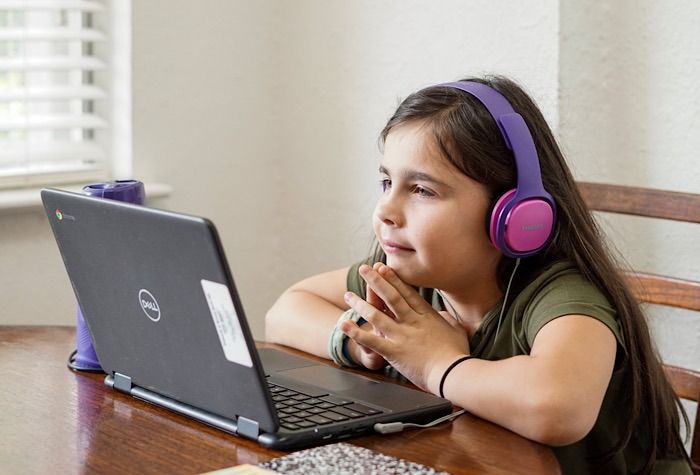
Unbelievably, 39 of the 42 governments that provided online education by creating their own remote learning apps and services mishandled the students’ data by risking or infringing on their rights. Even worse, the children were required to use these products.
Human Rights Watch recommends that “governments should conduct data privacy audits of the EdTech endorsed for children’s learning during the pandemic, remove those that fail these audits, and immediately notify and guide affected schools, teachers, parents, and children to prevent further collection and misuse of children’s data.”
If you want to take more control of what your children see online, check out these sites where you can find free online books for kids.
Image credit: Unsplash