
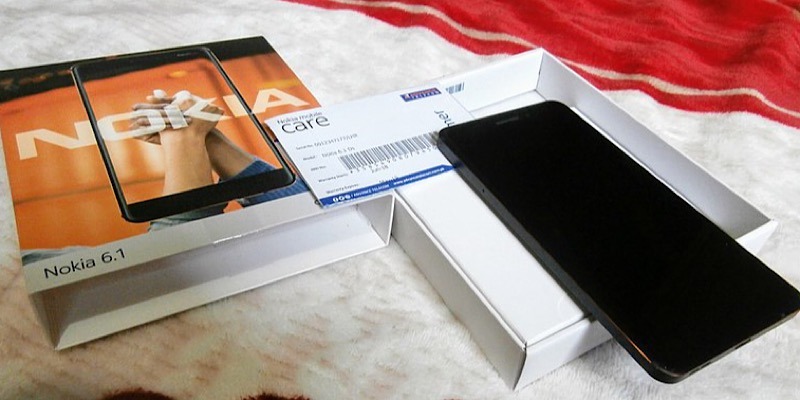
Nokia Phones Sending Data to Chinese Servers without User Knowledge

Nokia Phones Sending Data to Chinese Servers without User Knowledge Featured Image

With all that we know of security being breached by apps and websites that we visit, what if data wasn’t being shared through an app or website that isn’t trustworthy and was being sent through your phone without your knowledge? That’s the case with Nokia phone owners with the handsets sending data to a Chinese server without the knowledge of the owners of the phones.

Nokia Phone Data Grab

HMD Global first revealed a Nokia-Android phone two years ago with the Nokia 6. Several different versions of Nokia phones have been released since then, including the most recent, the Nokia 9 PureView. All of these phones are made by Foxconn in China.

It’s been released that some of the Nokia phones have been sending data back to servers in China without user consent. Norwegian public broadcaster NRK reported a breach on Thursday after a Nokia 7 Plus owner was told his phone contacted server and sent unencrypted data.
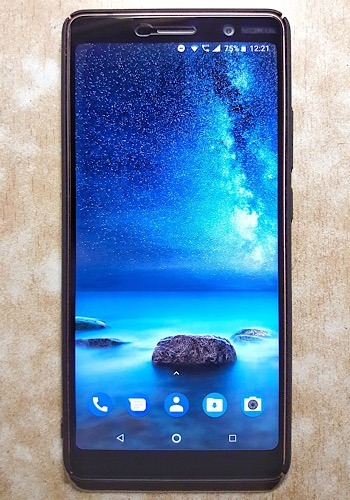
news-nokia-chinese-servers-phone

NRK says that Nokia has admitted that “an unspecified number of Nokia 7 Plus phones had sent data to the Chinese service” without the users’ knowledge.

“We can confirm that no personally identifiable information has been shared with any third party,” HMD reported to Reuters. “An error in software packaging process in a single batch of one device model” caused the data to be sent to the Chinese server.

“Such data was never processed and no person could have been identified based on this data,” HMD continued. They continued that this error was fixed in February and that nearly all of the affected phones have installed the update.

Finland’s Investigation

Finland is investigating to see if HMD breached data rules. The country’s ombudsman Reijo Aarnio reported to Reuters that he will investigate if the breaches involved “personal information and if there has been a legal justification for this.”

Whether it’s been fixed or not, it’s scary to think that data is being sent directly from your phone to a server in another country and that it has nothing to do with and app or website that you visit.

Do you have a Nokia phone? Does this concern you? Share with us in the comments section below.

Image Credit: Mizfaar_shah via Wikimedia Commons and YAP123456 via Wikimedia Commons

Subscribe to our newsletter!

Our latest tutorials delivered straight to your inbox

Laura Tucker Avatar

Read next

In 2016, archaeologists dated two rings of snapped stalagmites in France’s Bruniquel Cave to 176,500 years ago, evidence that Neanderthals had walked 336 metres into darkness with fire and built architecture deep underground long before modern humans reached Europe
Otto von Bismarck was 74 when Germany adopted the world’s first national old-age social insurance program in 1889, setting the pension age at 70 after years of fighting socialists with bans, laws, and a promise few workers would live long enough to use
When cosmonaut Valeri Polyakov stepped out of his Soyuz capsule in March 1995 after 437 consecutive days aboard Mir, doctors recorded him at several centimetres above his pre-flight height, and his spine had become so unaccustomed to gravity that the recovery team carried him to a chair rather than risk the compression of letting him walk.
When Bell Labs engineer Karl Jansky pointed a rotating antenna at the sky in 1932 looking for sources of transatlantic radio static, he kept picking up a faint hiss that peaked every 23 hours and 56 minutes, and he eventually realized he had become the first human to hear the center of the Milky Way.
When Harvard astronomer Cecilia Payne submitted her 1925 doctoral thesis arguing that the Sun was made almost entirely of hydrogen, the field’s senior figure Henry Norris Russell talked her into adding a line calling the result ‘almost certainly not real,’ and then published the same conclusion himself four years later to widespread acclaim.
When seismic waves from the Chicxulub impact reached what is now North Dakota roughly ten minutes after the asteroid struck, they appear to have triggered a ten-metre standing wave in an inland river that flung fish onto the bank and buried them under glass beads still falling from the sky.
When survivors near Lake Nyos woke on the morning of 22 August 1986, the cattle were dead in the fields, the birds had fallen out of the trees, and 1,746 of their neighbours were lying where they had stood the night before, with no fire, no flood, and no wound to explain it.
In October 2002, a Russian scientist named Dimitri Malashenkov stood up at a space conference in Houston and quietly explained that the dog Laika, whom the Soviet Union had publicly mourned as a heroic week-long orbiter in 1957, had actually died of heat and panic within about five hours of launch.