

The tech world has become obsessed with productivity – it’s quite the buzzword. Google is joining the trend with new ChromeOS features, including quite a few that will lead to greater productivity. Many video-editing features are being added as well.
Also read: 28 Best Chromebook Tips and Tricks for Beginners
New ChromeOS Video-Editing Features
Certainly, the productivity features will be popular, but what Google is pushing in a blog post are new video-editing features for more creativity.
Google Photos will have these new features, along with the movie editor in ChromeOS. You’ll be able to combine video clips, images, music, and even a title card into a new video. You can even give Google a few hints and have it create the movie for you out of your content.
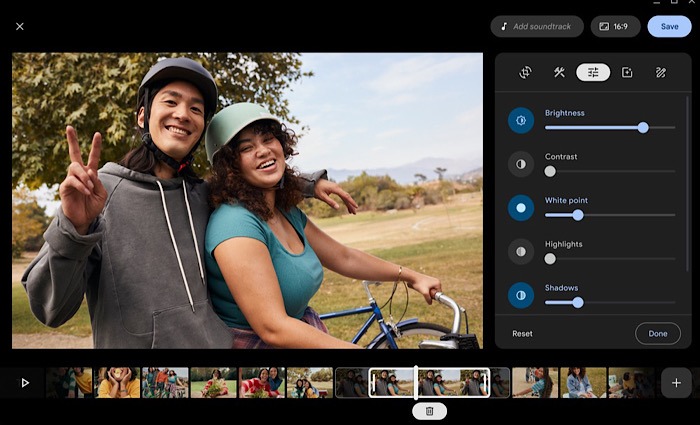
You can select the parameters for the new movie, such as theme, people, pets, etc., and Google Photos will find photos and pertinent clips from your videos and do all the work for you. But the option is there for you to select your own content too.
On top of creating your own movies, there is also “professional-grade video editing.” The LumaFusion app will be available on Chromebooks with its multitrack video editor that allows you to “add graphics, visual effects, transitions and distortions, audio tracks and sound effects, narration, color grading, and more.”
New ChromeOS Productivity Features
Secondarily, Google is pushing productivity features, both old and new. Surely, this must be a move to compete with the other players in this space.
The blog post first mentions new and old apps – Gallery, Screencast, and Cursive – showing how they can help with productivity, specifically for back-to-school season or working from home.
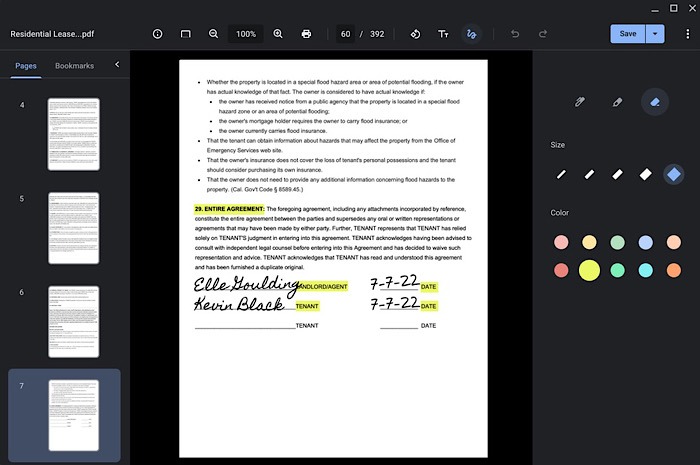
The Gallery app will now allow you to edit PDFs without installing a third-party app. This will allow you to “fill out forms, highlight text, sign documents, and add text annotations.”
Screencast will now allow everyone to “record, view, and share transcribed videos and presentations.” The new cursive app allows Chromebooks with a stylus to “capture, edit, and organize handwritten notes.” Copy and paste to share or save the notes to a PDF.
Some changes within the OS itself will lead to greater productivity. First, there is a newly designed Launcher. It will help you find what you need with just a button push. There’s also Nearby Share and Phone Hub that were added as cross-device features.
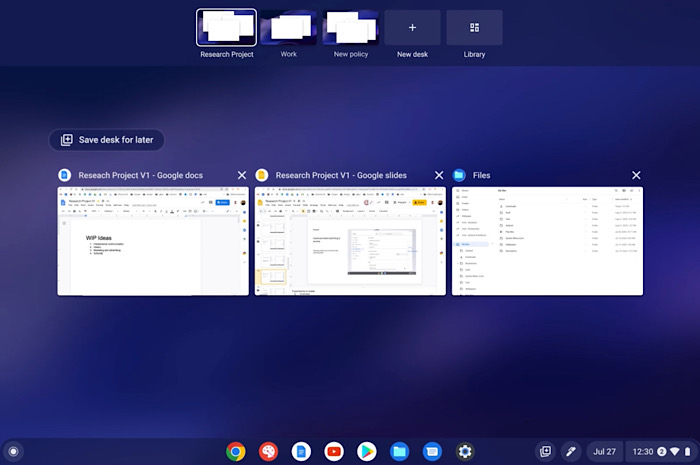
Virtual desks will allow you to have groups of windows and apps open at the same time in small collections. You’ll be able to close or open a whole desk at once without being required to close each app and window individually. It will especially work well for students, to have a desk for schoolwork, another for streaming, and another for connecting to friends and family.
Along with light and dark themes, you can personalize your desktop with your Google Photos images as wallpaper and can have the featured photo change daily.
Another option for the home screen is access to your calendar just by tapping the date on your desktop. Notifications are getting an upgrade too. They can be grouped together, and you can respond to them directly from the notification.
Look for these changes to spill out over the next few months. It just so happens that this will coincide with the release of iPadOS 16, which is also upping its game with multitasking features, such as Stage Manager. It seems Google wants ChromeOS to compete with the big dogs in the productivity space, as well as video editing.
Image credit: Unsplash