
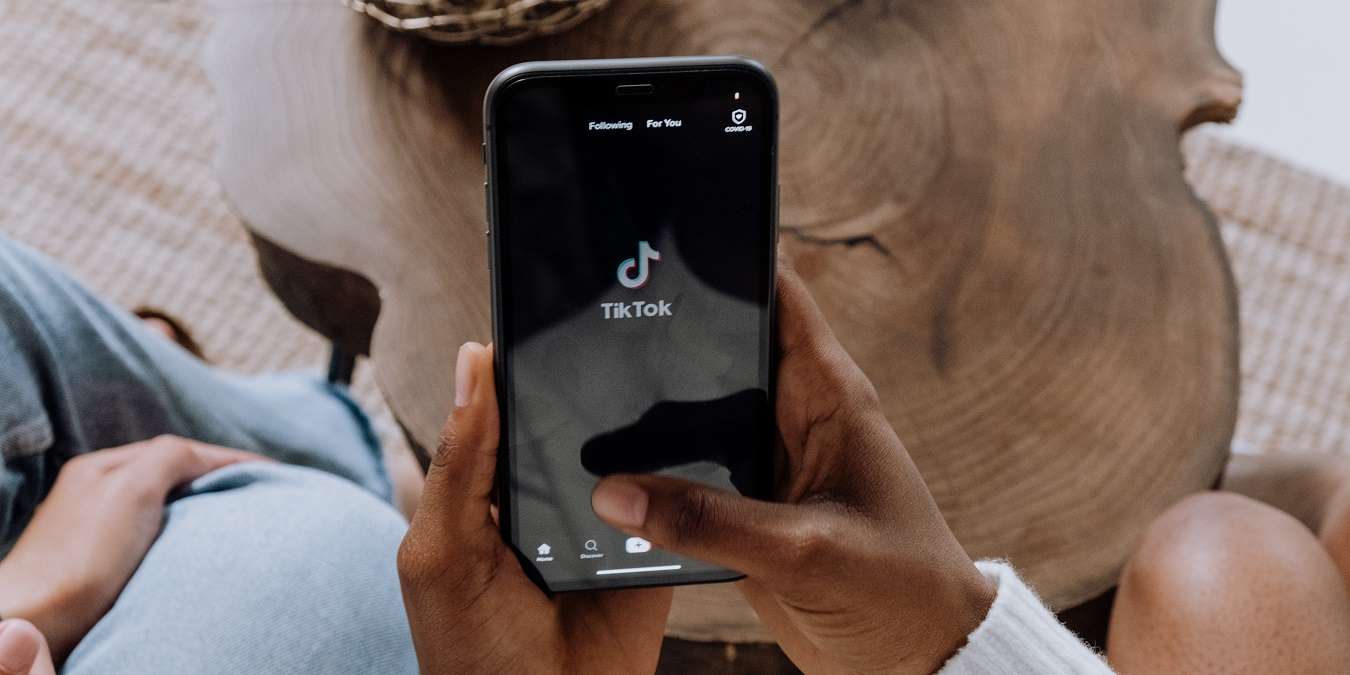
Montana First U.S. State to Ban TikTok

Tiktok Featured

There have been many discussions, investigations and accusations surrounding video-sharing platform TikTok in the U.S. Over the last few months, several internal committees have been set up to establish the veracity of claims that the mobile app, developed by the Chinese company ByteDance, is spying on American citizens. No longer willing to risk it, Montana Governor Greg Gianforte signed a bill that makes it the first U.S. state to ban TikTok

Tip: want to share your TikTok videos on more platforms? Lear how to link your TikTok account to Instagram.

A Ticking Timebomb

TikTok, and by extension ByteDance, has been accused on numerous occasions of mishandling the personal information of its users. There is still much debate surrounding the legality of a TikTok ban. Still, many, including Gianforte, argue that it collects and shares sensitive data with the Communist Chinese government.

Some U.S. states have already banned the video-sharing platform from government devices. However, the newly-enacted SB 419 bill outright bans TikTok from even being made available to residents in Montana.
Tiktok
Image source: Unsplash

“TikTok may not operate within the territorial jurisdiction of Montana” is the central line in the bill, while also setting out what exactly “operate” means and any imposed penalties. The bill prohibits app store owners like Apple and Google from allowing Montanans to download TikTok. It also bans anyone in Montana from accessing or using the app in the state. Skirting the legislation can lead to a fine of $10,000 per instance and “an additional $10,000 each day thereafter that the violation continues.”

While it may be difficult to prove, an affirmative defense is built into the bill, where an app store owner can’t be held liable if a Montana resident downloads and uses TikTok outside the state. It also makes an exception for “law enforcement activities, national security interests and activities, and security research activities.”

If you live in Montana, you have until January 1, 2024, to get as much TikTok browsing in as possible before it’s enacted.

Tip: want to clean up your TikTok watch history? Read on to learn more.
Image credit: Pexels

Subscribe to our newsletter!

Our latest tutorials delivered straight to your inbox

Charlie Fripp Avatar

Read next

When the SS Great Eastern laid the first working transatlantic telegraph cable in 1866, a message that had taken ten days by steamship suddenly crossed the ocean in minutes, and the financial markets of London and New York were forced, within a single trading week, to invent the modern concept of synchronised global price.
The Big Ear telescope was scanning at 1420.4056 megahertz on the night of 15 August 1977, the exact frequency at which hydrogen atoms vibrate across the universe, because Giuseppe Cocconi and Philip Morrison had argued years earlier that any species trying to be found would broadcast on that channel — and then, for 72 seconds, something did.
In 2016, archaeologists dated two rings of snapped stalagmites in France’s Bruniquel Cave to 176,500 years ago, evidence that Neanderthals had walked 336 metres into darkness with fire and built architecture deep underground long before modern humans reached Europe
Otto von Bismarck was 74 when Germany adopted the world’s first national old-age social insurance program in 1889, setting the pension age at 70 after years of fighting socialists with bans, laws, and a promise few workers would live long enough to use
When cosmonaut Valeri Polyakov stepped out of his Soyuz capsule in March 1995 after 437 consecutive days aboard Mir, doctors recorded him at several centimetres above his pre-flight height, and his spine had become so unaccustomed to gravity that the recovery team carried him to a chair rather than risk the compression of letting him walk.
When Bell Labs engineer Karl Jansky pointed a rotating antenna at the sky in 1932 looking for sources of transatlantic radio static, he kept picking up a faint hiss that peaked every 23 hours and 56 minutes, and he eventually realized he had become the first human to hear the center of the Milky Way.
When Harvard astronomer Cecilia Payne submitted her 1925 doctoral thesis arguing that the Sun was made almost entirely of hydrogen, the field’s senior figure Henry Norris Russell talked her into adding a line calling the result ‘almost certainly not real,’ and then published the same conclusion himself four years later to widespread acclaim.
When seismic waves from the Chicxulub impact reached what is now North Dakota roughly ten minutes after the asteroid struck, they appear to have triggered a ten-metre standing wave in an inland river that flung fish onto the bank and buried them under glass beads still falling from the sky.