
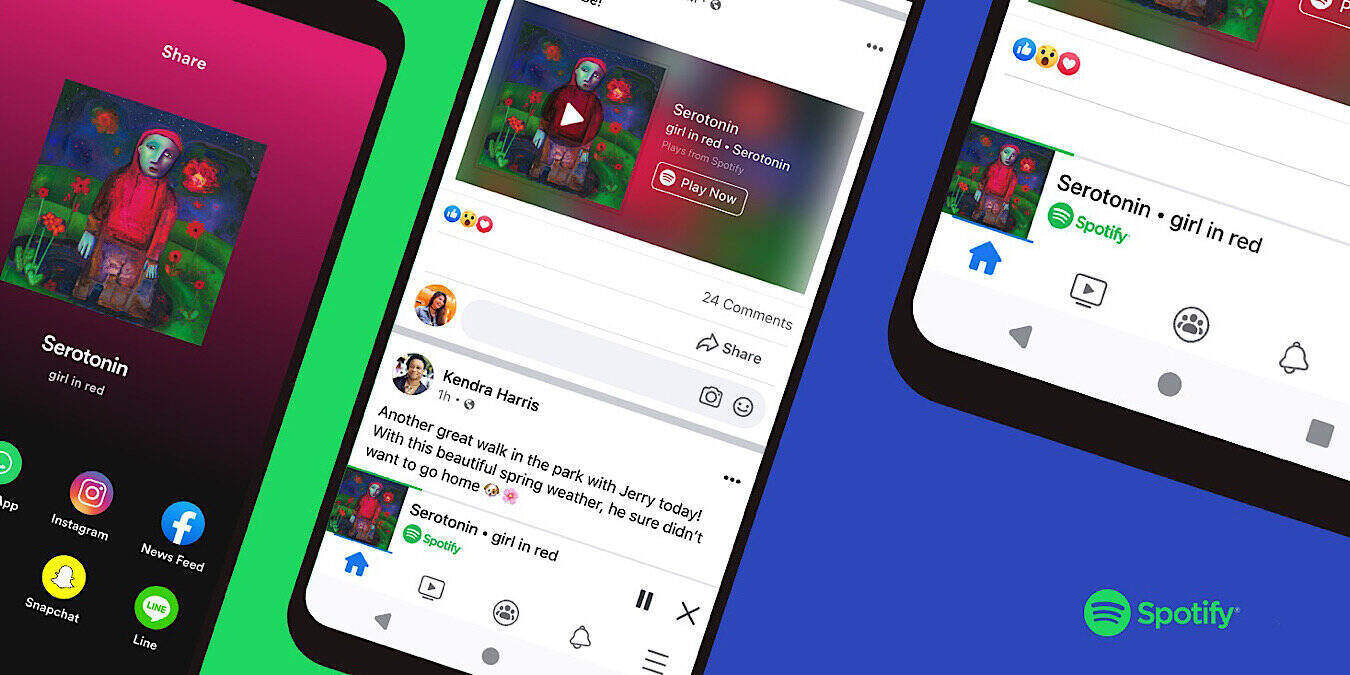

This news seems to have a few different prongs to it. First, there is the ongoing battle between Facebook and Apple. Secondly, the two companies each announced competing paid podcast upgrades and competing paid audio plans. After appearing to leave Spotify out of these plans, the streaming service announced some plans of its own: a Spotify miniplayer will now be part of the mobile Facebook apps.
Spotify Miniplayer on Facebook
There has certainly been a boon in podcasts with people spending more time at home during the pandemic. It seems the tech world noticed. Apple is making changes to its podcast experience, including the optional addition of subscriptions. Facebook is making multiple audio additions, including podcasts and a paid service.
And now Facebook will also include the Spotify miniplayer app, reducing the need for users to leave its app, the same reason the social media company used for making the other changes.
Spotify’s reason for its collaboration with Facebook is “discovery.”
“That’s why we’re improving how users share and engage with songs and podcast episodes by introducing a new miniplayer experience driven by social discovery – discovery that allows listeners to enjoy audio from Spotify directly within Facebook, without switching between apps,” said the Spotify announcement in a blog post.
The option has already been added to the iOS and Android Facebook apps in “select markets.” The Spotify miniplayer will support full playback on Facebook without leaving the app. Everyone can listen whether or not they are a subscriber.
“Spotify Premium users can discover and experience songs and episodes with full playback directly from Spotify inside the Facebook app on iOS and Android. Spotify Free users can enjoy the same great experience via shuffle mode with accompanying ads from Spotify,” added the blog post.
Facebook users will be able to listen through their friends’ Spotify shares as well as artists’ posts or videos that users add that contain licensed music.
Facebook users can tap the Play button on a song. This will initiate the Spotify miniplayer from within the Facebook app. The first time a user hits Play, they will be asked for their consent. The song will continue to play as they browse their newsfeed.
Availability
This change became available on March 26. It’s available in Argentina, Australia, Bolivia, Brazil, Canada, Chile, Colombia, Costa Rica, Dominican Republic, Ecuador, El Salvador, Guatemala, Honduras, Indonesia, Israel, Japan, Malaysia, Mexico, New Zealand, Nicaragua, Panama, Paraguay, Peru, South Africa, Thailand, Uruguay, and the U.S. initially.
Note that as of this writing, the change does not appear to have been made to the Facebook iOS app in the U.S.
The Internet podcast and music business just became extremely competitive. While previously Apple and Spotify were competing, Facebook has joined in and teamed up with Facebook. The question is whether this is the end of new feature rollouts or whether there will be more ahead for Spotify, Apple, Facebook, and others.
Bead on to learn about Spotify Car Thing bringing Internet music to older cars.
Image Credit: Spotify Newsroom and public domain