
Microsoft to Unbundle Teams From Office

Microsoft Teams Malware Featured

The global pandemic forced many people to work from home, using online meeting software like Zoom, Slack and Microsoft Teams to stay in touch with fellow office workers. But where Zoom and Slack are standalone installations, Microsoft bundled its Teams software into the Office suite. This effectively put Teams on every computer that had Office installed, which didn’t sit well with Slack.

Tip: communicate faster in Microsoft Teams with this keyboard shortcuts cheatsheet.

Anti-Trust Concerns

Slack, owned by SalesForce, approached the European Union regulators in 2020, demanding that Microsoft unbundle Teams. It wanted the tech giant to only make it available as a separate download. Microsoft plans to do just that to prevent an antitrust investigation by giving in to SalesForce’s request.

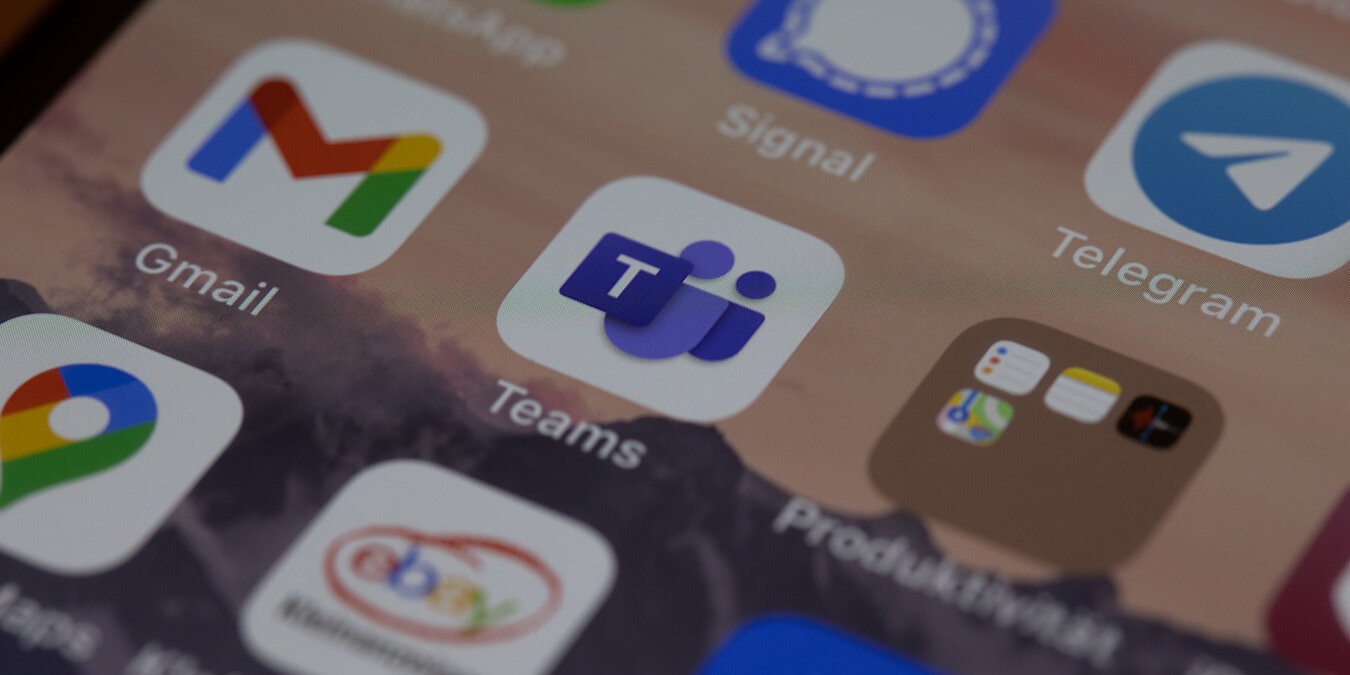
Microsoft Unbundle Teams Office Videoconferencing
Image source: Unsplash

In what is somewhat standard commentary from Microsoft, the company said they are “mindful of (its) responsibilities in the EU” and “open to pragmatic solutions.” It’s the same response it gave to regulators when it was called out over its software licensing practices in Europe.

Details on how the unbundling will work aren’t clear. But it’s suggested that, in the EU at least, companies will be able to buy Office with or without Teams.

Three years ago, Slack approached the EU regulators claiming that Microsoft disables the removal of Teams from computers. “We can’t ignore illegal behavior that deprives customers of access to the tools and solutions they want,” Slack said at the time. It added that Microsoft “created a weak, copycat product and tied it to their dominant Office product.”

“Reverting to Past Behavior”

Slack might claim that Microsoft is “reverting to past behavior,” but this isn’t the first time Microsoft has been in trouble with regulators. About a decade ago, Microsoft was forced to give users a choice of Internet browser. In a rather sneaky move, it made its Internet Explorer browser the default option.

That eventually led to a $730 million fine in Europe three years later, as the screen reportedly glitched and didn’t show up for some users.

Image credit: Unsplash

Subscribe to our newsletter!

Our latest tutorials delivered straight to your inbox

Charlie Fripp Avatar

Read next

When the SS Great Eastern laid the first working transatlantic telegraph cable in 1866, a message that had taken ten days by steamship suddenly crossed the ocean in minutes, and the financial markets of London and New York were forced, within a single trading week, to invent the modern concept of synchronised global price.
The Big Ear telescope was scanning at 1420.4056 megahertz on the night of 15 August 1977, the exact frequency at which hydrogen atoms vibrate across the universe, because Giuseppe Cocconi and Philip Morrison had argued years earlier that any species trying to be found would broadcast on that channel — and then, for 72 seconds, something did.
In 2016, archaeologists dated two rings of snapped stalagmites in France’s Bruniquel Cave to 176,500 years ago, evidence that Neanderthals had walked 336 metres into darkness with fire and built architecture deep underground long before modern humans reached Europe
Otto von Bismarck was 74 when Germany adopted the world’s first national old-age social insurance program in 1889, setting the pension age at 70 after years of fighting socialists with bans, laws, and a promise few workers would live long enough to use
When cosmonaut Valeri Polyakov stepped out of his Soyuz capsule in March 1995 after 437 consecutive days aboard Mir, doctors recorded him at several centimetres above his pre-flight height, and his spine had become so unaccustomed to gravity that the recovery team carried him to a chair rather than risk the compression of letting him walk.
When Bell Labs engineer Karl Jansky pointed a rotating antenna at the sky in 1932 looking for sources of transatlantic radio static, he kept picking up a faint hiss that peaked every 23 hours and 56 minutes, and he eventually realized he had become the first human to hear the center of the Milky Way.
When Harvard astronomer Cecilia Payne submitted her 1925 doctoral thesis arguing that the Sun was made almost entirely of hydrogen, the field’s senior figure Henry Norris Russell talked her into adding a line calling the result ‘almost certainly not real,’ and then published the same conclusion himself four years later to widespread acclaim.
When seismic waves from the Chicxulub impact reached what is now North Dakota roughly ten minutes after the asteroid struck, they appear to have triggered a ten-metre standing wave in an inland river that flung fish onto the bank and buried them under glass beads still falling from the sky.