

For the past few years we’ve been accessing our devices with biometric methods, mostly fingerprint identification and facial identification. By touching your phone with your finger or by looking at your tablet squarely with your face, you’ll be logged in. While the technology has its faults, the thought is that unlike passwords, you fingerprints or face can’t be stolen.
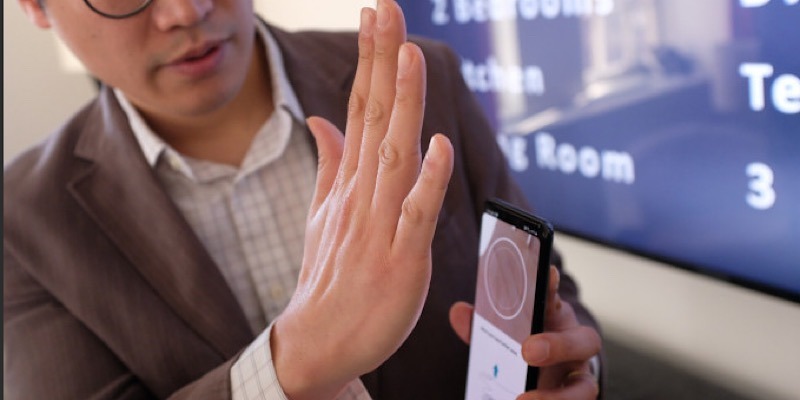
LG is now adding to the biometric logins. With the unveiling of their new phone, the G8 ThinQ, is its biometric feature Hand ID. This feature allows you to log in with “advanced palm vein authentication, and they claim to be the first to use this technology.
LG G8 ThinQ’s Hand ID Technology
LG had already announced that the G8 ThinQ would include a ToF image sensor on the front-facing camera and that it would use advanced face unlock technology, but it also has a more unique biometric technology: Hand ID that uses advanced palm vein authentication.
The press release explains that “LG’s Hand ID identifies owners by recognizing the shape, thickness, and other individual characteristics of the veins in the palms of their hands.”
Have you ever been to a palm reader to get a look at what your future may hold? Whether you believe in this or not, it’s based on the same thing as Hand ID: your palm is just as unique as your fingerprint and your face. Truthfully, psychics rely on the lines/wrinkles/creases in your hand while Hand ID relies on your veins.
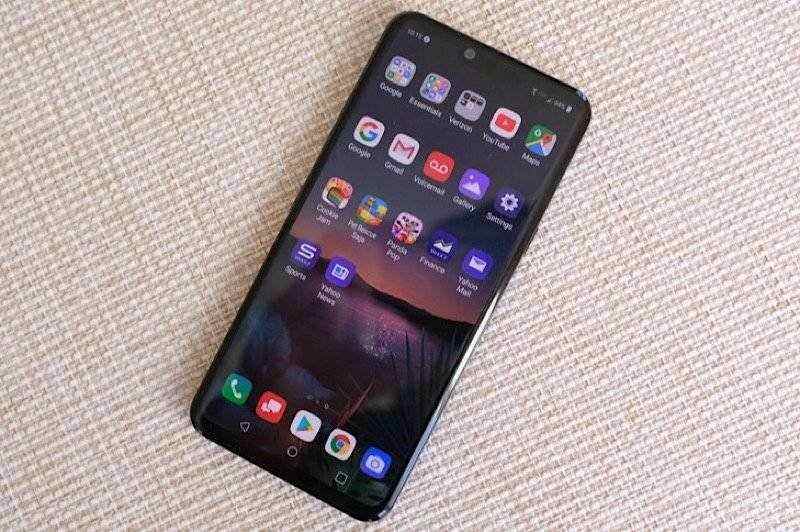
The phone has what it calls the Z-camera system that uses the ToF sensor mentioned above. It can detect motion, gestures, and depth.
To read your palm, it shines an infrared signal at your palm to extract a map of the unique veins in your hand. This is based on how the hemoglobin in your blood absorbs the IR signal. This allows you to unlock your phone simply by showing it your palm. LG claims this biometric method will be hard to hack.
Along with unlocking your phone, you can also use the Z-camera for Air Motion. These are gestures that allow you to control your phone by gestures made in the air in front of the phone. This allows you to perform shortcuts, answer calls, play music and videos, etc.
Hand ID Security
The idea is that LG’s Hand ID technology will be the ultimate in security. However, that proof is yet to be seen. Any security method is only secure if hackers don’t figure out how to hack it. So far, it seems if there’s a will, there’s a way with hackers. They just need to time to figure out how to beat it.
Does the LG G8 ThinQ’s Hand ID technology interest you? Would you be interested in abandoning your password or other biometric technology to use Hand ID? Tells us your thoughts in the comments section below.
Image Credit: Tech Crunch