

Usually, we think of betas as far as allowing developers to find out all the bugs that need to be taken care of before the software goes public. But users of the iOS 14 beta are learning more than just problems with the OS — they have found that Instagram is using their camera without their knowledge.
Instagram Using iOS 14 Camera
iOS 14 and iPadOS 14 are out in developer beta and public beta, leaving many users to jump the gun and download the early versions instead of waiting until they are released in the fall. One new feature is that the OS shows you indications of when your camera or mic is being used. But you always know when they’re in use, right?
Not necessarily. iOS 14 beta users found that when they were using the Instagram app, it was showing that their camera was in use, even if they weren’t taking a photo or shooting a video.
Camera use shows up in a green dot in the upper right near battery and Wi-Fi status. In the image below you can see how it shows up. It did not show when I used my Instagram app with iPadOS 14, but it did show when I accessed the camera when writing this article in the Bear app.
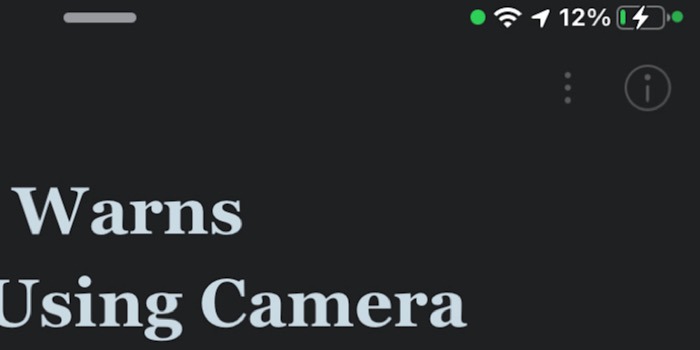
Instagram has responded to this complaint and said this is just a bug in iOS 14 and that they are currently working on a fix.
“We only access your camera when you tell us to – for example, when you swipe from Feed to Camera. We found and are fixing a bug in iOS 14 Beta that mistakenly indicates that some people are using the camera when they aren’t,” explained Instagram. They further promised, “We do not access your camera in those instances, and no content is recorded.”
As Forbes pointed out, if the bug is in the iOS 14 beta, then why are Instagram’s programmers working on a fix instead of Apple? It’s possible the camera is showing use when it’s not really being used, but either way, I’d rather have a false positive of camera use than no notice and a security breach.
TikTok and the Clipboard Issue
And this brings us to the TikTok Clipboard issue. It was noticed back in April in iOS 13 that the OS had a major bug that allowed apps to access the last items in your clipboard. TikTok was found abusing the security flaw and promised that it updated its app to solve it.
Apple took care of that issue, and now in iOS 14, users will be warned if an app is reading its clipboard. You can see this in action in the below image. I copied a bit of text and pasted it into Bear while I was writing the article. I initiated the paste command, but it’s still letting me know it’s pasting something from another app.

Since the beta has been released, it’s been discovered that TikTok is STILL accessing the clipboard.
TikTok has said they have fixed it and have submitted an updated version to the App Store, but that should be a warning to anyone using the video app that even after it was caught accessing user clipboards and said it fixed it, it continued to do so.
But that’s the beauty of Apple’s security features. It’s comforting to know that iOS 14 will warn me when an app is accessing my clipboard or my camera, even with major apps such as Instagram and TikTok. Even if it’s a false positive, I’d rather have that than not know at all.
Find out more about iOS 14 as well as all the changes that were announced at the 2020 WWDC.