
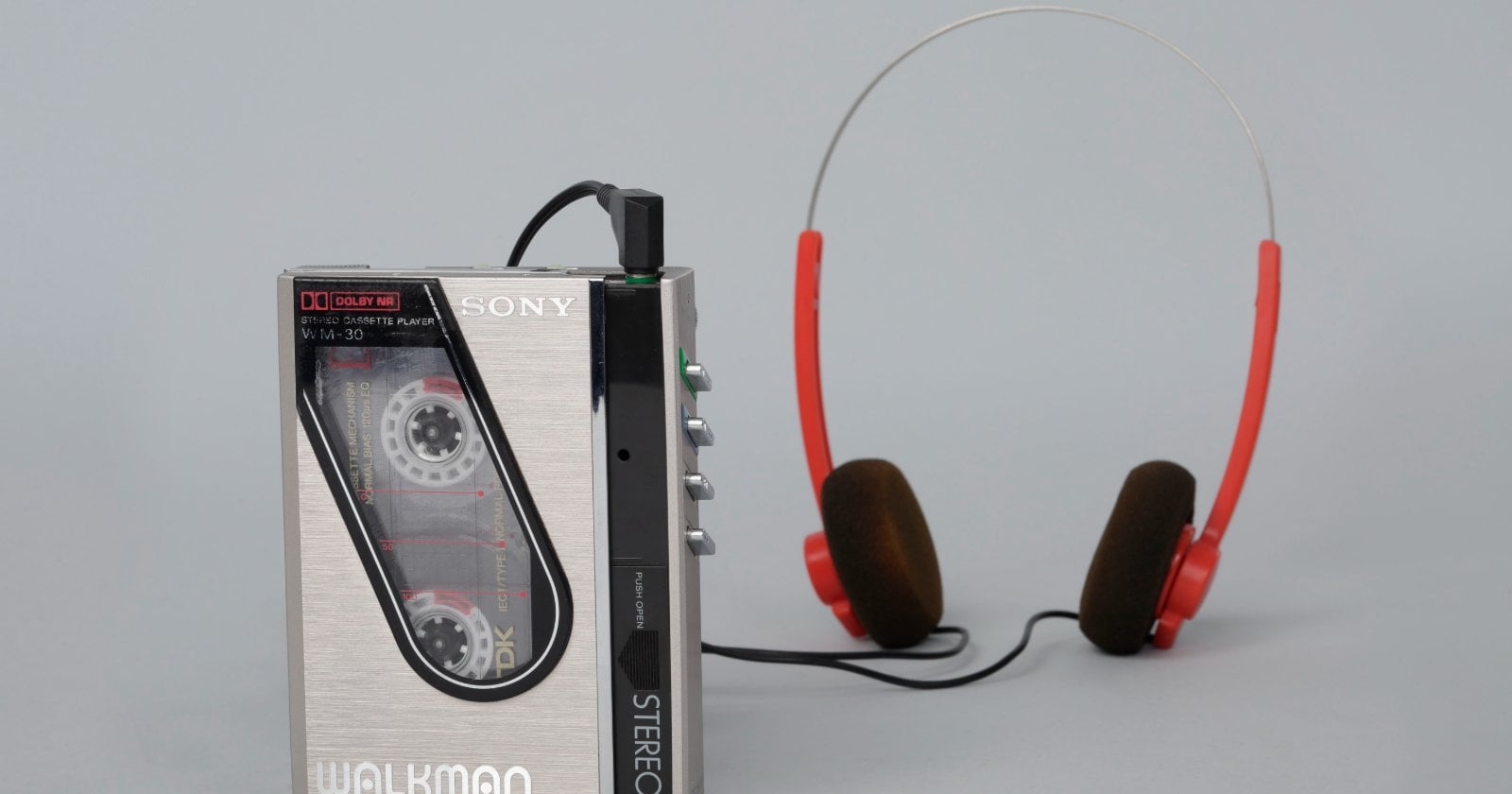

The headphones that came with the first Walkman were as much a part of the pitch as the cassette player itself. They were small, light and wrapped in orange foam, and they made the idea of carrying music around feel normal.
On November 5 of this year, Sony brought them back. The new model is called the MDR-3R, and the one big change is at the end of the cable: a USB-C plug where the old headphone jack used to be.
According to 9to5Google’s report on the launch, the MDR-3R went on sale the same day for $59.99 at the usual retailers. As they note, Sony describes the design as a “faithful recreation” of the 1979 original, down to packaging and a manual that “inherit the design of the original model.”
What the original actually was
When Sony released its first Walkman, the TPS-L2, in 1979, the headphones in the box were what What Hi-Fi calls “the slim and lightweight Sony MDR-3.” That lightness mattered. Home headphones of the era were heavy, padded things built to sit next to a stereo. A pair you could wear on a walk without noticing was part of what made a portable cassette player make sense at all.
The look stuck. Thin metal headband, small round earcups, bright foam pads. Plenty of people who never owned a Walkman would still recognize the shape from films, album art and old ads.
What’s new in the MDR-3R
The outside is meant to look like 1979. The inside is not. Sony says it has “re-engineered” the 23mm driver, the part that actually makes the sound, with the goal of staying “close to the original” while improving bass and range. What Hi-Fi reports the headphones weigh just 38g, and the box includes two sets of foam pads, one blue and one orange.
The cable now carries a built-in microphone and a three-button remote for playback, skipping tracks, volume, calls and your phone’s voice assistant. None of that existed on the original, which was a plain wire and a plug.
Sony is also selling a Stranger Things edition for $79.99. It has a black headband and black and red earpads. The show has spent several seasons putting 1980s gadgets back in front of younger viewers, so the tie-in is not much of a stretch.
Why USB-C instead of a headphone jack
The switch tells us more about phones than about headphones. The standard 3.5mm headphone jack has disappeared from most flagship phones over the last decade, and many laptops and tablets now rely on USB-C for nearly everything. Wired headphones that still end in a 3.5mm plug need a dongle to work with a lot of current hardware.
USB-C solves that, but it changes how the headphones work. A USB-C pair has to do its own conversion from digital to analog, because the phone is sending a digital signal down the cable instead of an audio signal. That conversion happens in a tiny chip inside the headphones or the cable. It is the reason USB-C headphones can include a microphone and controls so easily, and also the reason they won’t plug into much older gear.
There is an irony here. Without an adapter, a pair of headphones built to celebrate the Walkman cannot be plugged into a cassette Walkman, or any other device with only a 3.5mm socket, such as an older amplifier or many in-flight entertainment screens. If that is the use you have in mind, the original-style jack is what you need, and the MDR-3R does not offer it. Sony also does not recommend using the MDR-3R with its current digital Walkman players, according to TechSpot.
One thing to know before buying
The MDR-3R keeps the original’s open design. The earcups have small sound holes, and Sony told What Hi-Fi there is “some sound leakage,” though not too much. In plain terms, people near you will hear some of what you are listening to, and you will hear more of the world around you than you would with sealed headphones or noise-canceling earbuds.
That was true in 1979, too. It was part of the original’s light, airy feel, and it suited walking around outdoors. It suits a quiet office or a crowded train less well.
Who these are really for
At $60, the MDR-3R is priced well below most current wireless headphones and above a basic pair of wired earbuds. There is no battery to charge and no Bluetooth pairing to manage, which some people will count as a feature in itself.
For anyone who owned the original, the appeal is obvious. For everyone else, the MDR-3R is a reminder that a pair of headphones designed in the 1970s was simple enough that Sony could bring it back almost unchanged in form. The plug was the part that aged. The rest, it turns out, still works.