


Have you been wondering what happened to IBM? You may have thought they were completely out of the game, but they’re not. They may not be building desktop computers, but they’re still “in the biz.”
So what is IBM doing instead of producing desktop computers? They’re doing a lot, and that includes research. One of the things they have developed is a computer that is said to be smaller than a grain of salt.
Just imagine how far we’ve come. While at one time people were amazed that we could fit a whole computer into a phone that we keep in our pockets, now we have one that will fit on the tip of your finger.
History of IBM
IBM is a technology company that’s been around for a long time. They started out in 1911 and became “International Business Machines” in 1924, so right around the 100-year mark in both regards.
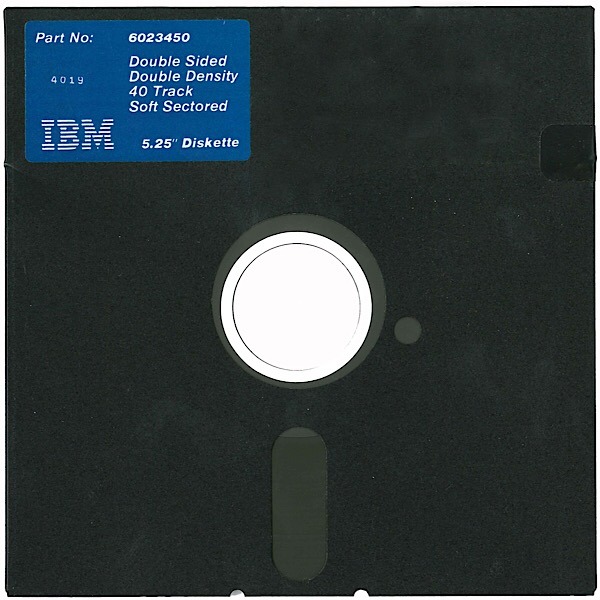
They have invented so many things that are integral to technology and our lives, starting with the ATM, the PC, the floppy disk, and the hark disk drive. Add to that the UPC barcode and DRAM, and you start to realize all that they have accomplished. Then consider that if you’ve been typing since before we all had computers on our desktops and in our pockets, you probably used an IBM Selectric electric typewriter at some point.
But they’re still very much in the business despite no longer manufacturing PCs. They offer cloud computing, microprocessors for gaming systems, and software technology that includes such things as The Weather Company. They also created the IBM Watson that uses natural language processing and machine learning and has competed against Jeopardy! champions.
IBM’s Newest Offering
This week the company is holding the IBM Think 2018 conference where they will introduce what they are calling the world’s smallest computer.
But it’s still a very mighty computer. Power-wise it compares to the x86 chip from 1990. While that might not seem impressive once you realize what today’s computers can do, you need to remember that it would get lost on your tabletop. It’s nearly too small to see.

It will cost less than ten cents to manufacture, and that has to be good news for investors. This tiny computer will include “several hundred thousand transistors” that it will employ to “monitor, analyze, communicate, and even act on data.”
The intention is for it to be used as a data source for blockchain applications. It will be able to help track shipments and detect theft, fraud, and non-compliance as well as complete basic AI tasks.
IBM is envisioning something big. They believe computers such as these will be embedded in everyday objects and devices within five years.
We’ve Come a Long Way
I’ve been using computers since 1983, and I’ve seen them do more and more and more and become more and more portable while in some cases getting smaller.
The iPhone I bring with me in my purse holds more storage than the first Apple Mac I used in 1988. And that was a black and white monitor, and the mouse was something new for me.
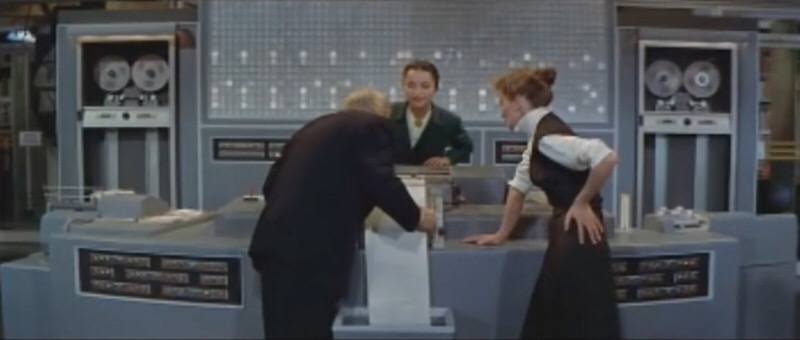
There’s a Christmas movie I like to watch every year, “Desk Set” from 1957, that features a computer replacing a research department. This computer filled an entire room and probably didn’t do nearly as much as my iPhone.
With IBM’s new tiny computer, it means we’re not done with innovation. We’re still doing more and more while getting smaller and smaller. This newest IBM computer may only operate at 1990 standards, but it’s still more than what was imaginable in 1990 and certainly more than in 1957.
Image Credit: “Desk Set from YouTube; all others are public domain