

Emoji have become an integral part of online communication. Where would we be without the ability to express sentiment alongside our messages? Prior to the explosion in emoji’s popularity emoticons were the de-facto message of expressing sentiment.
Why did emoticons falter while emoji have become so popular? We’ll take a quick look at the history of emoji.
History
Emoji is not an English word, despite sounding similar to “emotion” and “emoticon.” The word is a combination of two Japanese words which can be loosely translated to “picture” and “character.” In addition to being a little bit of etymological trivia, it also perfectly explains the purpose of emoji. Unsurprisingly, it was in Japan that emoji first reached mainstream popularity, but what is surprising is that emoji has existed since the late 1990s.
DoCoMo, Japan’s largest network provider, introduced the characters to their i-mode messaging service where they caught on extremely quickly. Rival services saw the growth in popularity and scrambled to introduce their own similar products.
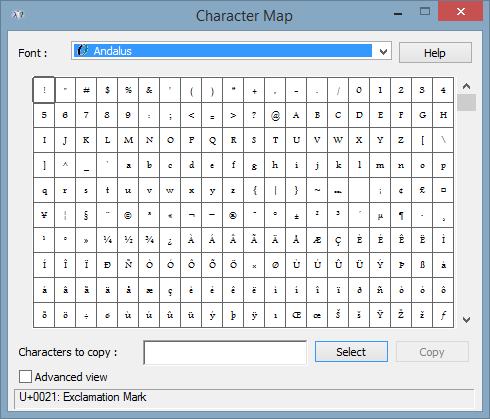
At first emoji sent from one service were incompatible with the others, though a transition to Unicode meant that emoji became more accessible across the different services.
Emoji grew in popularity following this period, though their popularity was mostly confined to Japan at first. Apple’s iPhone, and in particular the release of iOS 5.0, is largely credited with allowing their explosive growth in popularity outside of Japan. For those unaware, iOS 5.0 changed emoji encoding from SoftBank to Unicode, making it visible for everyone.
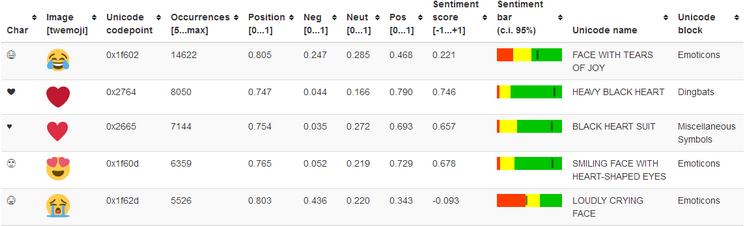
Beyond this, linguists have taken an interest in the usage of emoji with the publication of the Emoji Sentiment Ranking 1.0 in 2015.
Appearance

Depending on the website or device you’re viewing content on, emoji can appear differently. This is because the icons included on each device tend to differ, with companies having their own take on designs. The above displays Twitter’s take on the “face with tears of joy” emoji1 and goes some way to explaining how it became the most used emoji.
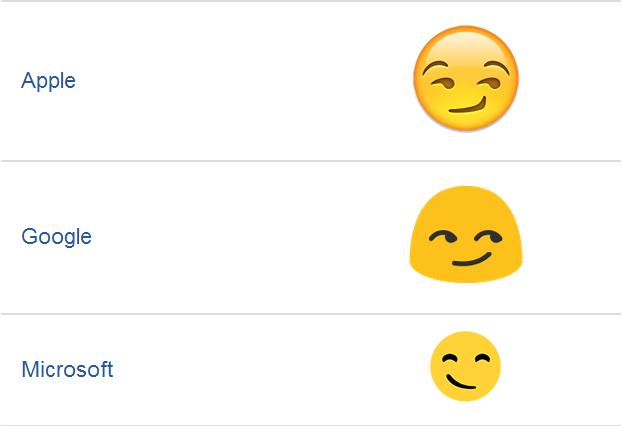
Sites like Emojipedia are invaluable resources, cataloguing the different designs across mobile operating systems and websites and providing a brief history of when an emoji was implemented. The vast majority will originate from Unicode 6.0 in 2010, which was what brought emoji into the spotlight.
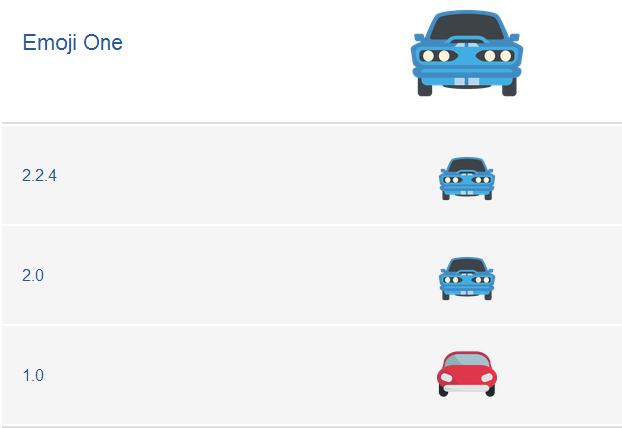
Emojipedia also tracks modifications made to emoji. Over time the designs are changed, whether to tie in with a new design language or to correct a fault in the original design. Given how often they’re used, some of the changes are quite surprising.
Implementation

Companies have blurred the distinction between emoticons and emojis, particularly in recent times. Facebook introduced its own range of designs which are triggered when sent as emoji or as emoticons. Even the “Reaction” system for likes bears some resemblance, with the same set of emoji faces displayed in the corner of posts to reflect general sentiment.
Regardless of how the emoji appears, what is actually sent remains the same. In the present day it’s a Unicode character, which the device is designed to then display as the appropriate emoji. To do so, the character will likely be displayed in another font which is inaccessible for normal usage.
Continuing with the Apple iPhone example, this font is called ‘Apple Color Emoji‘ and was released to coincide with iOS 5.0.
Trivia
While not available through the emoji keyboard, you can add at least one emoji symbol to your mobile handset. Gadget Hacks had a video showcasing this trick.

The above emoji, identified as “Laughing with Tears of Joy,” is the most commonly used emoji in the world – the Oxford English Dictionary rated it as the top word of 2015. No, we’re not sure if it’s really a word either.
Conclusion
Emoji are a fun way to converse, but as this article should illustrate there’s a lot more going into them than we recognize. Designers obsess over getting them just right, while linguists examine their usage through a critical lens.
Regardless of how regularly you use them, they’ve made a definite impact on how we look at social media.