
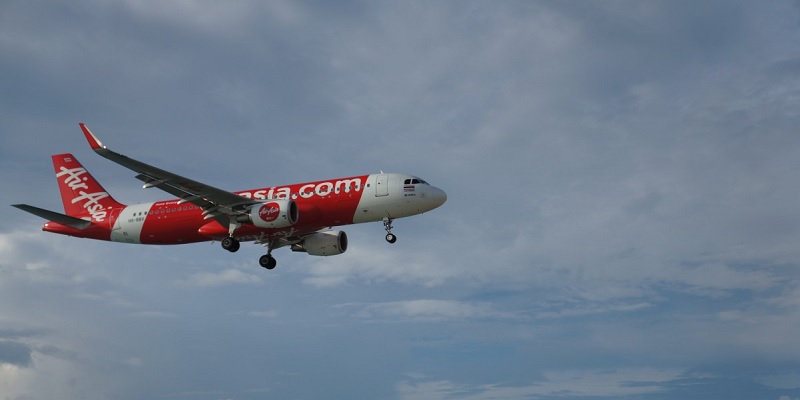

Did you recently access the Internet on a commercial flight? A growing number of airlines are offering in-flight Wi-Fi options to flyers and even selling them in add-on bundles when you book your tickets online. The Wi-Fi is accessed typically from a web GUI dashboard and in some cases is even available for free.
How Airplane Wi-Fi Works
Have you recently noticed a slight bulge above commercial aircrafts? This is typically used to hold a pair of antennae which pick up signals. In some airplanes the antennae are placed in the fuselage belly.
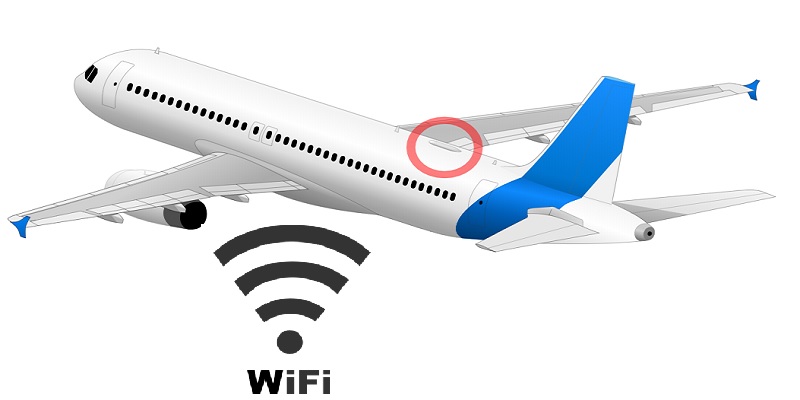
These are the two modes to transmit signals.
- Ground-based systems: Even when the plane is zipping through at 500 miles per hour, the Wi-Fi signals can be received from ground cellphone towers (LTE/4G). After receiving the signal, an on-board router (conveniently located near first-class) distributes the signal all over the plane.
- Satellite Wi-Fi systems: In satellite Wi-Fi systems the signal from the ground is beamed to a satellite which then relays it to the airplane antennae.
How Good Is the Wi-Fi Signal?
Because of the larger distance covered in aviation Wi-Fi, there may be latency issues leading to delays in page-load time. Airlines typically manage the latency issues by keeping buffer bandwidth. In US domestic routes, Jet Blue is even offering “free high speed Wi-Fi on every seat.” It sounds like the new reality. According to information on their website, even at 35,000 feet, the speed is good enough to catch a streaming video on Amazon Prime.
However, others urge more caution and ask passengers to refrain from watching streamed videos, using VPN, etc. Depending on the airline, you might encounter a limit quota which is merely enough to operate messenger apps. For international flights, clearly there are more restrictions, especially in long-haul routes where on-board Wi-Fi is usually more expensive.
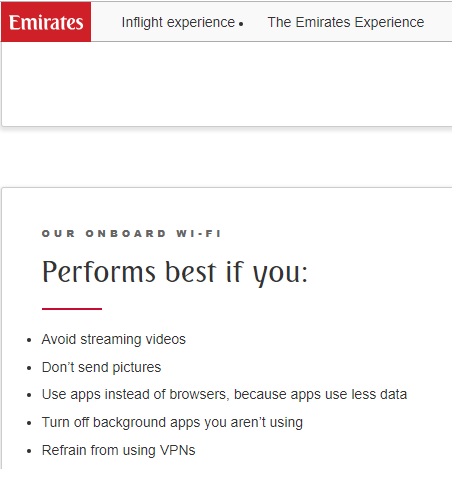
Also, it might not be feasible to keep all your devices on at the same time. There are other passengers who may be downloading heavy data. You often get 20-50 MB of free Wi-Fi in an airline like Emirates, typically in business class or premium economy. Getting a strong signal is still a challenge when you’re flying over the ocean, as there are no towers in range.
Who Are the Major Providers?
Gogo’s in-flight Wi-Fi is one of the best at the moment, as they use a hybrid of on-ground and satellite signals for maximum coverage. They call their ground-based systems ATG (Air-to-Ground). In the stratosphere they utilize Ku band (12 to 18 GHz), which is ideal for long distances. Evidently, Ku also works for astronauts on the International Space Station to communicate with the ground base.
OnAir, Immarsat and Panasonic Aviation are some other major aviation WiFi solution providers. Immarsat is pioneering European Aviation Network with an aim at bringing top-notch speeds and wider coverage.
What Does the Future Hold for Airline WiFi?
As the technology improves, airlines would be able to keep plenty of bandwidth buffer to avoid latency issues. It is being predicted that in another six years almost all airlines will offer high speed Wi-Fi to their passengers. For some of us, this might not be good news. After all, we can no longer use the excuse, “I am sorry. I could not check your emails because my phone was in airplane mode.”