


We’ve come a long way since the daisy-wheel printing days. There’s been the dawn of laser printing, ink jet printing, and more recently 3D printing. The latter of which is still shocking on a certain level that 3D objects can be created with a printer.
But now Harvard University has created something new: an acoustic printer. What makes this so unique is that you don’t need ink cartridges. It works with liquid, literally any liquid you can imagine can be used to print with.
Introducing the Acoustic Printer
Harvard’s acoustic printer uses sound waves to print with any liquid. This includes food items, such as honey, optical resins, liquid metal, and even human cells. These liquids don’t have the same consistency of what’s used in inkjet printers, but they don’t have to with this technology. This opens up an entire range of objects that can be printed on and printed with.
“We have developed a new drop-on-demand printed method that is conducive to printing liquids with low to very high viscosity,” said Jennifer Lewis, the Hansjorg Wyss Professor of Biologically Inspired Engineering at Harvard’s John A. Paulson School of Engineering and Applied Sciences, in a conversation with Digital Trends. “It’s exciting because it can be applied to a very broad range of liquids.”
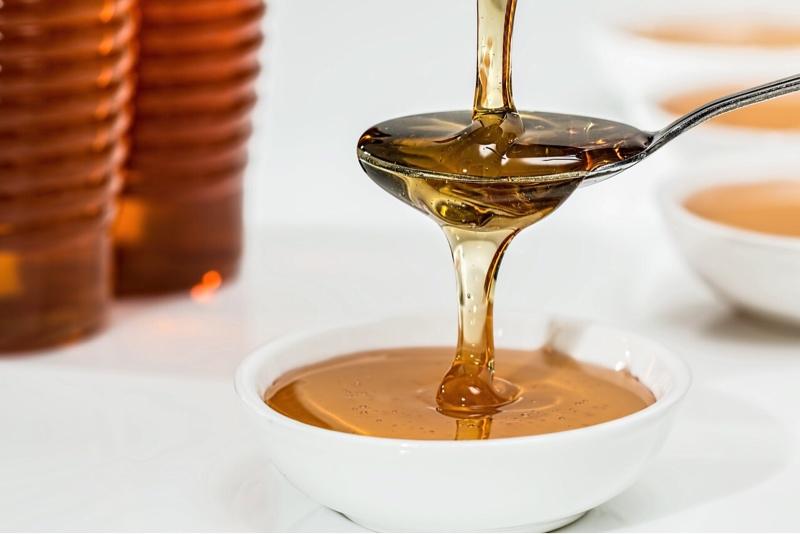
Being a liquid, it will still drip, no matter the consistency, because of gravity. As long as these liquids form droplets, they can be used for printing. Yet, that consistency matters, as it changes the size and speed of the droplets.
How It Works
Liquids that are so thick they appear to be a solid, are called pitch. These liquids form just one drop in a decade – ten years to form just one drop. And many liquids form droplets that are too large to be used to print anything.
What Harvard researchers did to do get around that gravity problem is use the pressure of sound waves. They call this acoustophoretic printing. The subwavelength acoustic resonator brings to the tip of the printer nozzle more than one-hundred times the normal gravitational force.
This force pulls every droplet off the nozzle when it gets to the right size for use in printing. The level of sound waves brings out different sizes of droplets. The higher the amplitude of the sound waves, the smaller the droplet size will be.

The materials used are not damaged by the sound waves, which makes this a safe method no matter the printing material that is being used, including biological materials, such as living cells or proteins.
“We are currently working on the next-generation acoustophoretic printers that enable smaller droplet sizes and faster build rates,” adds Lewis. “We have filed patents and are interested in commercializing this novel printing method.”
Furthermore
Being able to print with any liquid just opens up so many possibilities. Food, for instance. You could use edible liquids to print on food. And to be able to print with human cells? The possibilities are endless.
What do you think of Harvard’s acoustic printer? What other possibilities can you think of for its use? Let us know your ideas in the comments section below.