


It’s no surprise to learn that the major tech companies are responsible for letting sensitive stolen data fall into the hands of hackers. What is surprising, however, is that the leaked info belongs to children. To make matters worse, Apple and Google are being blamed for letting minors have access to apps that aren’t age-appropriate.
Also read: 6 Kid-Friendly Safe Web Browsers Parents Can Trust
Apple, Google, et al., Responsible for Stolen Data
A new report shows that Apple, Alphabet (parent company of Google), Twitter, Snap Inc., Meta (parent company of Facebook and Instagram), and Discord have all given sensitive information belonging to children to hackers.
This stolen data was used by the hackers to access the young victims’ accounts and force them into sexual exploitation. Federal law enforcement and investigators said the information was obtained through fake legal requests, which the tech companies honored.

It appears that bad actors are hacking police emails to obtain the data from fake subpoenas. They are possibly accessing the police email through the dark web, leaving the requests looking legitimate.
Basic subscriber information was used at times to gain access to the children’s accounts. Other times, the hackers would use that stolen data to contact the children and get them to share sexually explicit photos. It only gets worse from there. If the request was refused, they would be threatened, eventually leading to blackmail.
As if those details weren’t disturbing enough, in multiple cases, the victims were told to carve the hacker’s name into their bodies, then show the hackers proof of this action.

It’s believed that many of the hackers are teenagers themselves, with some residing in the U.S. Further data, however, of frequency, dates, and further information is not known.
Some of the tech companies have spoken up regarding this report. A Meta spokesperson said the company reviews “every data request for legal sufficiency.” A Discord rep contends they “validate all emergency requests.” A Snap spokesperson said the company reviews all data requests to “ensure validity.”
A Google spokesperson admitted they had “uncovered a fraudulent data request coming from malicious actors posing as legitimate government officials” in 2021.
Canadian Company Wants to Protect Kids
Aside from hackers obtaining stolen data from kids’ accounts, a Canadian company has found that Google Play and the App Store have content not intended for minors that is easily downloadable by them. They’re asking Google and Apple to tighten the availability at their mobile app stores.
The Canadian Centre for Child Protection released a report that said the age ratings for mobile apps are inconsistent, not enforced, and misleading to parents. They tested the settings in the app stores and found the age groups under 13 and 13 to 17 could easily reach content not meant for them.
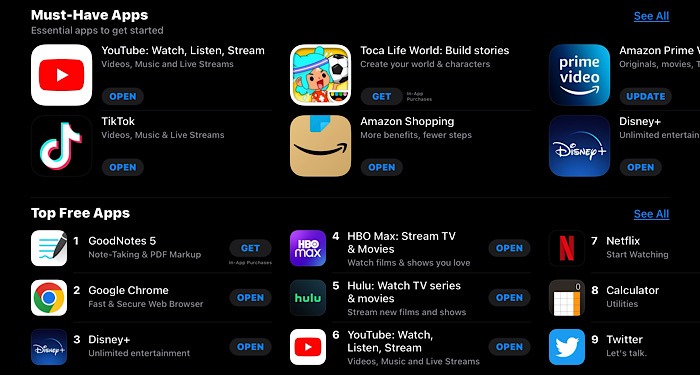
While there are supposed to be parental controls in place, they can be bypassed by enterprising minors, and sometimes the safety measures aren’t even required. Even if kids indicate their true age, they have access to dating apps and others that allow them to chat with strangers.
Signy Arnason, associate executive director of the Canadian not-for-profit, said, “When we dug in deeper and looked at not only the lack of description, but the lack of transparency around how those age ratings are determined, you quickly come to the conclusion that what you expect, as a parent, your children will be exposed to on the app, and the accuracy of those age ratings, are pretty misleading.”
The report throws some of the blame on the developers who don’t want to limit their potential audience, so they gauge their responses so that the app won’t be limited to an adult-appropriate audience.

All of the data in the report is only centered on children using their true age on their accounts. It doesn’t even delve into the accounts children and teens create with fake ages to reach adult content.
“The hot potato for this has been completely handed over to parents. It’s not that parents don’t have a responsibility, but they cannot be with their kids 24/7, and the level of exposure and the amount of harm that’s occurring online for kids really requires that these companies share the burden of responsibility for ensuring that kids are safe online,” added Arnason. “Right now, that just isn’t happening.”
A tip line the Canadian center runs found that reports of online exploitation increased by 37 percent last year. Perhaps minors found themselves with too much time on their hands during the pandemic. And, of course, that probably made it easier for the hackers to obtain the stolen data.
Even if you think you have it all under control with parental controls, think again. Read on to learn how kids are getting around those settings.