

Updates are necessary. This is explained to users every time they suggest they might not install an OS or app update. Now Google is going to push this to keep Android users safe. Android apps that don’t update will be blocked from the Google Play Store.
Also read: How to Uninstall and Reinstall Google Play Store on Android
Google Policy Update
Google released several policy updates on April 6, 2022. Among these is the decision to “ensure users realize the benefits” of Android OS updates designed to bring “privacy, security, and user experience improvements.”
Google explained that it collaborates with developers to work with newer Android OS versions and does so to “maintain the trusted experience people expect on Google Play.”
The current policy requires new apps and updated apps to reach an Android API level within a year of the most recent Android version release. Android apps that fail to do this cannot be published on the Google Play Store.
To keep its users safer, Google increased the level of compliance. Again, updates are necessary for security and privacy protections, and by being more strict with compliance, it also increases the level of safety.
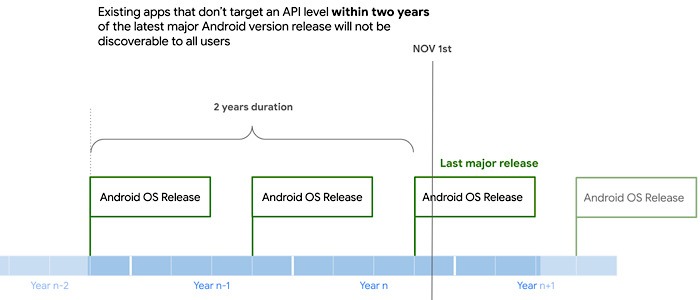
With a target date of November 1, 2022, “existing apps that don’t target an API level within two years of the latest major Android release version will not be available for discovery or installation for new users with devices running Android OS versions higher than apps’ target API level. As new Android OS versions launch in the future, the requirement windows will adjust accordingly,” explained Google.
Again, the purpose of this is to keep Android users safe. When an OS is updated, it includes security updates. If a developer doesn’t update its app as well, users aren’t reaping the full security benefit.
Luckily for users, most developers already abide by Google’s rules and keep their apps updated. This policy update is aimed at the few developers who ignore the rules. Google is encouraging developers to:
- Review the guide on migrating Android apps to meet Google Play Store’s target API level requirements.
- Review an article on the target API level requirements.
- Request an extension of six months to complete the migration.
How Strict Is this Policy?
This policy may seem super-strict, but it’s not as brutal as it may seem. If you’re using older Android apps you previously downloaded from Google Play Store, you will still be able to “discover, reinstall, and use” the apps on Android devices running the same OS version that the apps support.
iOS users aren’t so lucky. Apple has a stricter policy and makes more sweeping removals. The App Store has removed a great number of apps that are either outdated or simply haven’t been updated in many years. Users suddenly aren’t able to use these, as they no longer exist on the App Store. Apple doesn’t keep them going for current users like Google plans to do.
If you’re already having issues with your Android apps not showing up on the Google Play Store, read on to learn how to fix the situation.