


Despite many technological advances, Android users still can’t see iPhone users’ emoji reactions to text messages. That is finally changing, as a Google Messages beta will finally show emojis in iPhone users’ reactions instead of text. This coincides with Apple releasing a new batch of emojis with its own beta.
Also read: How to Create and Add Custom Emoji to Your Discord Server
Cross-Platform Emoji Reactions Now Agree … Kind Of
If you’re an iOS user, you may not have even realized that your friends and family who have Androids can’t even see it when you “heart” their message. You do it in iMessage, but when it shows up in their SMS message, it’s just text; it tells them that you “loved” their message.
Last November, it was revealed that Google was testing a change to its messages that would depict the reactions as they were meant to be: emojis. Three months later, a Google Messages beta is showing emoji reactions.
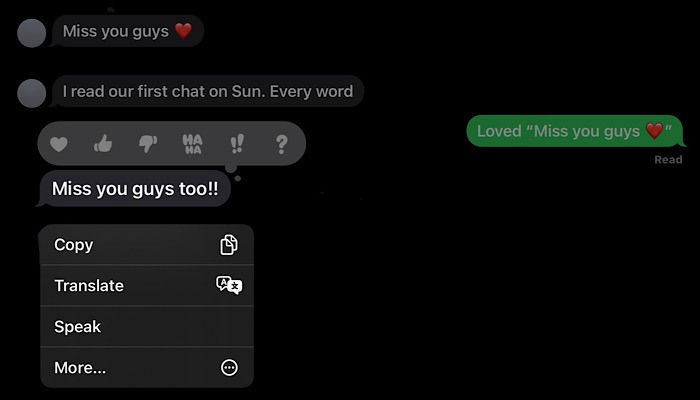
These iMessage reactions are referred to as “Tapbacks.” Instead of seeing them as text, Android users will now see the emoji in the bottom-right corner, mimicking what iOS users see.
Interestingly, it’s not a direct comparison. A heart reaction shows up as the smiling face with heart eyes, the HaHa reaction shows up as the laughing with tears emoji, the exclamation marks show as the surprised face, and the question marks show up as the thinking emoji.
You may not be able to see the reactions yet on your Android device. This feature is rolling out slowly to a Google Messages beta, and it’s unknown when it will roll out publicly.
If you decide you’d rather go back to seeing the reactions in text form, it is possible to turn the feature off. Go to the “Message overflow menu -> Settings -> Advanced” to do so. When you tap a message reaction when it’s turned off, Google will tell you it was “translated from iPhone” and show a larger view of the emoji reaction and the sender’s name, which will be particularly helpful in group conversations.
Apple Beta’s New Emojis
While Google is working on conversing with iPhones in the intended format, Apple is releasing its own beta with even more emojis. The iOS 15.4 beta has 37 new emojis, leaving the question of whether they are even necessary.
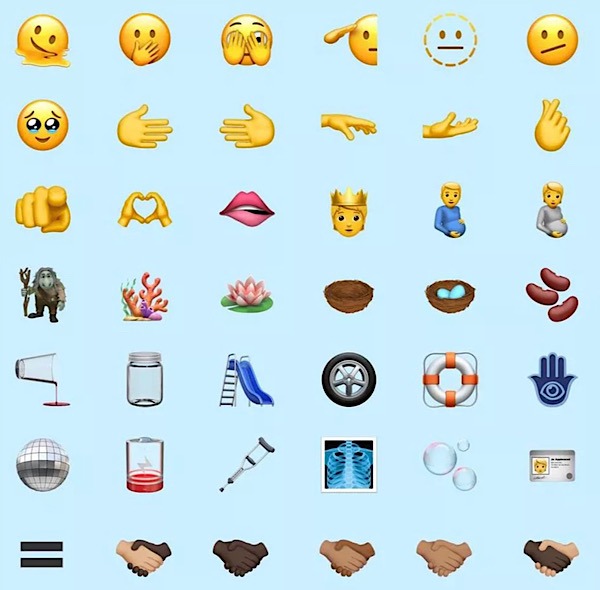
The collection includes a hodgepodge of different reactions and objects. There’s a peek-a-boo, palm up, palm down, half of a face that’s saluting, hands forming a heart, pregnant woman, pregnant man, troll, mason jar, beans, a crutch, and more.
If you have a use for all of these, you’re having very interesting text conversations.
But perhaps overdue are the multiracial handshakes. It’s quite surprising that they have not been offered before, just as it’s surprising that Android users are just now gaining the ability to see true iPhone reactions.
If you’re an Android user and want the use of all iPhone emojis, check out this handy guide.
Image Credit: cnet