
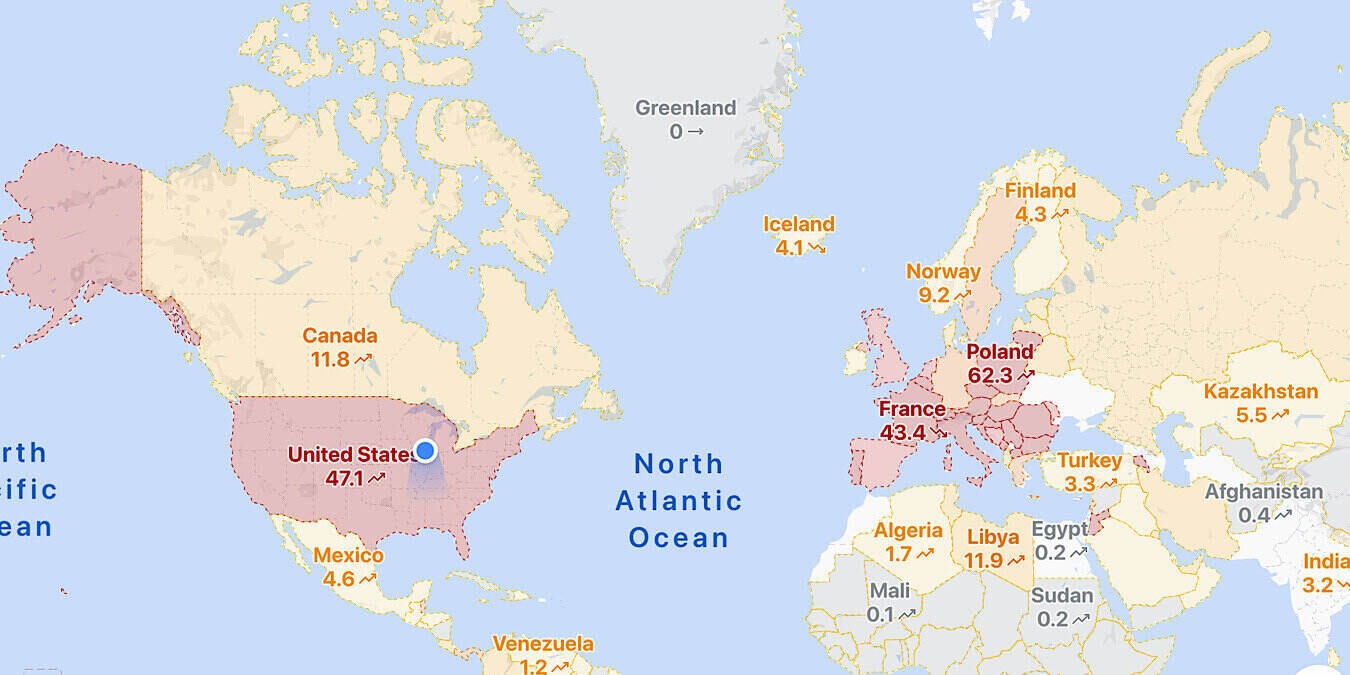

Google seems to have been on quite a tear this year, updating devices and apps. It seems like every week there’s a new update. This week there is an update to Google Maps that adds Google Assistant help, food delivery status, and further COVID-19 data for the given area.
Google Maps Coronavirus Info
It’s clear that this Google Maps update, with its 250 new features and improvements, is all about providing information to users. Amazingly, Google claims more than 500 million updates are made each day to Maps.
The most helpful change to the app is information regarding coronavirus data. Earlier, Google Maps gained the ability, through layers, to add a COVID-19 layer to the map. It’s currently showing the seven-day average of new cases per 100,000 people. It shows the data by country, and in the United States, it’s also by state and county.
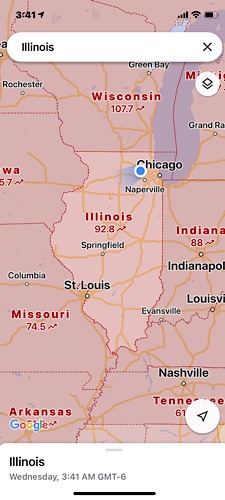
However, It will soon show all-time cases and quick links to resources. This will be so helpful for traveling plans, to learn not only whether the place you want to travel to is a current hotspot for the virus, but also if it was a hotspot in the past. If you have questions regarding the info, those resources will be there to help you.
Other Changes in Google Maps Update
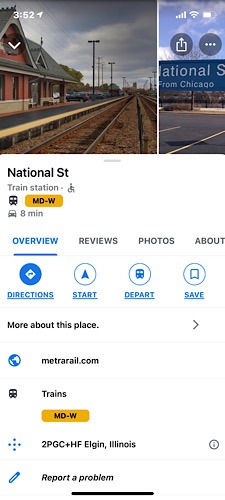
There are a few other changes to the Google Maps update that will grab your attention as well. One is that it will show the crowd size on public transit. I checked a nearby train station, but it doesn’t show this information. It either hasn’t rolled out to my phone yet or is because no one is there as it was before 4 a.m. This is in addition to the feature showing the “popular times” that has been on the app for some time.
Google Maps will also begin showing the status of your takeout and delivery orders and your reservations. Users in the U.S., Canada, Germany, Australia, Brazil, and India will see this. This will include information for orders and your pickup times. It will also show your expected food delivery times, anticipated wait times, delivery fees, and reorder shortcuts.
A really great change to the Google Maps update is hands-free driving in the way of Google Assistant. When you’re in driving mode, you can activate Google Assistant to send and receive calls and texts and review new messages across multiple apps. It will even include playback commands for services such as YouTube Music, Spotify, Google Podcasts, etc.
I was not able to access this, as currently, it’s an Android-only option in English in the U.S. It can be accessed through a pop-up, through Assistant settings, or by voice with “Hey Google.”
“Driving mode makes all of this possible without ever leaving the navigation screen, so you can minimize distractions on the road,” wrote Dane Glasgow, Maps VP, in a blog post.
“To make sure that information is as accurate and up-to-date as possible, we rely on 170 billion high-definition Street View images from 87 countries, contributions from hundreds of millions of businesses, and people using Google Maps. … We also invest in technical approaches that power some of our most beloved and essential features — from the 20 million places globally that now show popular times data to AR-powered Live View.”
These changes join all the previous great features. Read on to learn how to get a Google Maps alert when driving in the wrong direction.