

If you count on seeing all your health metrics from your Fitbit in the way most convenient to you, you may be out of luck. Google is closing the web app, so you will have to get all your Fitbit data from the mobile app.
Google Announces End of Fitbit Web App
Google, the company that acquired Fitbit, has decided to terminate the Fitbit web application, so users who have grown accustomed to browsing their health metrics via the web app, will no longer have this option, as of July 8, 2024.
These health metrics include but are not limited to, steps counted, heart rate, sleep data, and calories burned – all fitness-related statistics that Fitbit devices track. The web app provided a comprehensive and detailed view of these metrics, and for some users, it was the preferred mode of accessing their information, due to its user-friendly interface and the ability to view data on a larger screen.
With the discontinuation of the web app, users must now rely solely on the mobile app to access their Fitbit data. This may require a period of adjustment for users who found the web platform more convenient or were more comfortable navigating the web interface. The mobile app will continue to offer all the features and data that were available on the web app – however, the web app does not work on tablets.
This move can also be seen in the context of Google’s broader business strategy. Many tech companies are increasingly focusing on mobile platforms, reflecting the trend that mobile devices are becoming the primary tool that people use to interact with digital services. Google’s decision to shut down the Fitbit web app could be seen as part of this ongoing shift towards mobile.
FYI: if you lead a very active lifestyle, check out these two watches from Kospet.
Missing Fitbit Data
Yet, everything may not be as rosy as Google says it is with Fitbit. Perhaps just accessing your health metrics on the mobile app instead of the web app isn’t all you need to do.
A friend has a dearly-loved Fitbit that she depends on for health reasons. Working on this news piece, I mentioned it to her. As it turns out, her health data stopped working the night after Google’s announcement. She doesn’t have data from the past 24 hours. It’s not even about web app vs. mobile app – it’s simply not there.
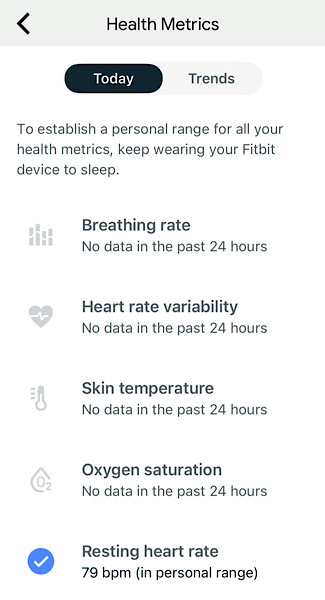
Granted, we’re weeks away from July 8, and Google is promising all of the same metrics will be available in the mobile app. Searching, I did turn up one other complaint of the same thing happening. That leaves it unclear whether there is now a problem with Fitbits.
Nevertheless, these are the things that happen once you start changing options with beloved services and devices. And with something like Fitbits, users depend on them for their daily needs – for fitness and health reasons. So taking something away from them can be scary. Their health and fitness depends on it.
It may take a little time to find out whether data will be restored to my friend’s device and others. In the meantime, if you’re considering a switch, check out this comparison of Fitbit and Apple Watch.
Image credit: Unsplash. Screenshot by Laura Tucker.