

Last year Google came out with a time-saving way to reach some of their services with the .new domain. It allowed us to quickly create documents, spreadsheets, and presentations by typing in docs.new, sheets.new, and slides.new.
The company is now expanding its reach to third-party websites. The ones available now were handpicked by them, but soon any company can apply for a .new domain. You can now sign in to Spotify, Medium, and eBay through this platform.
.new
It seems like such a natural for Google. They created the Google search engine, and it changed our approach to research. We just have to go to the address bar and search whatever we are looking for.
Now in 2019 we can go to the address bar and instead of typing in a long URL or having to store it in a long list of bookmarks, you can just type in the shortcut.
They had always planned to open up .new to third parties, but to start it off, they hand-picked sites that they know are ones many people frequent, such as Spotify, Medium, eBay, etc.
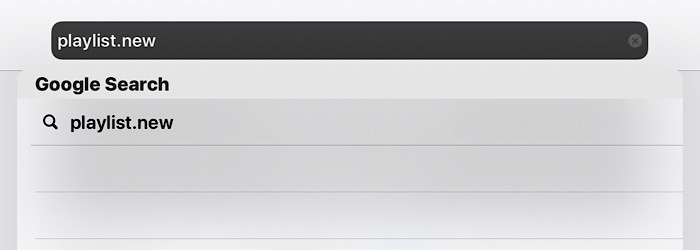
Just type in playlist.new to stat a new Spotify playlist. So you’re not really reaching the Spotify website’s front page, but you’re reaching a specific part of Spotify, saving you some trouble. You can also type in sell.new if you want to list something new on eBay. If you want to create a new post on Medium, just type in story.new.
“Similar to .app, .page, and .dev, .new will be secure because all domains will be served over HTTPS connections, said Ben Fried of Google in a blog post.
There are also shortcuts for Canva, Webex, creating invoices, RunKit, a combined document and spreadsheet, OVO Sound, Google Calendar, OpenTable, and Github so far
Trademark owners can register their trademarked .new domains with Google through January 14. Anyone can apply for a .new domain beginning December 2, which starts out the Limited Registration Period. Before that, Google will be allowed to assign .new domains where they see fit, and they can set up a total of 100 by then.
Entrants for a .new domain will be vetted by Google to be sure the intention is to use it as an “action generation or online creation flow.” It has to be saving them a step – you can’t just be sending people to your website hidden behind a .new domain.
“Right now we see [domains] as gateways to the Web, bringing people to these static pages,” said Stephanie Duchesneau, Google program manager at an Internet Corporation for Assigned Names and Numbers-hosted summit this past spring. “But we really wanted the domain to be doing even more work.”
Additionally, all .new sites have to use HTTPS, keeping the connection encrypted. It ensures you won’t have anyone else sneaking a peek at your created information, such as your playlists, calendar, etc.
Game-Changer?
This could be a game-changer. While it probably won’t revolutionize the computing experience the way the Google search engine did, it could still change it somewhat significantly if people really take to it.
What do you think? Is the .new domain a game-changer or just another way for Google to misuse your data? Add your thoughts to the comments below.