

When it comes to programming, people tend to rush to hot new languages. While it may seem like it has been around forever in Internet time, Go is still a fairly new language. Despite that, it is being widely used in several fields.
Still, there’s something to be said for sticking around. While Java isn’t nearly as old as the languages that influenced it, it’s much older than Go. It’s also heavily entrenched in many industries, so you’ll still find plenty of people picking the language for their programming tasks. Let’s see how the two languages compare to each other.
Also read: Golang vs Python: Which Is Best for Your Programming Needs?
Golang vs. Java: Introduction
Go was designed at Google, with the project kicking off in 2007. Robert Griesmar, Rob Pike, and Ken Thompson were the key designers. It is meant to be easily readable and to allow users to quickly become productive while remaining fast. Despite work starting on the language in 2007, Go wasn’t released to the public until 2012.
Java’s history is a much stranger one. Originally designed for interactive television, Java was too ahead of its time for cable. Eventually, the focus shifted to standard computers and the then-burgeoning Internet. Java’s big feature at the time was “write once, run anywhere.” This philosophy was a big deal when Sun Microsystems first released Java in 1996. Sun provided the Java runtime on the most popular platforms. It also promised developers they wouldn’t have to port their code to multiple systems.
Golang vs. Java: Language Features
Both Go and Java owe much of their design to C, but that can be said about a bevy of different languages. While they might share common roots, Go and Java are more different than they are similar.
Go strives for simplicity and scalability. This means clear, easily readable code and solid error-checking, which means that errors are caught and exposed early and often. The language’s “goroutines” make concurrency a snap, while other languages can make this a complicated mess.

Java is more stable and established and follows object-oriented principles. While object-oriented programming isn’t as fashionable as it once was, it offers benefits like reflection, the ability for a program to essentially examine itself at runtime. While reflection is possible in Go, it isn’t as readily accessible.
Golang vs. Java: Performance
For some reason, people tend to think of Java as a slow language. Thanks to its JIT (just-in-time) compiler, which compiles machine code specific to the system on which it is running, this is far from the case. Still, in many cases, benchmarks show that Go has an advantage in speed.
Much of this is due to Go’s language-level focus on concurrency. That said, many of the benchmarks linked above show Java either matching or beating Go when it comes to performance. This is a case where you’ll need to look at the languages’ performance in certain areas to see which will be more performant for you.
Golang vs. Java: Community
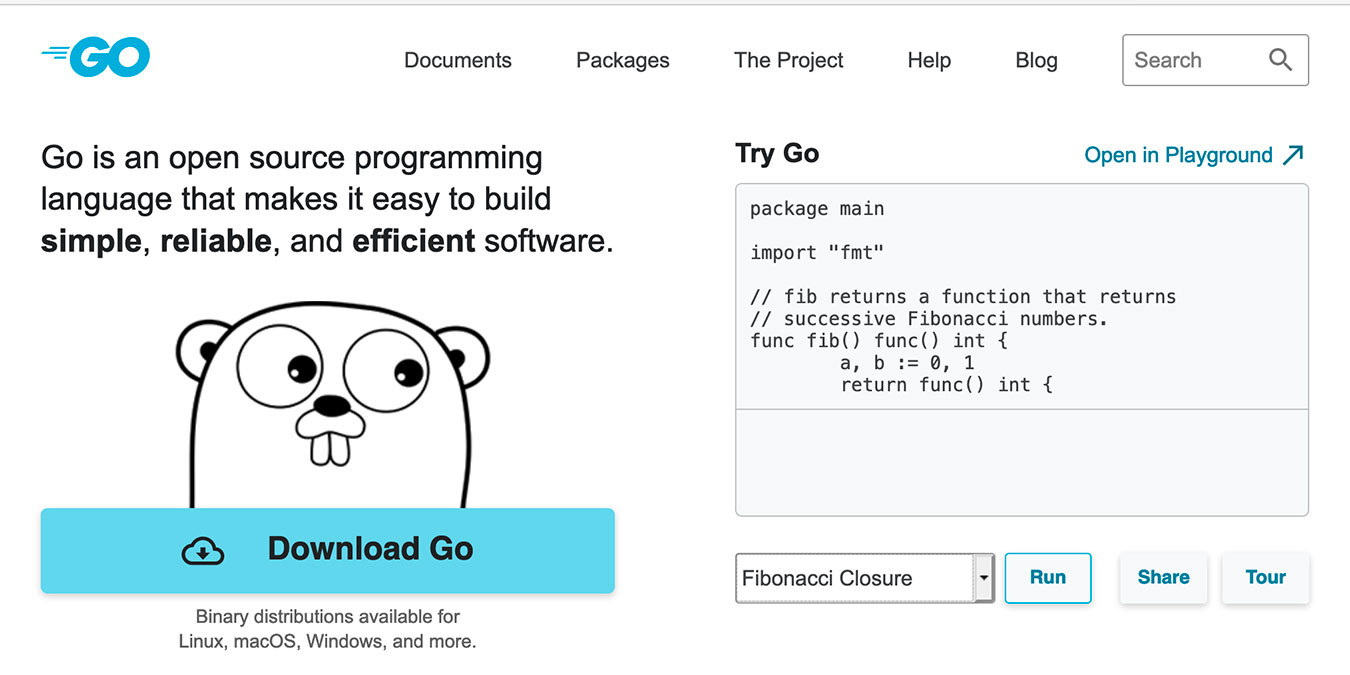
Despite only being around for a few years, a large community has sprung up around the use of Go. You’ll find plenty of example code, open source libraries, and of course, other users. This means that when you run into a problem, someone has likely solved and documented it.
Java had a sixteen-year head start on Go, so it is extremely well-known. There are plenty of people there who use Java, especially as it is one of the main languages in which Android apps are written. While Go’s community has the excitement, Java’s community is full of veterans, which can be helpful to newcomers and seasoned professionals alike.
Conclusion
As is often the case, there isn’t a clear-cut winner here. Golang excels in certain categories, while Java is going to be a better case for others. If you’re trying to choose one for a new project, think about the requirements of the project and what platforms it will run on. If that isn’t enough to help you choose, and you’re working alone or in a small team, choose the language you’re more comfortable with.