

We’ve all tried different email systems that promise this or promise that. But while they all sound exciting, we always end up with good ole Gmail. It may not have all the bells and whistles that we’re looking for, but it’s reliable. But rumors and leaked images of Gmail’s new design say it’s now about to be exciting as well as reliable.
Take a Snooze
We’re all comfortable with Gmail, whether we use the web app, the mobile app, or use it within a different email app. We know what we’re getting. At the same time, we’re overdue for an update to the interface. While changes have been made to the mobile apps, they’re not made very often to the web app.
Feast your eyes on the image below. These are images that were leaked on The Verge of Gmail’s new design.
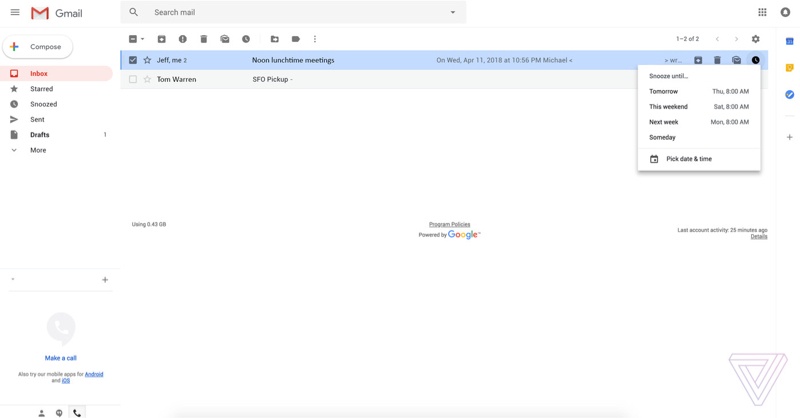
It looks so much cleaner and up to date. Also, there are some undeniable things that are new and improved. See the list on the right side? It shows a Snooze menu.
I know what Snoozed is because I use the Inbox mobile app. It’s a Gmail app, but it works differently, and better in my opinion, than the regular Gmail app. It’s great for achieving Inbox Zero.
Snoozed is just what it sounds like. It allows you to delay emails until you’re ready to deal with them. Just like snoozing an alarm, you choose the time and date when you want to read them, respond to them, etc.
Another feature from Inbox that will be implemented is smart replies. It will give you quick responses to some emails. It figures out what type of response is needed and offers responses to thank people, RSVP to an invite, agree with what they have suggested, etc.
Check Your Calendar
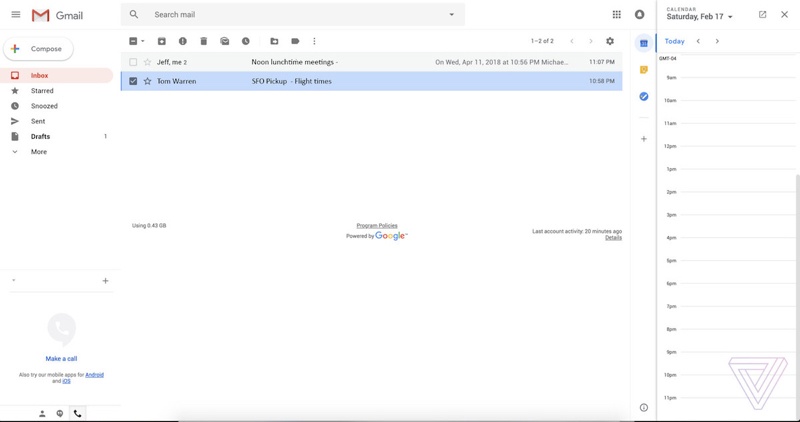
Additionally, if you look to the right of the image below, you can see the calendar in all its glory. How handy that would be to have your calendar right there with your gmail to make planning just that much easier!
And I have to say, I’ve been reviewing my share of productivity apps lately (I love them!), and all of them incorporate a calendar, at least all the good ones. Sometimes they incorporate Google Calendar or the iOS Calendar, and sometimes the they incorporate their own calendar. It’s a necessity in our daily lives at this point.
According to The Verge, incorporating Google Calendar is an option. You can also add Google Keep or Google Tasks, or can collapse the whole section and only focus on your email.
Coming Soon
Google will also be allowing you to choose one of three new layouts to view your email. There is a default view that shows attachments, a comfortable view that doesn’t highlight the attachments, and a compact view that shows more messages on a single page. The Verge explains that the compact view is the most similar to what we currently have with the Gmail web app.
These changes will be rolling out soon, but there has been no definitive date mentioned.
I do have to admit that it worries me a bit, as I use the Inbox app nearly exclusively rather than the web app, so I’m worried if this means they’ll be discontinuing this app now that some of the great features will now be in the web app. What has not been addressed is if they’ll also be incorporating the ease of achieving Inbox Zero
What do you think of Gmail’s new design? Are you anxious to try it? Or do you always use apps instead? Let us know what you think of it in the comments section!
Image Credit: The Verge