
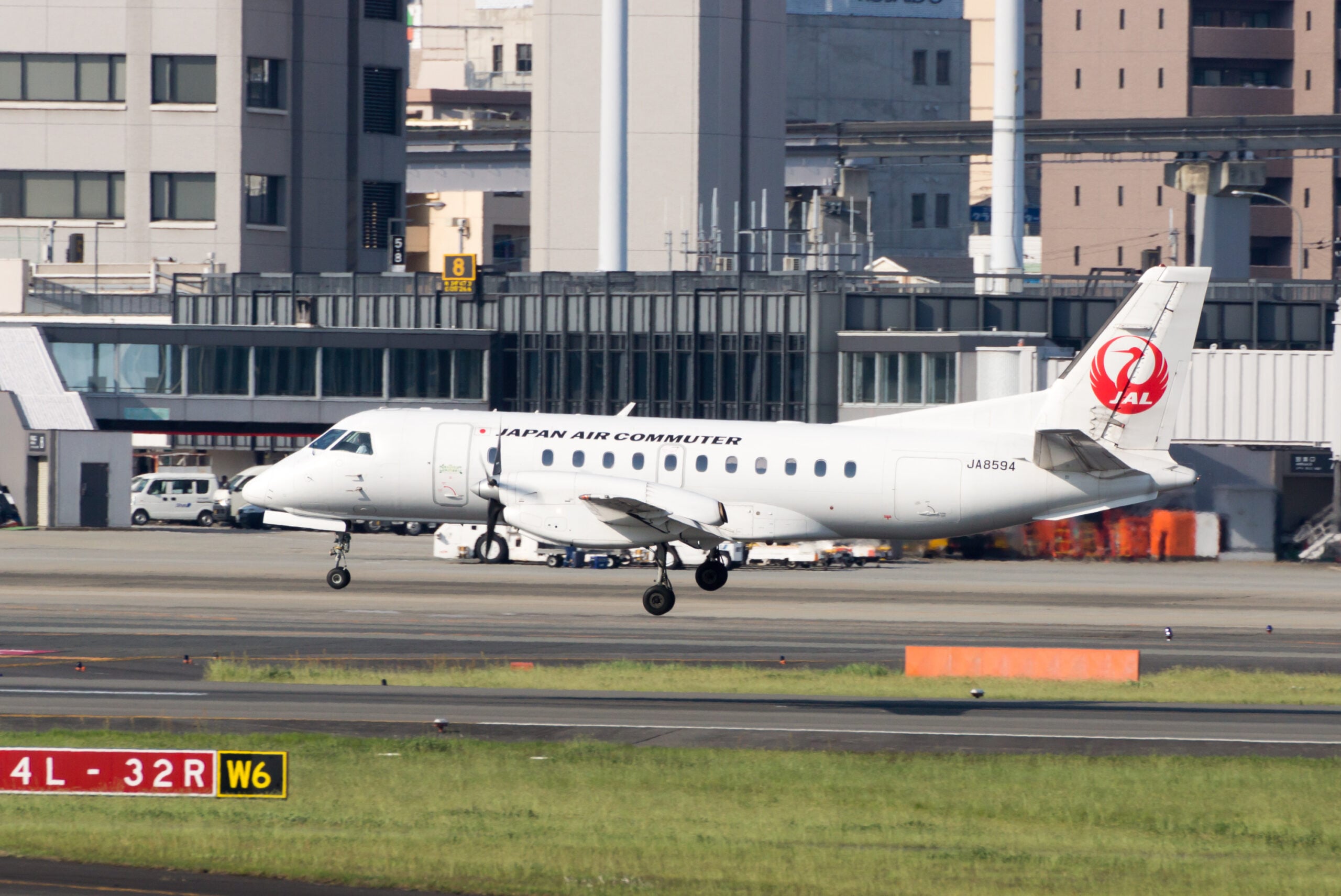


GE Aerospace and BETA Technologies have taken off in a modified Saab 340B fitted with a traditional GE Aerospace CT7 gas engine on one side and a megawatt-class hybrid electric engine on the other, with the electric motors and battery system providing additional power during takeoff, GE Aerospace said in a release on 4 November.
The tests took place at BETA’s flight test facility in Plattsburgh, New York. The modified hybrid electric engine was on the right side, and the motors and battery system supplied the extra power needed to deliver thrust, GE said.
The teams recently completed the work, according to the company, which announced it during the Up.Summit industry event. GE called the result the world’s first hybrid electric assisted takeoff using a plane designed to operate at commercial airliner altitudes with passengers.
“GE Aerospace is advancing the building blocks that will define the future of hybrid electric flight, now successfully demonstrating a more efficient commercial takeoff with a hybrid electric system,” said Arjan Hegeman, GE Aerospace vice-president of future of flight engineering. “Step by step, we’re proving out a suite of next-generation technologies, from hybrid systems to Open Fan architecture, to meet customer needs.”
One side conventional, one side hybrid
GE describes the hybrid unit as a fully integrated megawatt-class, multi-kilovolt propulsion system. Megawatt-class refers to power measured in millions of watts, and multi-kilovolt to an electrical system running at thousands of volts.
The other side of the aircraft used the CT7, a GE Aerospace gas engine. Based on early observations, the hybrid electric takeoff was achieved with less noise than gas engines alone, GE said. The company limited that comparison to the takeoff phase.
Earlier tests used the electric system in flight
Previous hybrid electric flight tests by GE Aerospace and BETA used electrical power assist during climb and cruise, as well as power regeneration during the cruise and descent phases. The new test applies the assist at the start of the flight.
In May 2026, GE Aerospace worked with NASA, BETA and Boeing on what GE calls the world’s first hybrid electric flight above 30,000 feet, the same altitude levels as passenger commercial aircraft. Those technologies were developed through NASA’s Electrified Powertrain Flight Demonstration project, known as EPFD.
Teams then ferried the EPFD aircraft to the United Kingdom for the Farnborough International Airshow, which GE said marked the first hybrid electric flights to cross the Atlantic. Those achievements, along with daily public flying displays, confirm the viability of more electric aircraft engine systems for aviation, according to the company.
The hardware feeds a demonstrator programme
Both the hybrid electric system and Open Fan are being developed through CFM RISE, a technology demonstration programme unveiled in 2021. CFM International is a 50-50 joint company between GE Aerospace and Safran Aircraft Engines.
Open Fan is a jet engine design that removes the traditional casing, allowing a larger fan size with less drag to improve fuel efficiency, GE said. Hybrid electric systems are highly compatible with different fuel types and with advanced engine architectures such as Open Fan, the company said.
CFM RISE has completed approximately 500 test campaigns and more than 10,000 endurance and dust ingestion cycles to date, including tests on Open Fan, compact core and hybrid electric systems. The programme targets more than 20 per cent better fuel burn than commercial engines in service today, and lists safety, durability and efficiency as its priorities.
RISE stands for Revolutionary Innovation for Sustainable Engines. It is a technology demonstration programme and not a product offered for commercial sale, meaning the hardware tested on the Saab 340B is not yet something an airline can buy.