


For those of you having a gloomy Monday, it might be refreshing to know that today marks the 30th anniversary of the GIF image format, released for CompuServe on the 28th of May, 1987.
Graphics Interchange Format (GIF) today is known more for making the funny animated images we share with each other than for its original purpose. In fact, most people using it today aren’t even old enough to remember its release. In response to the GIF turning 30, I thought it would be a nice idea to share a couple of fun facts about this image format.
1. It Was Released Around the Time of Windows 2.0
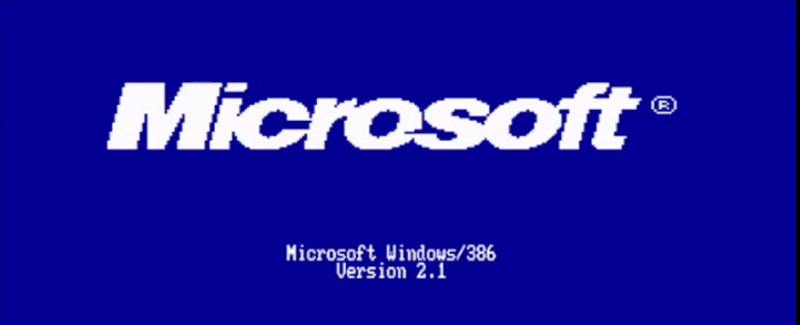
You know that GIFs have been around since practically forever, but you probably don’t know what else came around at the time of its release. The GIF image format began development in 1986 and was released on the 28th of May, 1987 for CompuServe. At the time this was the first ever Internet service provider in the United States. Keep in mind: Many people were still using DOS, but a lot of other more enterprising folks were running the latest and greatest technology from Microsoft – Windows 2.0. It wasn’t until 1992 that the more successful 3.1 version of Windows would be released.
To say that the Internet would be unrecognizable today to someone who was browsing the Web in 1987 is an understatement. Web browsers didn’t even exist, so there was no “browsing” to be done. Instead, they were dialing into CompuServe, bulletin board systems (BBS), and RELAY (a chat service).
The latest technology for Internet connectivity back then was a 1200-baud modem that would have “break-neck” speeds of 2.4 kbps (if you were blessed with a modem that sent two bits per baud). That’s roughly 10,000 times slower than what we would call “mediocre” today.
2. GIFs Weren’t Originally Meant for Animation
It’s 2017, and the majestic GIF plays a modern role as an easy way to render and send animated images online. This association has become so strong that if you search for something with the word “GIF” after it, you’ll get a bunch of animations related to what you were looking for. But GIF wasn’t originally developed for that purpose. To understand why, we first have to look at what problem the developers were trying to solve.
When the Internet was just starting to become a thing, bandwidth was extremely limited. And as I said previously, you could only download at about 2.4 kilobits per second if you could afford the premium it cost back in the day.
During this little dark age every byte was precious, and computer manufacturers like IBM and Apple had their own proprietary display formats for images. To minimize the impact of this problem, the developers of GIF hoped to standardize images across the Internet. Since JPEG was still in development (and had little regard for saving bandwidth), it was up to these programmers to ensure that they could make images that were both easily readable and had a small impact on bandwidth.
GIFs were developed with a simple 256 color scheme that took advantage of a special type of compression called LZW that would minimize distortion. This made it ideal for sharing graphs and charts which needed a lot of clarity and didn’t use a whole lot of colors.
It wasn’t until the GIF89a specification released in 1989 that this image format would finally support animation. And we didn’t take full advantage of this until the mid-90s. For almost a decade we lived with windowed desktops with no animated images!
3. The GIF Was on Life Support at One Point
It’s easy for geezers to take this for granted, but there are a lot of people browsing the Web right now who haven’t lived through it in the early 2000s. The animated GIF’s usage started dropping around 2006, and in 2012 it rarely found a place anywhere. With absolutely no warning, it just started making a comeback in 2013. Some more enterprising users began using GIFs in place of emoticons to illustrate more complex forms of expression. Geekier types would even make their own images. Facebook even took note and made their site more GIF-friendly in 2015.
Know any more wacky and fun facts about this beloved image format? Leave a comment below with your thoughts to pay homage to this maverick creation!