

Certain fads enjoy a fleeting surge in popularity online, and some never make it beyond a few niche communities. Many of the trends are difficult to explain outside of the context of their usage scenarios, but full-width text has its own distinct history.
For those uninitiated, full-width text and its offspring appear as text spaced something “L I K E T H I S.” Whether you’ve seen it in tweets, Facebook posts or web comment sections, there’s a lot more going on than you might think.
History
The origins of full-width text pre-date widespread Internet usage, instead stemming from domestic music releases in Japan. Artists followed major trends like incorporating English words and lettering into album titles alongside their native language.
Oftentimes the album names would be nonsensical, but crucially the English characters did not work with the Japanese alphabet at first. This was circumvented with increased spacing, hence what became known as “full-width” text.
Full-width text’s resurgence can be attributed to the Internet and a particular genre of music known as “vaporwave,” a bizarre fusion of different interests beginning around the early 2010s. Sampling is common as is a focus on consumer culture and what is referred to as “aesthetics.” In fact the main subreddit for vaporwave describes it as “music optimized for abandoned malls.”
Simply put, vaporwave places a considerable emphasis on how it appears, with some online descriptions indicating that it places its appearance above its music. The focus on appearance placed prominence on aesthetics, a word usually spaced as “A E S T H E T I C S” within the community surrounding vaporwave. Music journalists even struggle to explain the trend with at least one suggesting it is “ironic or satirical.”
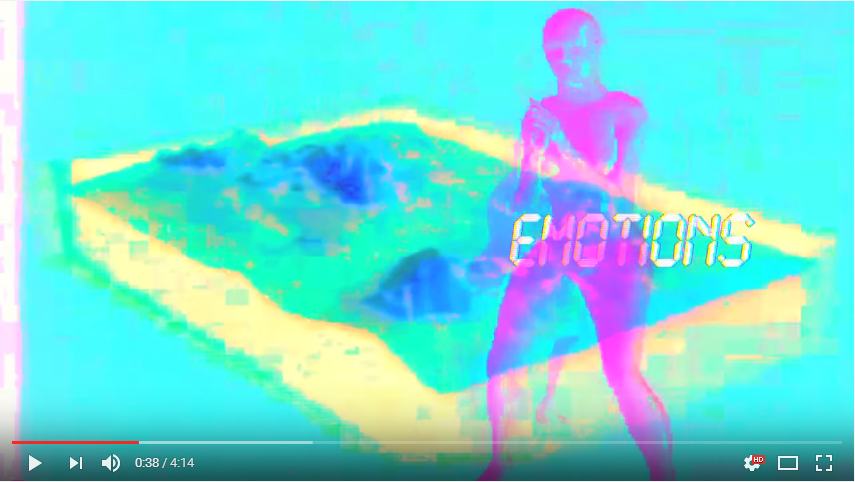
American rapper Yung Lean may also provide an explanation for the peculiar focus on “aesthetic,” with some of his music videos featuring strange artistic choices and focuses on “glitchy” artwork. Yung Lean himself gave rise to a meme relying on full-width text; the practice of suffixing “B O Y S” to other phrases stems from both the name of Yung Lean’s record label, Sad Boys Entertainment, and a surprisingly successful Starcraft II team. One of the clearest examples of the style is Yung Lean’s “Hurt;” its comments are a prime source of examples of full-width text’s usage online.
Music
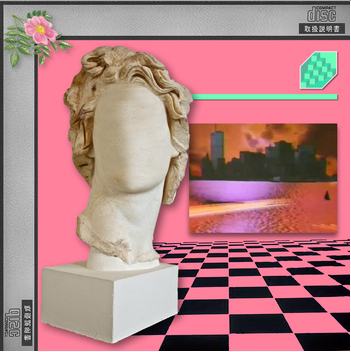
Vaporwave’s key tracks are difficult to define, with fans of the genre splitting its short history into at least three different phases. One of the earliest albums to be identified as part of the trend is Floral Shoppe by Macintosh Plus.
Beyond this album, other artists are often found in related videos if you wish to explore the genre further.
Resources
Full-width text may never become totally mainstream, but it does have its place in certain online communities. Should you wish to adopt full-width posting for yourself, you have two main options.
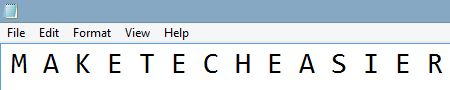
You can place a space after each letter in a given word to create a similar effect of full-width text, but it is not the truest example of it in use. Spacing will not be the same as with actual full-width lettering.
If you’d rather get the real deal, online converters make it very easy to enter regular text and get a full-width version in return, though it is advisable to not have letters spaced before entering them into a converter. Doing so will only result in double spacing between letters in your full-width text. Given how big the spacing will already be, that may not be ideal.
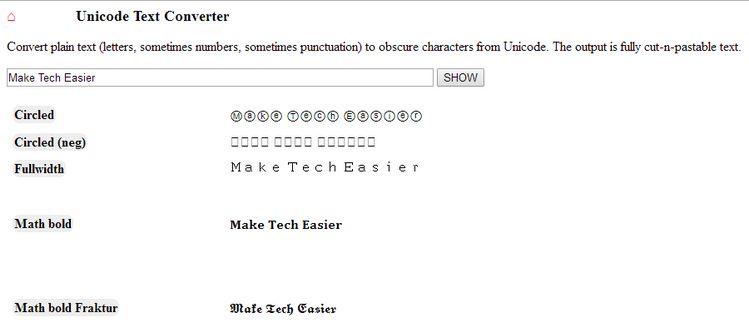
1. Qaz
Qaz, with its quirky top-level domain, offers full-width conversion as well as a range of other Unicode character conversions. Due to how the site is formatted, it does not feel ideal for longer bodies of text, but in our testing it worked flawlessly regardless.
2. Txtn.us
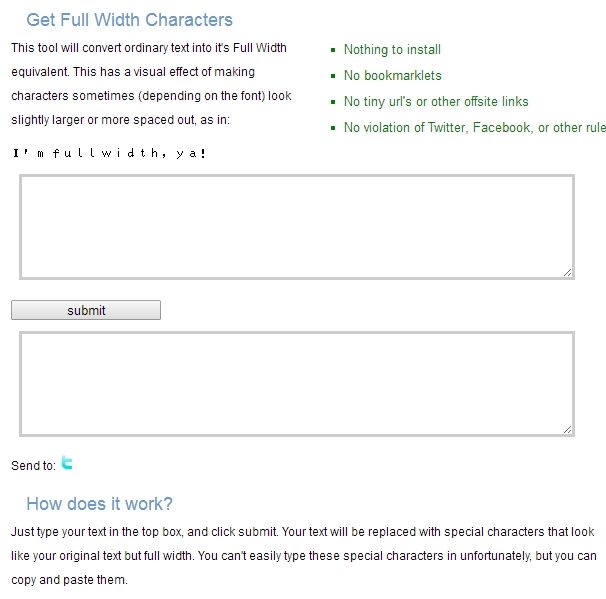
Txtn.us (no longer available) is an extremely straightforward text converter. Based on the appearance it has been available for a while, possibly predating the resurgence in full-width text’s usage; thankfully the Unicode implementation of full-width text has not drastically changed since its inception. We’re inclined to agree with one of the statements made on the website, that these special characters cannot be easily typed in.
3. Linkstrasse.de
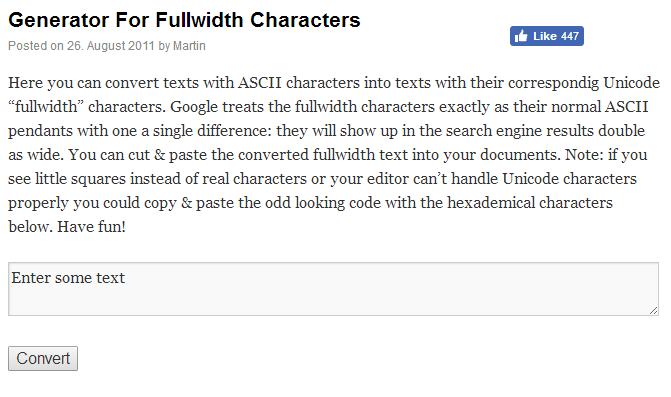
The third option, Linkstrasse.de, is a converter on a larger blog where it provides a little more context about Unicode’s focus on rendering every character and how full-width text fits into that vision. The converter is extremely simple to use with the first box allowing for input and the second providing output.

4. Holdun

Software engineer John Holdun deserves credit for the extremely simple design of this particular full-width converter. If there’s one converter that comes close to being worthy of the ‘A E S T H E T I C’ label, this is probably it. The site has no detail or settings, save for the default text of “type and touch return.” As it turns out that’s all you have to do. Press “Enter” and it’ll convert text to full-width, just like that.

Conclusion
As you’ll no doubt see, full-width text and its offshoots exist as a cross-section of the strangest elements of Internet culture, Japanese music releases and a satirical, often ironic, sense of self-awareness. Whether you already have or never will try using it for yourself, it provides an ideal entry point into vapourware, itself a curious jumble of different ideas.
Image credit: e-ink