


What if there was a way to add electronics to your food and your drugs? Can you see some value in that at some point? Or are you thinking tech is already too many places in your life; being connected to your food is just way too much?
Interestingly, it’s happening, edible electronics is not so much a “what if” scenario. They have already figured out how to do it. They just need to figure out a few problems that exist with it … and figure out what they’re going to do with it.
What Are Edibile Electronics?
These electronics that they’re playing around with are a very, very thin layer and look like tattoos. In fact, that’s what they’re being compared to, the temporary tattoos that children wear when they’re young. Do you remember using those? You place it on your skin and put a wet sponge on it, and that transfers the image from the paper to your skin. The color isn’t staining your skin or inserting dye into it, though, as if you pick it, it will come off, and after a few days, it starts wearing off.
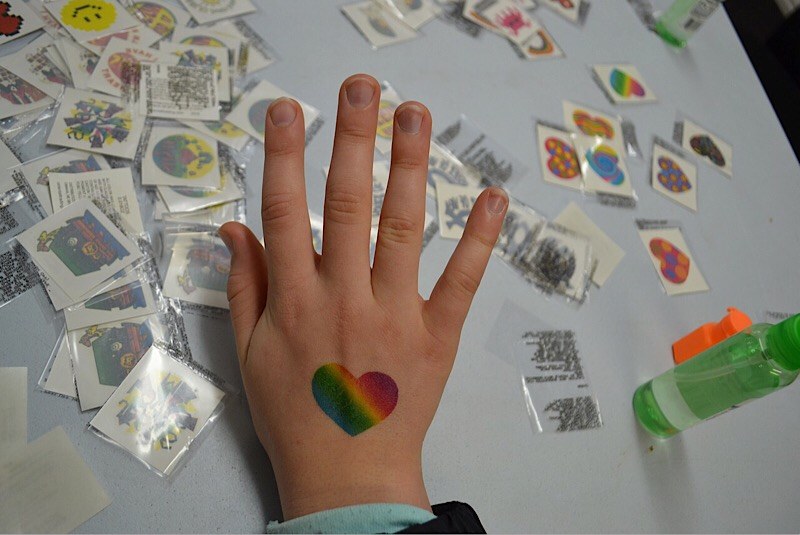
Edible electronics are kind of the same thing. In fact, Giorgio Bonacchini’s team at the Instituto Italiano di Tecnologia (IIT) in Genoa, Italy, was inspired by those very same temporary tattoos.
The team has printed organic electronic components onto that same transfer paper that the tattoos are on when you buy them. After they printed the electronic components onto the paper, they tested the properties of the circuits. They’ve used this system to transfer the circuits on pieces of fruit and pills.
The Challenges
It’s the components in this process that are holding it up. While the ethyl cellulose film that is being used has also been used as a coating on pills, the transistors contain material that is metallic. There is a recommended dietary allowance of bulk silver at 350 micrograms per day for a 155-pound person. One transistor only requires four micrograms of silver, so that RDA shouldn’t be a problem.
However, there are also four different semiconducting polymers being used in these circuits. Two of them are biocompatible, but the other two are fairly new and haven’t been fully tested yet. They are still working on how the polymers interact with the body.

An additional problem is that the transfer process exposes the materials to air, light, and water, and that’s unfavorable to the polymer layer. However, blending the polymers with semiconductors helps with that.
What Does It Mean for the Future?
Edible electronics isn’t a completely new idea, but being able to apply it in this way is. Just last year I swallowed a “smart pill” designed to diagnose my digestive problems. The problem was the electronics inside it were really huge. I was barely able to choke it down. It would have been wonderful if it could have been simply an image transferred onto regular food.
And there are so many interesting uses of the edible electronics. Monitoring the digestive tract is one use they are considering. They’re also thinking it could be used for produce to monitor its edible lifetime. There are many possibilities.
Do you see value in this edible electronics technology? Or are you thinking this is just way too much infiltration of technology in your life? Add your thoughts in a comment below.