
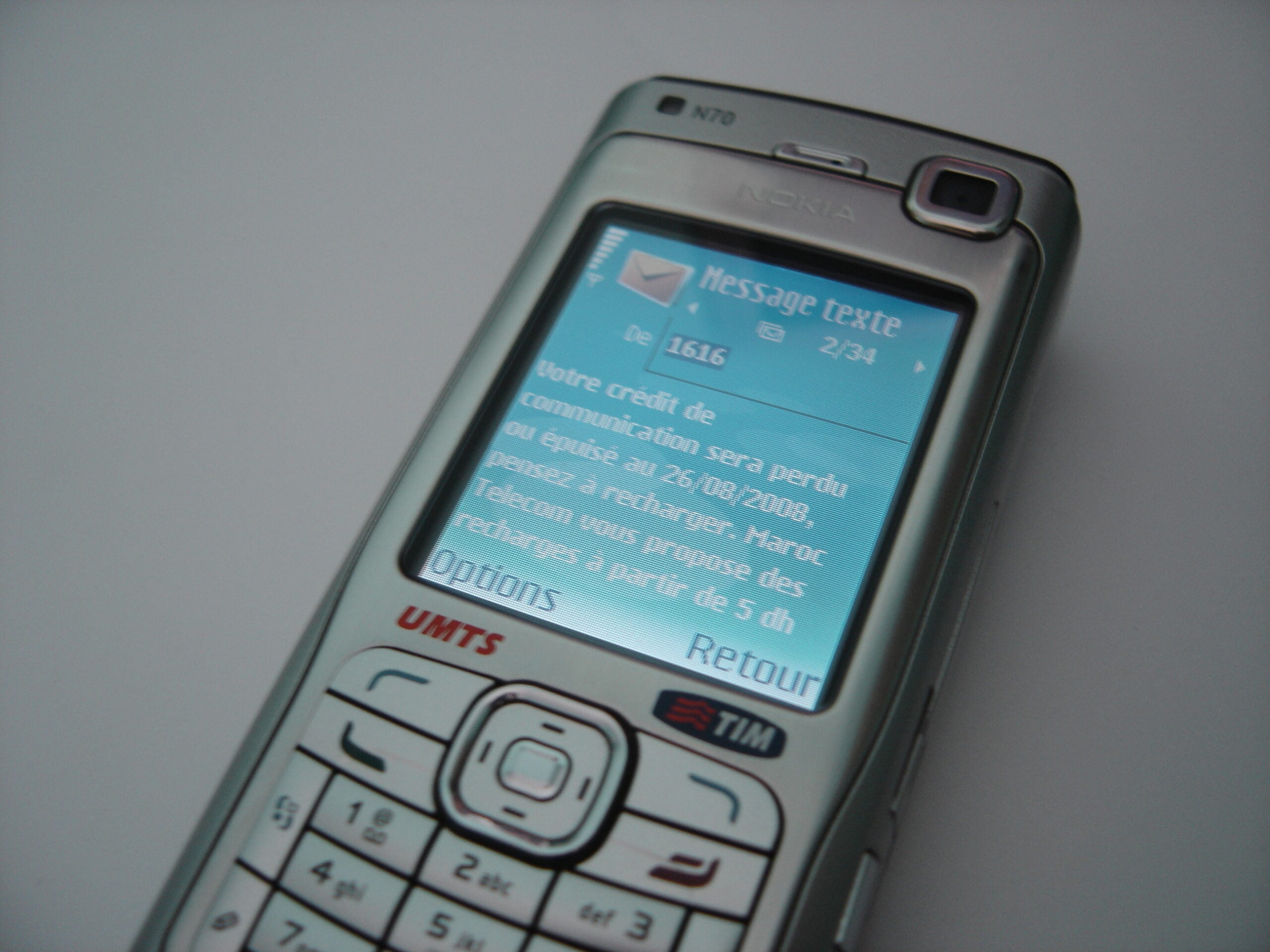


In December 1992 Neil Papworth was working at Vodafone UK’s site in Newbury. His employer, Sema Group, had sent him there to install and test the Short Message Service Centre it was building for Vodafone. Mobile phones did not yet have keyboards, so he typed the message out on a PC. It read “Merry Christmas”.
He sent it to Richard Jarvis of Vodafone, who was at his office Christmas party, according to Papworth’s own account. The date was 3 December 1992 and Papworth was 22, according to Vodafone’s newsroom, which describes the message as the world’s first text.
Jarvis did not reply, the BBC reported in 2022.
A 2.1kg handset
Vodafone UK’s account, published for the 30th anniversary, opens with the words “Legend has it”. It says the message went over the Vodafone network to an Orbitel 901 “portable” telephone weighing in at 2.1kg. The BBC calls Jarvis’s phone a new-to-the-market Orbitel 901 and puts its weight at the same 2.1kg, roughly that of 12 standard iPhone 14s.
Jarvis was a Vodafone chief engineer who was to show the message to Gerry Whent, the chief executive at the time, according to Vodafone UK.
The BBC says the message was sent to test the technology. Papworth describes himself as part of the Sema Group Telecoms team developing the SMSC for its customer, Vodafone UK. Vodafone’s newsroom calls him a 22-year-old software programmer who had been working as a developer and test engineer to create the service for Vodafone.
Vodafone UK says the “Merry Christmas” story remains the official version.
It adds that, as with any new technology, there was much testing of the system behind the scenes. Dave Pearce, then Vodafone’s SMS product manager, recalls that the first text he ever saw was the word “test”, sent by a Vodafone engineer called Ian Harris during the development phase.
Papworth said in Vodafone’s 2017 anniversary piece: “In 1992, I had no idea just how popular texting would become.”
What came after
The original idea was for Vodafone to use the system essentially as a paging service, Papworth says.
Texts had a 160-character limit at first, according to Vodafone, and early users got round it with abbreviations such as LOL and with emoticons made from keyboard characters. In 1993, Vodafone says, Nokia introduced an SMS feature with a beep to signal an incoming message.
Pearce says some telcos thought texts would only be useful for letting people know they had recorded phone messages. The culture at the time was very voice-focused, he says.
Vodafone commercialised SMS in 1994, according to Vodafone UK.
Most early phones had numeric keypads with two or three letters on each number, the BBC says. Ben Wood, a former Vodafone staffer, told Vodafone UK that typing the name Ben meant pressing the 2 key twice, then the 3 key twice, then the 6 key twice.
Papworth says texting did not take off until handsets could both send and receive and people could send SMS to friends on different networks. According to Vodafone, that came in 1999, seven years after the Newbury message, when texts could be exchanged between multiple networks.
Sources:
- Vodafone newsroom: https://www.vodafone.com/news/newsroom/technology/25-anniversary-text-message
- Vodafone UK News Centre: https://www.vodafone.co.uk/newscentre/features/merry-christmas-the-30th-anniversary-of-the-first-text-message/
- BBC News: https://www.bbc.co.uk/news/technology-63825894
- Neil Papworth personal website: https://www.neilpapworth.com/index.htm