

While it’s much beloved by its users, TikTok has been much maligned by U.S. government officials since it picked up popularity during the pandemic. The latest hit is from the Federal Communications Commission. The FCC commissioner sent a letter to Apple and Google, asking them to ban TikTok, believing the social app is a “national security threat.”
Also read: How to Activate Parental Controls on TikTok
The FCC TikTok Complaint
TikTok originates from a Chinese company, ByteDance. The Beijing company has admitted to keeping information that belongs to users in the U.S.
FCC Commissioner Brendan Carr posted a letter to Twitter that he had sent to Apple CEO Tim Cook and Google CEO Sundar Pichai. Carr complained in the letter about “an alarming new report [that] sheds fresh light on the serious national security threats posed by TikTok.”
Carr further explained in his tweet that “TikTok is not what it appears to be on the surface. It is not just an app for sharing funny videos or memes. That’s the sheep’s clothing. At its core, TikTok functions as a sophisticated surveillance tool that harvests extensive amounts of personal and sensitive data.”
He went on to say that he asked the two tech companies to remove the TikTok app from their app stores “for its pattern of surreptitious data practices.” Carr’s letter to the tech CEOs complained that TikTok “collects vast troves” of information from its users in the U.S.
Carr added that ByteDance is “an organization that is beholden to the Communist Party of China and required by Chinese law to comply with the PRC’s surveillance demands.”
Last week, leaked recordings revealed that ByteDance officials have often accessed sensitive TikTok data collected from U.S. users who had downloaded the app. A TikTok official said, “Everything is seen in China” in the recordings, though TikTok has said that all data belonging to Americans is stored in the U.S.
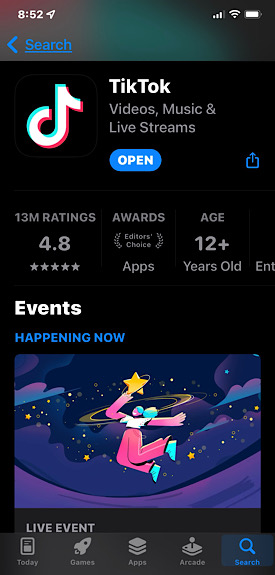
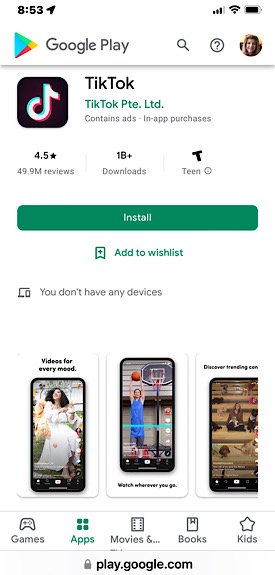
That’s a lot of saved data, as, according to Carr, the TikTok app has been downloaded “nearly 19 million times in the first quarter of this year alone” from the App Store and Google Play Store.
It’s unknown how successful a TikTok ban would be, as many users are quite smitten with it.
The Continuing TikTok Problem
TikTok launched in the U.S. in 2017, but it really took off during the pandemic, with people stuck at home looking for connections and entertainment. Especially sought after were the dance clips that allowed young people, as well as their parents, to put their own stamp on the routines.
In the midst of its rise in popularity, the former U.S. president became a critic. The administration saw it as a security risk and believed China was using it as a tool to get their hands on sensitive information about U.S. users.
The president issued an executive order that would force ByteDance to sell off the U.S. side of TikTok. A group of buyers, including Oracle and Walmart, were set to buy it, but the sale was challenged by ByteDance in court.
Once President Joe Biden took office, he rescinded the prior executive oder, with an understanding that his administration was looking into apps that were controlled by China.
Last fall, TikTok’s Michael Beckerman and other executives from YouTube parent Google/Alphabet and Snapchat parent Snap Inc. were questioned at a Senate hearing. These questions centered around support for the Children and Teens Online Privacy Protection Act. The proposed legislation would not allow apps to save information on teens 13 to 15 without their consent.
Beckerman commented during the hearing that TikTok “liked” the aim of the proposed legislation, but they hoped for improvement on age verification on the Internet.
Couple the teen data problem with TikTok’s admission that it collected U.S. user data, and it explains Carr’s desire to have Apple and Google ban the Tik Tok app.
If you’d rather just stay away altogether and not wait for a ban, check out these TikTok alternatives.
Image credit: Pexels Screenshots by Laura Tucker