

Facebook is going along with Apple’s iOS 14.5 change regarding app tracking kicking and screaming. It’s been complaining about the change since December, and now that iOS 14.5 has rolled out, Facebook is suggesting it may have to start charging for its service.
Facebook’s Hidden Threat
Apple announced last year that iOS 14.5 would carry the change of forcing apps to notify users of what data it collects on them if they wanted to be available on the App Store. Facebook took great offense to this and complained loudly about the iOS 14. 5 change, saying it was concerned more about small businesses and how they would handle the change.
The complaint did not deter Apple, and it forged on – iOS 14.5 was released last month. Users have started to see apps that are readily complying with the change. It’s noted on the App Store what data is collected and how it’s used. The apps themselves, when opened under iOS 14.5, allow users to opt out of having data collected.
Facebook is fighting back against the iOS 14.5 change by complying, yet warning users what is going to happen if it is forced to comply with the iOS 14.5 Change.
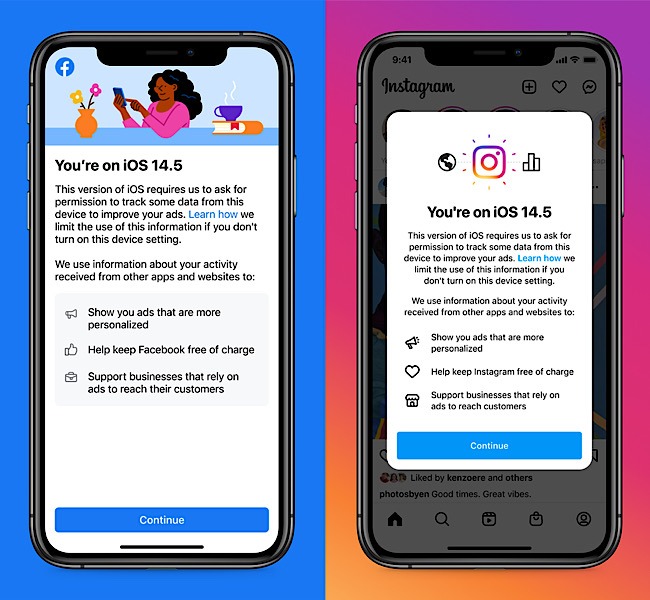
“As Apple has said that providing additional context is allowed, we will show an educational screen before presenting Apple’s prompt to help people make an informed decision about how their information is used,” explained Facebook in a recent blog post.
“It provides more details about how we use data for personalized ads, as well as the ways we limit the use of activity other apps and websites send us if people don’t turn on this device setting. Our screen also lets people know they’re seeing Apple’s prompt due to Apple’s requirements for iOS 14.5.”
Facebook supplied an image of the app prompt it will include on both Facebook and Instagram, abiding with Apple’s terms. On the “educational screen,” Facebook says it uses the data in question to:
- “Show you ads that are more personalized.
- Help keep Facebook free of charge.
- Support businesses that rely on ads to reach their customers.”
The social network says it will start rolling out this change.
For its part, Apple is vowing that apps that handle the iOS change by “offering incentives, displaying a screen that looks like a request, displaying an image of the alert, and annotating the screen behind the alert” will be rejected.
iOS 14.5 User Experience
I have not as of yet seen Facebook’s “educational screen” on either my iPhone or my iPad, but I have seen the requests on other apps.
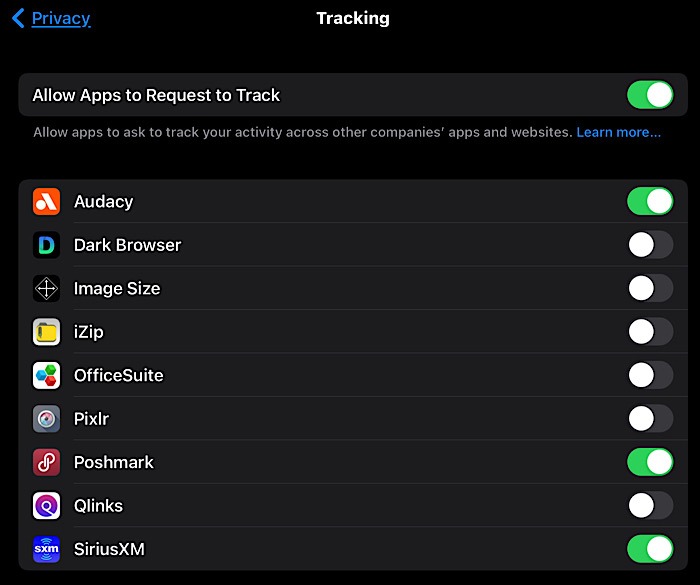
After you see an app’s request for your data, it will show up in Settings -> Privacy -> Tracking. The image above shows the apps where I have already accepted the ad request or denied it.
Obviously, I have not had this request on all apps I use at this point. But you can see that I can also change the app’s permissions from the Settings.
How will this iOS 14.5 change ultimately affect Facebook? Will it lose enough money that it is forced to charge for the app? Let us know in the comments below how it will affect you.
Read on to learn about the new iPad Pros and iMacs using the M1 chip that Apple has just released.
Image Credit: Facebook Blog Post