

There is one word to explain the state of Facebook lately: Embattled. It started with the Cambridge Analytica scandal, and it’s only continued since then. Just within the past few weeks they admitted they suffered a security breach, and now there are fake duplicate accounts being created, forcing people to tell their Facebook friends to not friend that person, as it’s not really them.
Yet this is the time Facebook is choosing to introduce their new product, Portal. The social networking giant is jumping into the hardware business with a smart speaker, one that will aid you in doing video chats with your friends and family. But the question still remains, can you trust Facebook Portal with your information?
Introducing Facebook Portal and Portal+
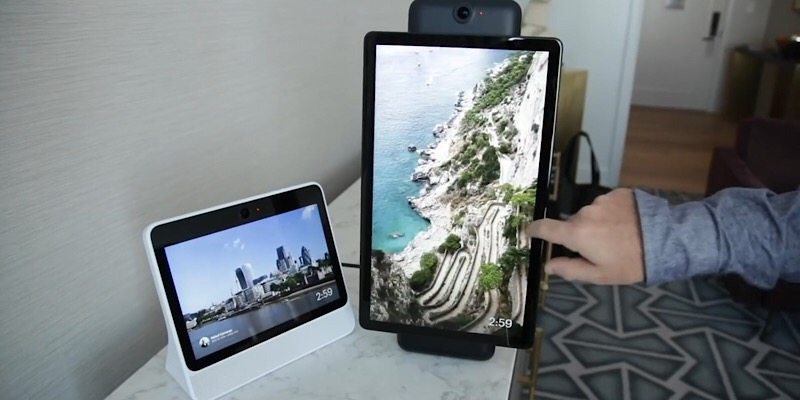
Facebook is offering two smart speakers in different sizes. Portal is available in 10-inch and 15.6-inch. The larger of the two, Portal+, includes a swiveling screen and hi-fi audio . The screen on the larger device can be pulled to either landscape or portrait orientation, and it also includes a 4-inch woofer.
Both devices include voice navigation with “Hey Portal.” They work with Alexa and are scheduled to eventually work with Google Assistant as well.
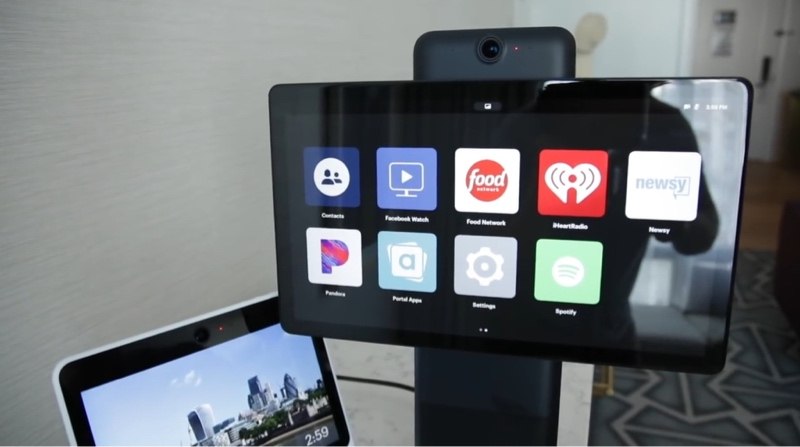
Facebook Messenger is used for video calls, and Spotify and Pandora will provide music through the device. Additionally, they’ll provide Facebook Watch content, augmented reality Story Time for kids, a third-party app platform, and will show photos and videos as a screensaver.
Handling Privacy Concerns
So you’re asking why you should trust Facebook with any more than you currently do because of their current track record, but they claim to have taken care of that.
Rafa Camargo, Facebook’s VP of Portal said, “We had to build all the stacks – hardware, software, and AI from scratch – and it allowed us to build privacy into each one of these layers.”
It does not include facial recognition. However, it does run what they call 2D pose locally on the smart speaker to track your position. This is because the camera follows you around as you have a video chat. So the person you’re talking to won’t see just half your face, they’ll see your whole face as you move around.
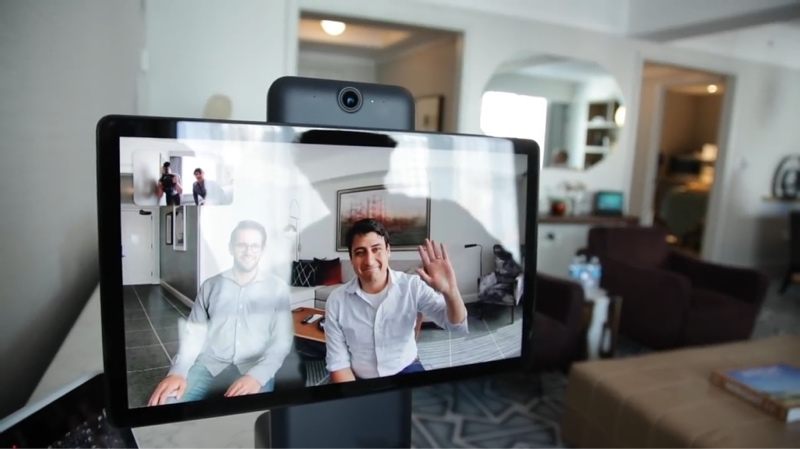
A separate chip will activate Portal when it hears the wake phrase. It doesn’t save recordings, and the data connection is encrypted. You can disable the camera and mic at your discretion by tapping it, or you can slide a plastic privacy shield over the lens that will keep voice controls active but shut everything off visually.
Still, Can It Be Trusted?
It sounds really great, with prices of $199 and $349, but the question of trust still remains. Recently, even Amazon’s Alexa products have had questions of trust with speakers listening when they shouldn’t be and sending private conversations to various contacts. If Facebook still can’t get a grip on keeping social networking data safe, why should the Facebook Portal and Portal+ be any different?
You can’t blame Facebook for wanting to break into the smart speaker market, and this has probably been in the works for a while, probably before the social network started to have such privacy issues, but that question of trust might always be with Facebook.
How do you feel about the Facebook Portal and Facebook Portal+? Can their reputation recover enough so that people will trust these smart speakers with their data? Or has too much transpired that you’d rather just use an Amazon speaker with Alexa, Google Home, or Apple’s HomePod?
Let us know if you think you’ll be buying a Facebook Portal or Portal+ in the comments section below.
Image Credit: TechCrunch YouTube Video