


If at first you don’t succeed, try, try again. Facebook is undeterred it seems after a prior failed attempt to launch a Siri competitor in 2015. It’s being reported that the social media company is working on an artificial intelligence virtual assistant once again and have been for the past year. They’re still looking to compete with Siri and Alexa.
Facebook Virtual Assistant
The development team for Facebook’s virtual assistant is led by Ira Snyder, the social network’s director of augmented and virtual reality. The team has also been working on their ideas for hardware.
CNBC reported that the team is based out of Redmond, Washington, and according to two former Facebook employees who left the company recently, “has been contacting vendors in the smart speaker supply chain.”
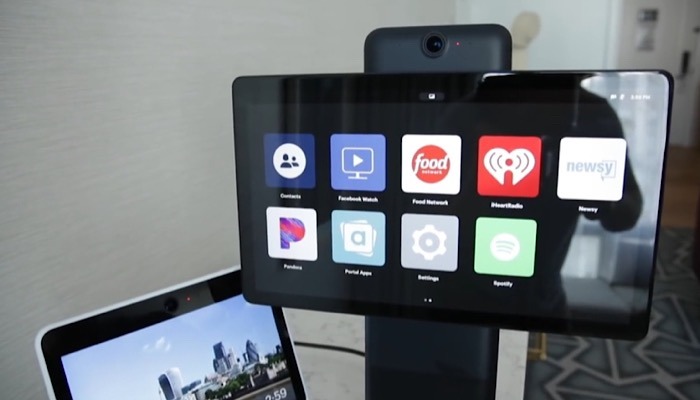
It’s not known if the team’s only idea for the use of the virtual assistant is with smart speakers, but last November Facebook began marketing a Portal video chat device. It allows users to make video calls via Facebook messenger.
While it’s already possible to say “Hey Portal” to get the Portal to handle some simple commands, it also includes Amazon’s Alexa voice assistant to do more complex tasks. If Facebook had its own virtual assistant, it would not need to reach outside its own brand to handle all the tasks.
Additionally, there may be skills they are envisioning for the Portal that Alexa hasn’t been taught at this point. This way they can better take control of the direction of the Portal device.
It’s also thought that the new virtual assistant could be used with Oculus headsets and other future projects Snyder’s team is working on, other than Portal or possible smart speakers.
Facebook could be developing their own smart speaker, but it’s a tough market to break into . Amazon controlled 67% of the market in 2018 in the United States with Google taking 30%. Whatever those two companies didn’t control, Apple was fighting for with their HomePod speaker using Siri.
While Facebook released an AI assistant for Messenger called “M” in 2015, it was not successful. It was intended to help users with smart suggestions, but depended too heavily on human interaction and never really took off. It was officially killed last year.
Future of Facebook’s Integration
Again, all that’s known is that Facebook is working on this technology for their own AI virtual assistant. It’s unknown what their plans are for it. But their Portal device has yet to really catch on, similar to Apple’s HomePod, so maybe they are envisioning it could do other tasks and need their own assistant to handle that.
Would Facebook having their own virtual assistant lead to you wanting to try the Portal device? Or can you see other options for their virtual assistant? Add your thoughts to the comments section below.
If you want to read more about smart speakers and and other IoT devices, check out our companion site, IOT Tech Trends.
Image Credit: TechCrunch YouTube Video and Public domain