

Are you looking for a new app or a new album download but don’t want to pay for it? Pirating that app or music is a really attractive solution, saving anywhere from a few dollars to several hundred, but is it ethical?
For some people it’s easy to skirt the topic by just telling yourself everyone does it, so why shouldn’t you. But for others, they find it hard to do something they know on some level is wrong. Is it really harmless or are there some people being hurt in the process? We asked the staff here at Make Tech Easier to chip in and tell us how they feel about the ethics of pirating apps, music, and other media.
Laura Tucker and Aaron Peters:
I like to say that I’ve probably built a wing on Steve Jobs’ home with all my iTunes downloads. That wasn’t always the case though. I started out acquiring my music through some email groups that operated under the guise of “sharing music with friends.” Once the Napster “scandal” (or is it not?) hit, I began to see the issue a little differently and realized if everyone obtained their music that way, the musicians wouldn’t be able to support themselves. As a fellow creative person, it had an effect on me. I pay for my music now, as well as all my apps and movie downloads. Aaron used to participate in “the free-for-all that was Napster,” but has also changed his stance since and even began replacing his music with legitimately paid copies.
Emmanuel Banks and Bertel King
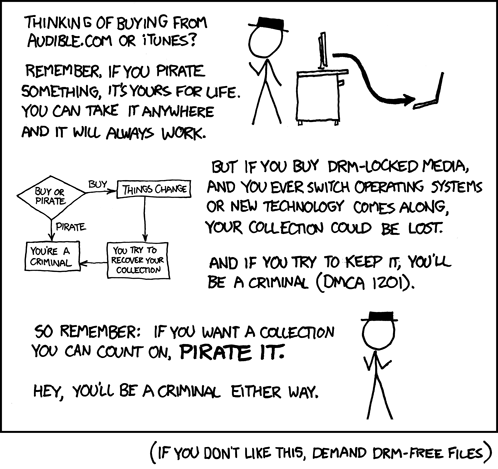
Neither Emmanuel or Bertel pirate music or software. Emmanuel feels “the ease and quality of just buying the song or movie is worth it instead of just hopping on a pirate website.” He admits to being very paranoid about his computer and fears viruses that pirated media could have attached to it. He’ll preview music on YouTube before spending money to buy it. Bertel doesn’t pirate out of principle and will go to Creative Commons to find free music instead of pirating.
Ruji Chapnik
For Ruji, “the ethics of pirating vary according to the nature of the pirated material and the pirate’s intentions.” She doesn’t support pirating independent music, but does see it as excusable for a poor graphic design student to pirate a copy of Photoshop. She feels Adobe will be harmed far less by pirating than the musicians would be. Like Bertel, she recommends finding free and open source alternatives before pirating. I understand this one, as when I was a graphic designer, I “borrowed” software from my employer, as I couldn’t afford several hundred dollars to buy it, yet now I will find cheaper alternatives, even if they aren’t as good.
Soumen Halder and Miguel Leiva-Gomez
Soumen and Miguel look at pirating more from a business standpoint. Soumen believes piracy is needed for the industry to thrive. “While purchases grow a business, piracy makes it popular.” Miguel believes it’s the very act of piracy that makes software expensive. He likens it to electronic cigarettes, saying, the only industry that wants them banned are the pharmaceuticals that could lose money over them, suggesting the industry just doesn’t want to compete. When it comes to software, he doesn’t feel it will even be an issue soon, with more and more software being available to use over the Internet as opposed to it being available in hard copy form, suggesting that it’s the act of piracy that has taken the industry to this point.
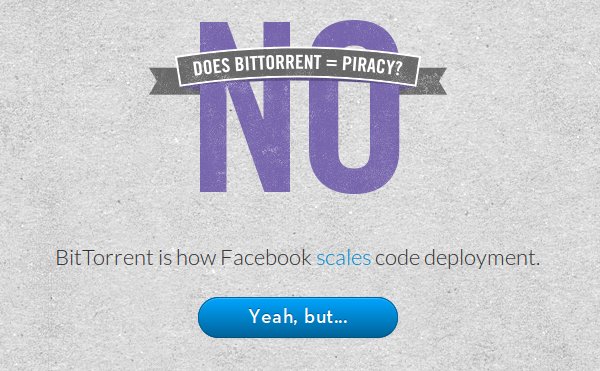
Once pirating is looked at in these terms, it makes me compare it to healthcare in the United States, yet another hotbed topic. Prescription prices are so astronomical, because the pharmaceutical companies know the insurance companies can pay for it. This leaves uninsured people forced to look for other alternatives, such as buying medication from other countries. Likewise, Adobe knows they can charge astronomical prices for their software, knowing the big graphic design companies can afford it, yet this leaves freelance designers to find other alternatives, such as open source or pirated software.
Is piracy a necessary evil?
While many people treat piracy as evil and condemn those who did so, others treat it as necessary for the industry to thrive. There will always be a thin fine line between what is correct and what is wrong. How do you view the ethics of pirating apps, music, and software? Is it a necessary evil or one act that should be eradicated forever? Let us know in the comment section below.
Image credit:Young boy in pirate outfit by BigStockPhoto, XKCD