
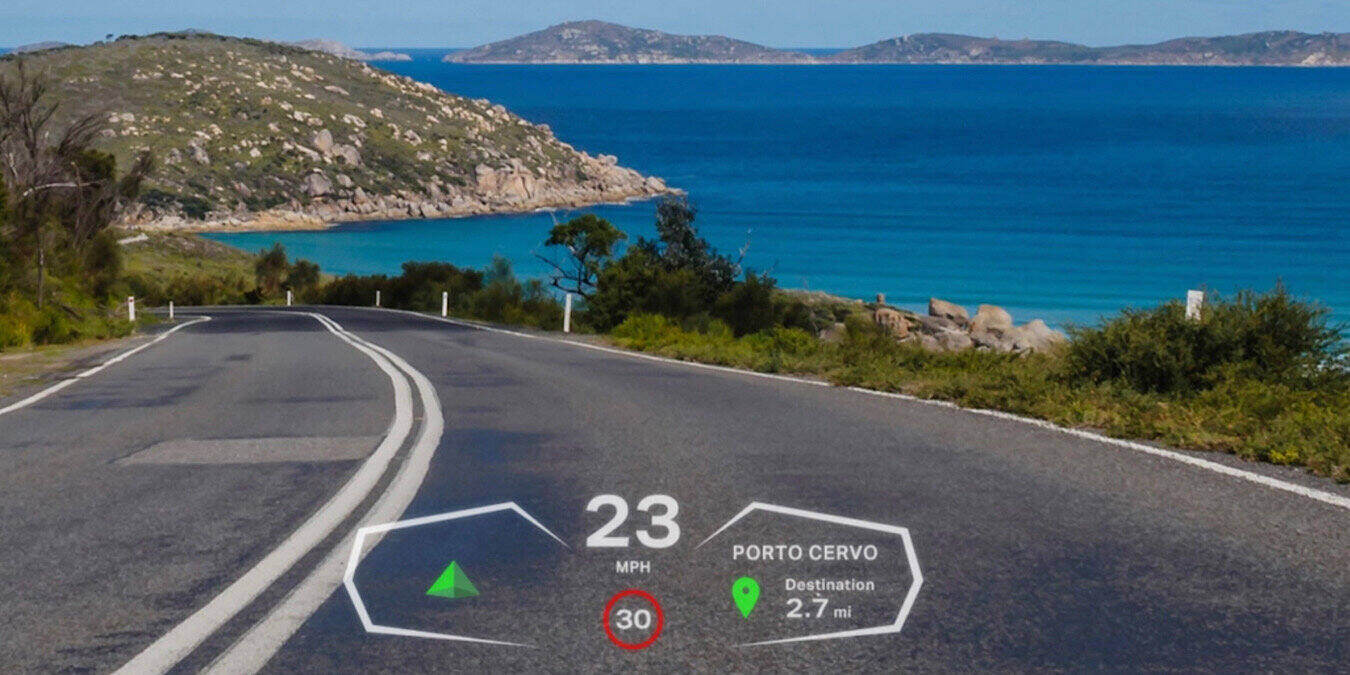

Imagine not having to take your eyes off the road to see your speed or navigation while driving. While one faction of technology is focusing on autonomous vehicles, there are others who want to use technology to still allow you to remain in control. Envisics has raised the funding to bring AR holography to windshields in cars to allow you to have all the information you need while never having to take your eyes off the road.
Envisics Gets Its Start
Some of us have the joy of driving a newer car that has GPS directions on a screen inside the car and a backup camera as well. I have an eight-year-old car but rented one with this type of system recently and loved it.
Envisics, a U.K.-based startup, plans to go much further, putting that information on your windshield with the help of am AR holographic head-up display (HUD). It’s raised $50 million from automotive companies such as Hyundai Motors and General Motors’ VC arm GM Ventures.
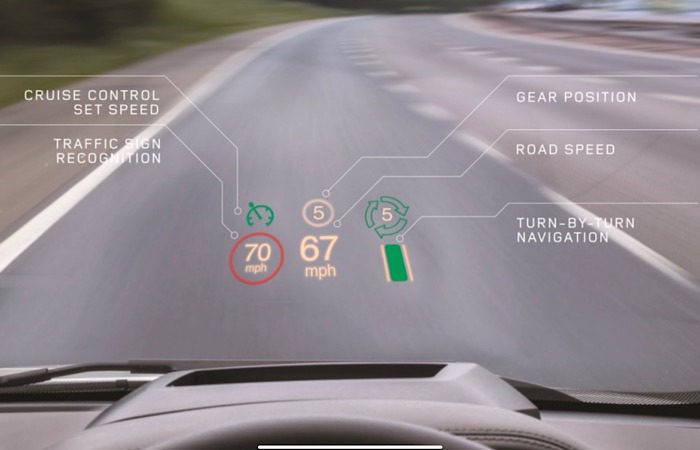
The HUD technology got its start in aviation and the military but has made its way to personal autos. BMW brought HUD over to display speed and directions in the windshield, but this has a limited field of view, using a secondary display still as well.
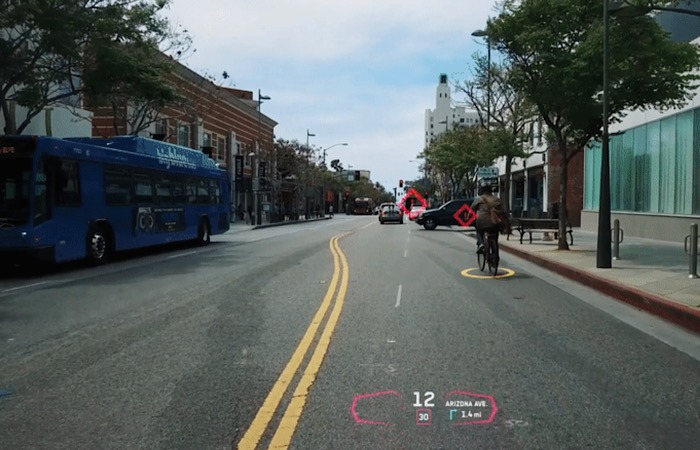
AR-enabled HUDs overlays graphics that interact with objects on the road and leverage vehicle sensor data. This allows the driver to go further than just a symbol or a computerized voice or beep to inform them of a hazard in their path.
Envisics was founded in 2018, but the technology started a decade before. Jamieson Christmas completed his Ph.D. in Real Time Holography for Displays in 2009, and this became the world’s first laser holographic HUD for the Jaguar Land Rover.
Christmas’s Two Trees Photonics sold in excess of 150,000 units and was acquired in 2016 by a Los Angeles-based company that built enterprise-grade AR headsets. He decided to move into holography and automative with an independent company “to continue the work” he’d started – this was the beginning of Envisics.
Putting the Technology to Use
Envisics is now backed by some of the automotive world bigwigs to bring a better AR to the windshield. Christmas is expecting the HUD technology to be on the road by 2023. The new animation will go further than Jaguar took it with a visual instrument cluster and the driver’s view of the road that will cover three lanes and up to 100 meters of the road in front of them.
The company isn’t the only one with these plans. Swiss startup WayRay is doing something similar, raising money from Porsche, Hyundai, and Alibaba. Mercedes-Benz also plans to feature AR HUD technology in a production vehicle that will start with the 2021 S-Class.
But Envisics is unique in that the display technology “electronically manipulates the speed of light to create true holographic imagery” in three dimensions.
“This approach has a significant number of benefits, including class-leading resolution, ultra-wide color gamut and significantly lower power consumption, and the ability to create multiple images at different distances simultaneously,” said Christmas.
Hyundai Mobis has confirmed it will be developing “autonomous driving-specialized AR HUDs” with Envisics. It plans to enter mass production by 2025, marrying the AR HUD technology and the autonomous car idea. GM’s Cadillac has also said a new car, the Lyriq, that will have a dual-pane HUD that will be capable of displaying two images at different paths simultaneously. It’s expected to hit the market by 2023.
With several major automative companies entering the AR HUD realm to add imagery to the windshield, with and without Envisics, it’s clear this is what’s ahead in the future.
Confused a little about the differences between mixed reality, virtual reality, and augmented reality? This article should help clear it up for you.
Image Credit: Envisics and VentureBeat